What To Pack For The Galapagos (And What Gets Confiscated)
Half the Galapagos packing problem is subtraction. The islands run a real agricultural quarantine, and the inspectors at Quito and Guayaquil open bags.
Short answer
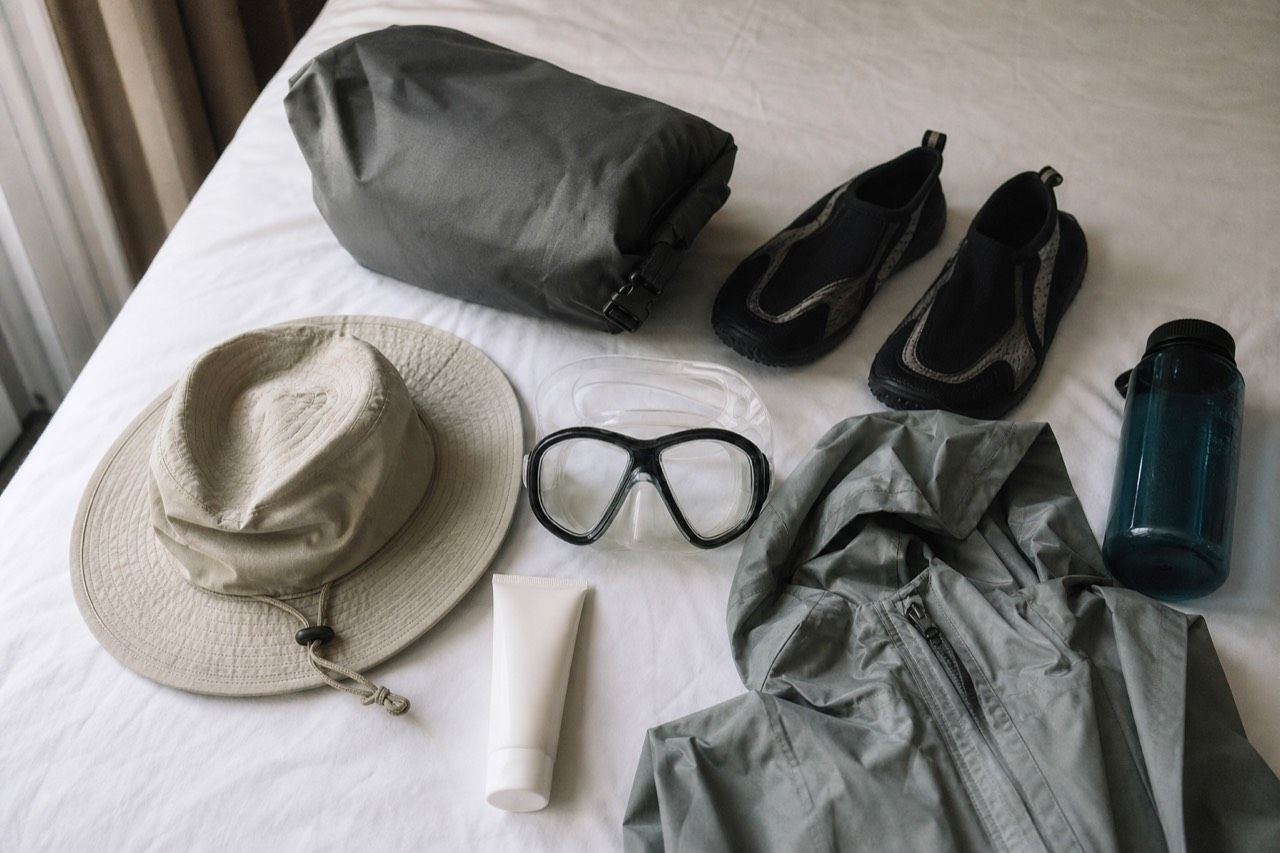
Pack reef-safe sunscreen, a wide-brim hat, quick-dry layers, water shoes plus one pair of grippy closed shoes, a dry bag, and motion-sickness tablets. Leave behind all fresh fruit, vegetables, seeds, plants, soil and unprocessed animal products: those are confiscated at the mandatory biosecurity inspection before your flight.
The banana went in the bin. I had bought it in Quito that morning, forgotten about it, and by the time my bag rolled off the belt at the biosecurity counter a man in a green vest was already pointing at the side pocket. No fine, no drama, just a bin and a shrug. That was 2021, my first trip, and it taught me the thing nobody puts at the top of their packing list: what you take out of the bag matters more than what you put in.
I have been back twice since. The list below is the one I actually pack from now, built around the rules that get enforced rather than the ones that sound good in a listicle.
What Is Banned From Your Luggage On The Way To The Galapagos?
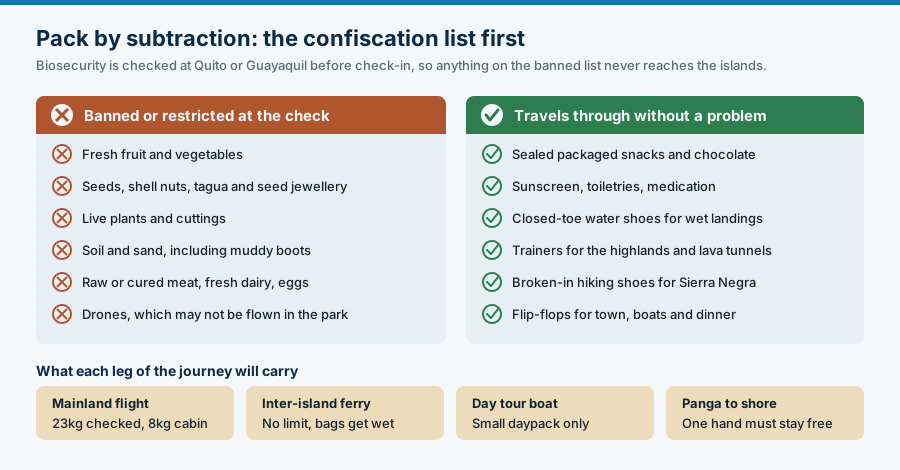
Fresh fruit, vegetables, seeds, live plants, soil and many unprocessed animal products are restricted or banned outright. Every bag is inspected before check-in at Quito or Guayaquil by SICGAL and Agrocalidad staff. Items are removed and binned on the spot. Sealed commercial snacks are usually fine.
This is not theatre. The archipelago's biggest ecological threat is introduced species, and the quarantine exists because a single seed in a hiking boot tread can start something nobody can undo. The Galapagos biosecurity agency publishes the official list of restricted and prohibited products, maintained under its own resolution rather than by airline discretion, so the answer does not change depending on who checks you in.
The inspection happens before you reach the airline counter, not at the gate. You queue with your checked bags, they go through a scanner, sometimes a dog walks the line, and occasionally a bag gets opened. Budget twenty extra minutes for it. Anyone arriving ninety minutes before a Galapagos flight has usually miscalculated.
| Item | Status at the SICGAL check | What people get caught with |
|---|---|---|
| Fresh fruit and vegetables | Banned | Airport bananas, apples, a hotel breakfast orange |
| Seeds, nuts in shell, live plants, cuttings | Banned | Souvenir seed jewellery, tagua nuts |
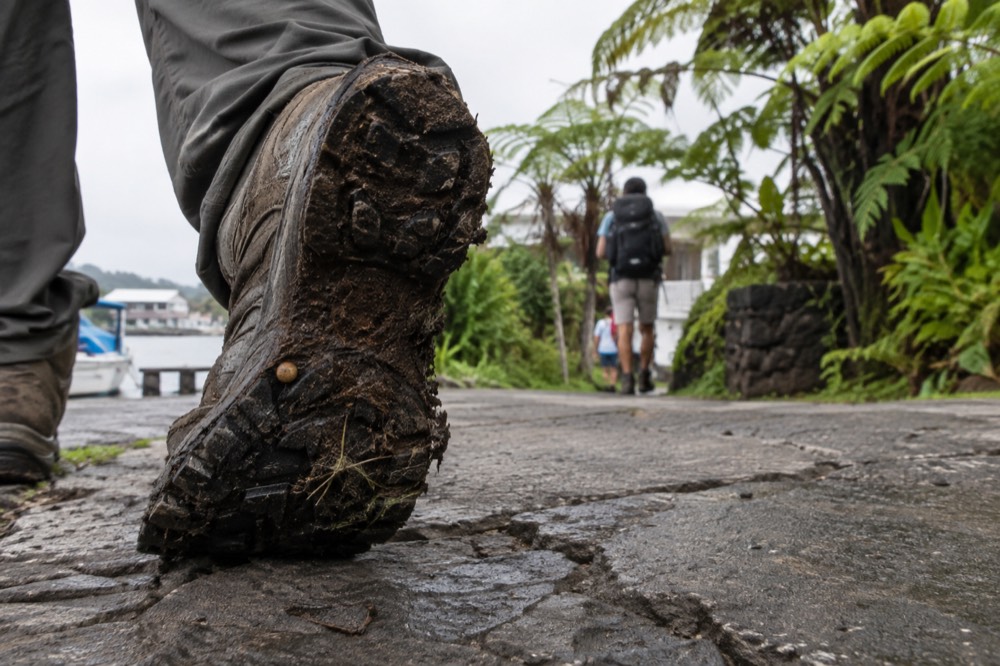
| Soil, sand, unwashed camping gear | Banned | Muddy hiking boots from the mainland |
| Raw or cured meat, fresh dairy, eggs | Restricted or banned | Jamón, cheese bought in Quito |
| Sealed packaged snacks, chocolate, biscuits | Generally allowed | Fine, keep them sealed |
| Sunscreen, toiletries, medication | Allowed | Standard liquid rules apply |
| Drones | Not permitted for use in the park or marine reserve | People pack them and cannot fly them |
That last line surprises photographers every year. Aerial tourism is not allowed in the national park or the marine reserve, so a drone is dead weight for the entire trip. Leave it in a mainland hotel's luggage store.
The paperwork around that queue has its own order, and knowing it saves real stress. The Transit Control Card is bought before you fly, at $20 per person, through the official CGREG online system, so that step is done before you ever reach the airport. The National Park entrance fee is the other way round: it is paid to rangers at Baltra or San Cristóbal when you land, $200 for foreign adults and $100 for children under 12, following the increase that took effect on August 1, 2024. There is no official confirmation either way on whether cards are accepted for the fee at the airport counter, so treat cash as the safe assumption and withdraw it on the mainland, where ATMs are reliable and the bills come out small enough to make change easy.
The grey zone at the scanner is loose snacks. A factory-sealed bag of biscuits passes without a glance; the same biscuits half opened in your daypack become a judgment call for the inspector. Nuts out of the shell in commercial packaging are generally treated like any other processed snack, while nuts still in the shell fall under the seed rule and go in the bin. If you want trail food for the volcano hikes, buy it sealed, keep it sealed until you are through, and do not decant anything into a reusable bag before flying.
Does Reef-Safe Sunscreen Actually Matter Here?
Yes, and practically as much as ethically. You will be in the water almost every day, guides on several boats ask for mineral sunscreen, and equatorial UV at sea level is punishing. Bring a zinc oxide or non-nano mineral formula from home. Selection in Puerto Ayora is thin and prices are high.
The equator does not care that the water feels cool. In the garúa season the sea sits around 19 to 22°C and the sky is often overcast, which is exactly when people burn, because they stop reapplying. In the warm season, roughly December to May, the water climbs to about 23 to 24°C and you stay in longer.
Two practical points. First, a long-sleeve rash guard replaces most of your sunscreen need on snorkelling days and does not wash off into the reef. Second, buy sunscreen before you fly. There are shops in Puerto Ayora, but everything on the islands arrives by cargo ship and the markup is real.
A wide-brim hat beats a cap. On boat decks the reflected light comes from below as well as above, and your ears and neck are the first casualties.
Application method matters as much as the formula. Aerosols waste half their content on a moving deck and nobody downwind wants your zinc cloud drifting across them, so pack a lotion or a stick. Add an SPF lip balm, because lips burn faster than any other skin on the water and almost nobody packs for it. Whatever you bring, carry it inside a zip-top bag: mineral sunscreen is thick, it separates in heat, and a split bottle over a bag of clean clothes is a classic day-one disaster.
Water Shoes Or Hiking Boots: What Footwear Do You Need?
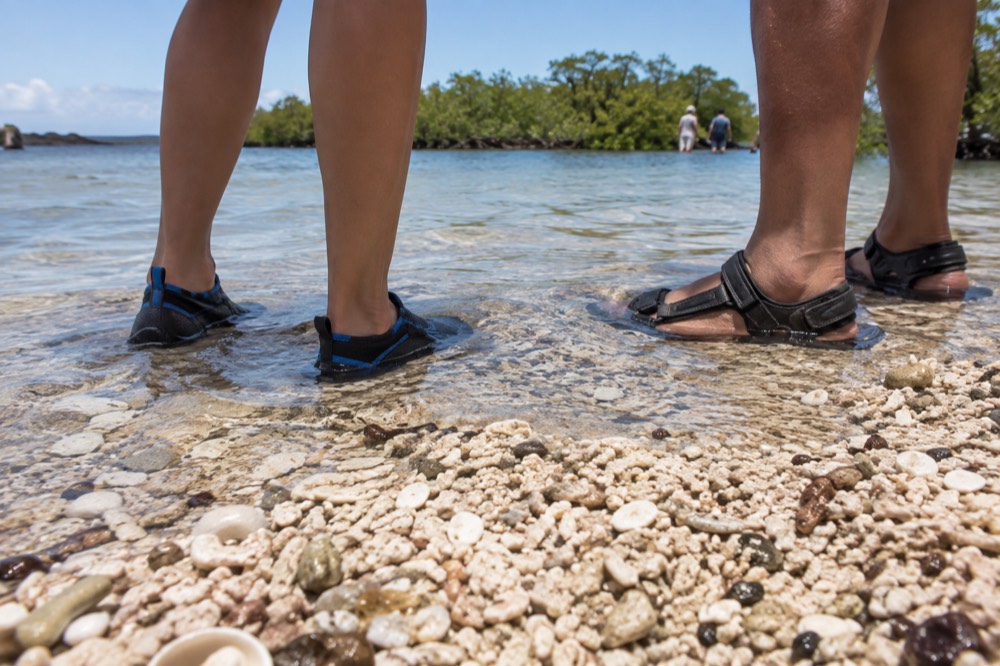
Bring two pairs, not three. Water shoes or sport sandals with a closed toe handle wet landings, lava rock and beach walks. One pair of grippy trainers or light hiking shoes covers the highlands and volcano trails. Full hiking boots are overkill unless you are doing Sierra Negra in the wet season.
Wet landings are the reason. Panga boats nose onto a beach and you step out into shin-deep water, which means whatever is on your feet gets soaked and then walked on volcanic rock that is sharp enough to open skin. Flip-flops fail this test badly.
| Activity | Best footwear | Why |
|---|---|---|
| Wet landings, snorkel beaches, Tortuga Bay | Closed-toe water shoes or sport sandals | Wet, sandy, sharp lava underfoot |
| Highlands tortoise reserves, lava tunnels | Trainers or light hiking shoes | Muddy, uneven, often damp inside tunnels |
| Sierra Negra volcano trail | Broken-in hiking shoes, boots in wet season | Long, exposed, deep mud after rain |
| Town, boats, dinner | Flip-flops | Everything else already covered |
The lava tunnels on Santa Cruz are the sleeper case. They are dark, the floor is uneven, and it drips. On a short highlands trip like the Giant Tortoise and Lava Tunnels tour, three hours out of Puerto Ayora, people show up in sandals and regret it inside five minutes.
Sierra Negra is where the footwear decision doubles as the tour decision. The guided hike runs five to six hours out of Puerto Villamil with pickup included, breakfast and a box lunch, and a Galapagos National Park guide, from $66.99 per person, and the operator's listing shows 4.3 from 24 reviews. Match the shoe to the season: broken-in trainers cope in the drier months, while the wet season turns the caldera trail into something that genuinely wants boots. The volcano sits high, the cloud rolls in fast, and the walk is longer than the photos suggest.
One small addition that costs almost nothing in weight: neoprene socks. Worn inside water shoes they take the sting out of lava entries, and on dry trails they stop the sand-and-sweat blisters that ruin day three. They roll to the size of a fist and belong in the gap left over after the shoes go in.
How Much Luggage Can You Actually Bring?
The Galapagos routes are flown by Avianca and LATAM from Quito and Guayaquil, with a standard 23kg checked bag and 8kg carry-on on most fares. Small boats and inter-island ferries impose tighter practical limits: hard-sided suitcases are awkward on a lancha, and a duffel is far easier to load.
Check your own ticket, because fare classes differ and the airlines change allowances. Take the numbers below as the common baseline rather than a guarantee.
| Leg | Typical allowance | Real-world constraint |
|---|---|---|
| Mainland to GPS or SCY (Avianca, LATAM) | 23kg checked, 8kg cabin | Confirm on your fare; excess is charged at the counter |
| Inter-island ferry (lancha) | No formal weight limit | Bags get thrown into an open bow locker and get wet |
| Day tour boats | Small daypack only | Nowhere dry to put anything |
| Panga transfer to shore | Whatever you can hold | One hand must stay free |
That ferry row is the one to plan around. The crossings from Santa Cruz to Isabela or San Cristóbal cost roughly $30 to $35 and take two to two and a half hours in a small speedboat that slams over swell. Anything soft, waterproof and squashable survives. A rigid suitcase spends the trip in spray.
Pack for the ferry leg, not the flight leg. Cabin baggage is where your camera, medication, documents and electronics should live, because the checked bag goes into an open bow locker on the lancha and arrives damp at best. A waterproof duffel in the 60 to 80 litre range handles a week land-based without strain; a hard case does not bend around the locker hatch, and the crew will not thank you for trying. If you own both, leave the rigid one in a Quito or Guayaquil hotel luggage store and collect it on the way home.
What Colours And Fabrics Work In The Islands?
Neutral, light colours in quick-dry synthetic or merino. Light tones stay cooler under equatorial sun and show salt crust less than black. Avoid cotton for anything you will sweat or swim in, because it stays wet all day in the humidity and never dries on a boat.
There is a lot of nonsense written about wildlife and clothing colour. The honest version: Galapagos animals are famously indifferent to people, so you are not going to spook a marine iguana by wearing red. The reason to choose neutrals is heat, salt stains and photographs, not camouflage.
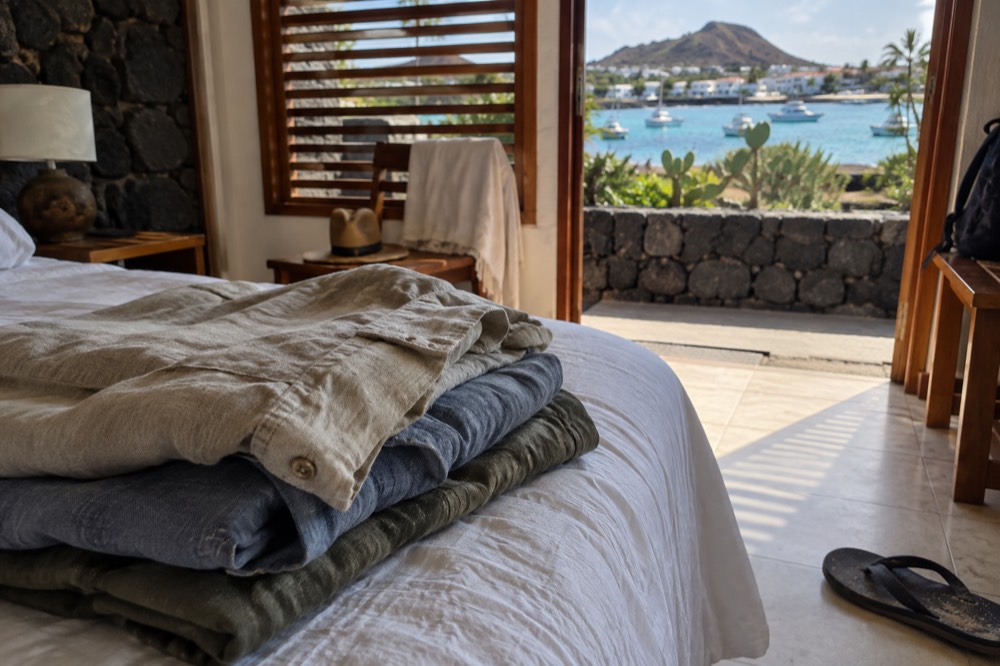
What genuinely matters is dry time. Between the sea, the sweat and the garúa drizzle, you are damp most days. Two quick-dry shirts you rinse each night beat five cotton ones. A light rain shell earns its space in the cool season when the highlands are wrapped in mist while the coast is bright.
One habit worth packing alongside the fabric choices: a nightly rinse. A few minutes under a tap with your shirts and swimwear, hung to dry overnight, resets the salt and the smell, and it means two quick-dry tops genuinely last a week. A braided cord and two clips weigh almost nothing and turn any hotel bathroom into a laundry.
Do You Need Bug Spray?
Yes, but less than you expect. Mosquitoes are a real nuisance in the highlands, in mangroves and around Puerto Villamil's wetlands at dusk, and there are biting flies on some beaches. A standard DEET or picaridin repellent is enough. There is no malaria risk in the Galapagos.
The islands are dry at the coast for much of the year, which keeps mosquito numbers down where most people sleep. Go up into the Santa Cruz highlands for tortoises, or walk the Isabela wetlands in the late afternoon, and the picture changes fast. Cover your ankles.
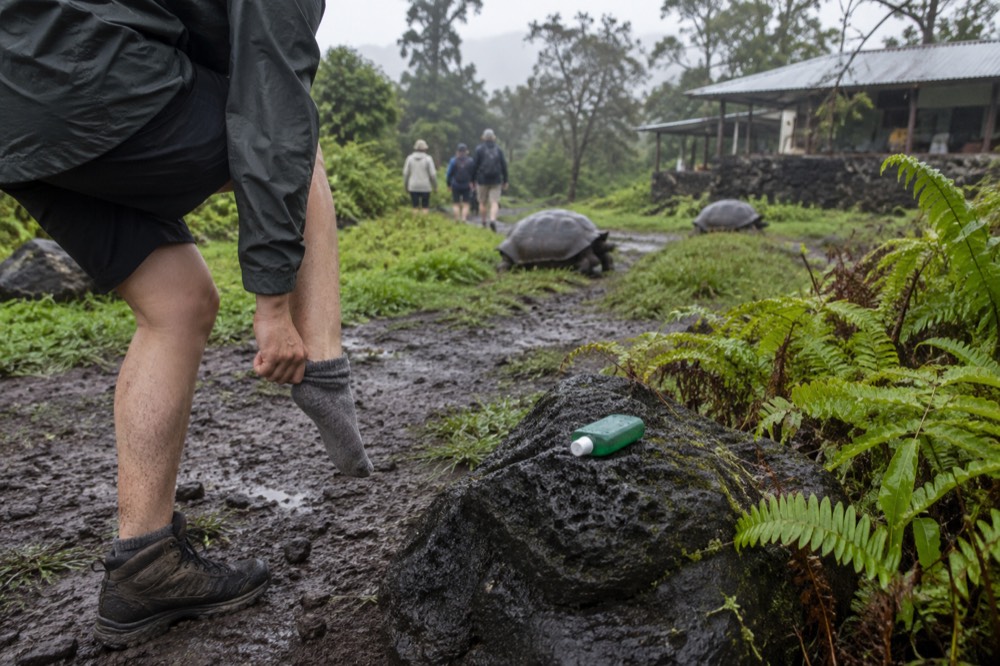
Sandflies are the underrated pest. They work the beaches at dawn and dusk, they are small enough to be missed, and the bites itch for days. Long trousers after five o'clock solve most of it.
Add a small first-aid layer to the repellent: antihistamine tablets or cream for the bites that get through, a few plasters for lava cuts, and something for the sunburn you did not think would happen. None of it needs a proper kit; a zip-top bag the size of a paperback covers it. Pharmacies exist in Puerto Ayora and Puerto Villamil, but opening hours and stock are unpredictable, and a boat is not the place to discover you are out.
What Is The One Item Most People Forget?
A dry bag. Everything on a Galapagos land-based trip involves getting into or out of a small boat, and a 10 to 20 litre roll-top bag keeps your phone, camera, passport copy and dry shirt genuinely dry. It also doubles as your daypack on wet landings.
Second place goes to motion-sickness tablets, taken an hour before boarding rather than when you already feel green. The channel crossings are open ocean and the swell between islands is often bigger than the photos suggest. Ginger sweets help at the margins, but a proper tablet helps more.
Third, a reusable water bottle. Tap water is not for drinking, boats carry large refill containers, and single-use plastic is discouraged across the archipelago in line with the national park's visitor rules. Those same rules include the 2 metre wildlife distance, which is easier to respect when you are not backing up to fit a sea lion into a wide-angle shot.
If your trip includes Isabela, the water gear earns its place. A boat like the Cabo Rosa Tunnels snorkelling tour, five hours through the lava arches off Puerto Villamil, is exactly where the rash guard, water shoes and dry bag all pay for themselves at once. Read the operator's inclusions and Check availability before you buy gear at home. The wider set is on the Isabela day tours page.
On sizes: a 10 litre roll-top takes a phone, wallet and passport copy; a 20 litre one adds a spare shirt and a towel. The smaller bag lives inside the bigger one on transfer days, which costs no space and means you never unpack the system. If you own neither, a sealed phone pouch is the budget substitute that protects the single item nobody can replace mid-trip.
What You Can Leave At Home
Hairdryers, because most hotels have them and the voltage is 110V. Heavy books, because you will not read them. Formal clothes, because Puerto Ayora's smartest restaurant still has sand on the floor. And the drone, again, because it cannot legally fly where you want to fly it.
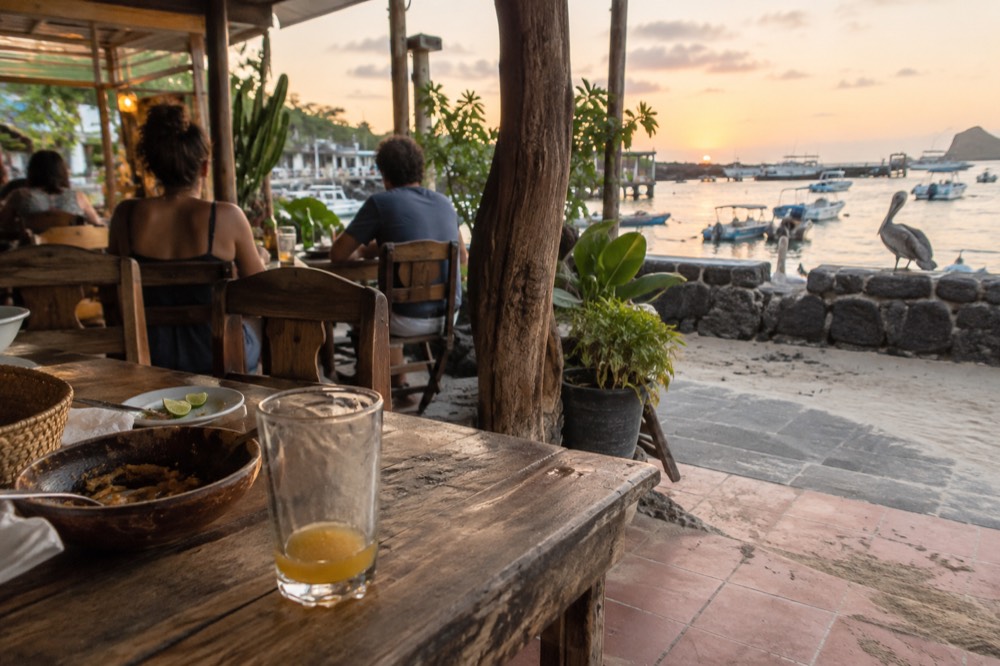
Currency is the US dollar, so no adapter maths and no exchange counters. Bring small bills, since taxis, ferries and the water taxi in Puerto Ayora all deal in ones and fives, and change for a fifty is a project.
One last subtraction. If you are still deciding when to go, the gear list shifts with the season, and our guide to the best time to visit covers what changes between the warm and garúa months. For the paperwork and fees side of the same trip, the entry rules and flights guide has the park fee and transit card in one place. And if Tortuga Bay is on your list, the walk out to it is 2.5km of paved trail in full sun, which is its own small argument for the hat.
On power: Ecuador runs 110V on North American-style two-pin sockets, so travellers from the United States and Canada need no adapter at all, and travellers from Europe, the UK or Australia need one simple adapter rather than a voltage converter. Charging points on boats are scarce and sometimes a single shared outlet, so a power bank is more useful on the water than any second adapter.
What Do The Day Tours Already Include?
More than you probably expect. Most Galapagos day boats include mask, fins and a wetsuit in the listed price, and several add towels, lunch and drinks, which reduces your packing list to the personal layer: sun protection, dry bag, tablets and a change of clothes. Read the inclusions before you buy anything at home, because duplicating what the boat carries is the most common packing mistake on these routes.
The variation between boats is bigger than the price differences suggest. Some listings bundle every fee and tax into the price; others leave dock charges as a separate line. The practical move when comparing options on the day trips page is to read the inclusions list before the price, since two boats at the same figure can differ by a wetsuit, a towel and a lunch.
The Pinzón Island day tour shows the fully loaded end of the scale. Seven hours out of Puerto Ayora at from $249 per person, it carries a 4.9 rating from 154 reviews, the highest review count of any day tour we list, and the inclusions run to snorkelling equipment, short or long wetsuits as you prefer, lunch, sodas, towels and all fees and taxes. Pack for a boat like that and your kit for the day is a hat, a dry bag and a fleece for the ride home.
Wetsuit choice is the one inclusion worth thinking about before you travel rather than on the dock. The same seasons that drive the sea temperature, roughly 23 to 24°C from December to May and 19 to 22°C from June to November, decide whether a shorty feels pleasant or a full length suit is welcome. Boats that offer both, as the Pinzón listing does, remove the guesswork; if fit matters to you, bring your own and treat the boat's suit as backup.
Towels are the quiet variable. Some boats provide them, some do not, and a soaked towel at the end of a day is exactly the item you do not want loose in a daypack. A microfibre towel that packs down to the size of a fist closes the gap on any listing, dries overnight, and weighs nothing in transit.
Santa Fe is the other strong example. The day tour to Santa Fe Island and Hidden Beach runs seven hours from Puerto Ayora at from $229 per person, with a 4.9 rating from 91 reviews, and the listing includes snorkelling equipment, all fees and taxes, coffee and tea, lunch, bottled water and sodas. When the boat brings the water, your reusable bottle becomes a backup rather than your supply, and the daypack shrinks to sun protection and a camera.
One inclusions question no boat can answer for you is guiding. Everywhere inside the protected areas of the national park, visitors must be accompanied by a naturalist guide authorised by the park directorate, which is why independent snorkelling at most of the famous sites is simply not an option. It is also why the guided day tour is the normal way to see the islands, and why this packing list is written around boats rather than solo shore days.
Should Divers Pack Differently?
Mostly no, for a single day of diving. The dive listings we track include scuba equipment and a dive guide in the price, so the extras a diver actually brings are personal: certification card, swimwear that works under a rented suit, and a warm layer for the surface interval. The one item that changes with the itinerary is the torch, and even that is sometimes provided.
The Night Dive Adventure in Academy Bay makes the point neatly. It runs three to four hours out of Puerto Ayora from $303, with a 4.8 rating from 5 reviews, and the inclusions list covers use of scuba equipment, a dive guide, a towel and a flashlight. The flashlight is the detail to notice: night diving depends entirely on the light, and when the operator supplies one, your only packing jobs are swimwear and something warm for afterwards. Check availability
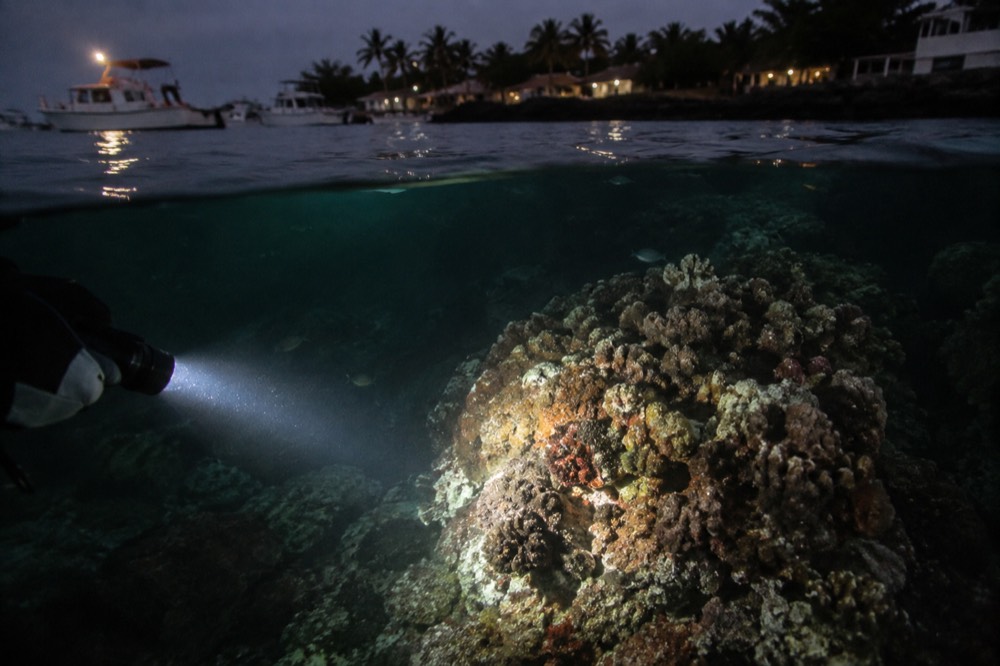
A thin dive skin or swim leggings earn their spot for divers who do not love the idea of a rented suit against bare skin, and they add warmth in the cool season, when the water sits at 19 to 22°C. They also dry faster than a wetsuit, which matters on a boat with nowhere to hang anything.
Certification is the one thing no operator can rent you. Bring the card, physical or digital, because check-in on dive boats runs on it. Beyond that, the packing difference between a diver and a snorkeller on the same departure is smaller than people expect: the heavy gear belongs to the boat, and the personal list is the same sun, sea and motion-sickness kit as everyone else's.
How Does Your Packing Change On Isabela?
Isabela is the island where luggage strategy matters more than luggage volume. You arrive by a two to two and a half hour crossing on an open speedboat, bags ride in a bow locker that takes spray, and there is no direct ferry from San Cristóbal, so every visit routes through Santa Cruz. Pack soft, pack waterproof, and split your gear so one wet bag cannot ruin the trip.
The crossings cost about $35 one way between Santa Cruz and Isabela, and the same on the Santa Cruz to San Cristóbal leg. Puerto Villamil itself is a sandy, barefoot town, so once you are there the footwear list simplifies to water shoes and flip-flops, with the real shoes reserved for the volcano. Day tours from Isabela also tend to run cheaper than Santa Cruz departures, typically $75 to $187 against $145 to $245, which means a few nights based on Isabela can partly pay for the extra ferry.
The alternative is not to move at all. The Day Tour to Isabela Island with Tintorera Islet runs ten hours from Puerto Ayora at from $285 per person, holds a 4.7 rating from 138 reviews, and includes wetsuits, long or short as preferred, lunch, sodas, the fuel surcharge and the Puerto Ayora pier fee. Ten hours is a long day out. The trade is that you never pack for a ferry, never drag a duffel through a bow locker, and sleep in your Santa Cruz hotel the same night.
If Isabela is a stay rather than a day trip, the kit additions are small. Sand gets into everything in Puerto Villamil, so the dry bag earns double duty as a beach bag. The wetlands and mangroves around town are where the biting insects concentrate at dusk, which makes long trousers and repellent an Isabela-specific item rather than a general one. And the volcano hike means the one pair of proper shoes comes along, even in a bag otherwise built around swimwear.
What Does A Lean Week Of Packing Actually Look Like?
Roughly four quick-dry shirts, two pairs of shorts, one pair of long trousers, one warm layer, one rain shell, swimwear, a rash guard and the three footwear options, plus the small kit of dry bag, sunscreen, hat, tablets and a microfibre towel. That is a 60 litre duffel with room to spare, and it covers a week of land-based island hopping without laundry anxiety.
The season, not the packing article, sets the final list. The warm months and the garúa months ask noticeably different things of the same bag.
| Kit item | Warm season, Dec to May | Cool garúa season, Jun to Nov |
|---|---|---|
| Wetsuit | Shorty, or a rash guard alone on the warmest days | Full length suit; boats provide them, check the listing |
| Warm layer | Rarely needed, a light fleece for boat rides at most | Fleece plus rain shell, especially for the highlands |
| Evening wear | Shorts and a shirt | Long trousers and sleeves against dusk insects |
| Rain protection | Rare, usually brief showers | Drizzle in the highlands, spray on every crossing |
| Footwear emphasis | Water shoes and sandals | Water shoes plus mud-ready shoes for volcano trails |
Two habits make the small list work. Rinse swimwear and shirts each evening so four shirts genuinely cover a week. And keep the daypack permanently staged: sunscreen, hat, tablets, dry bag and towel living in it from day one, so packing for each tour is a thirty-second job rather than a morning rebuild. The full set of Galapagos day trips runs to the same rhythm, and so does island hopping more broadly; the bag that works for one boat works for all of them.