Diving The Galapagos: An Honest Guide
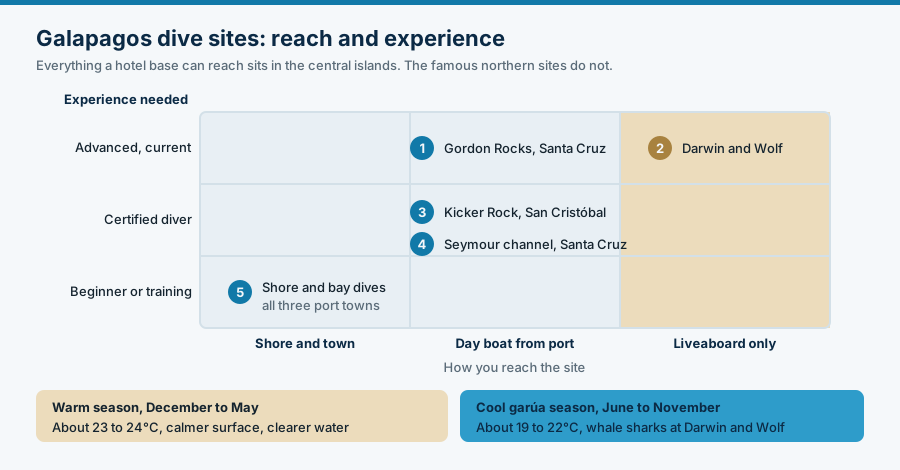
The photographs that sell Galapagos diving were taken at sites you cannot reach from a hotel. Separating the liveaboard sites from the day-trip sites is the whole planning problem.
Short answer
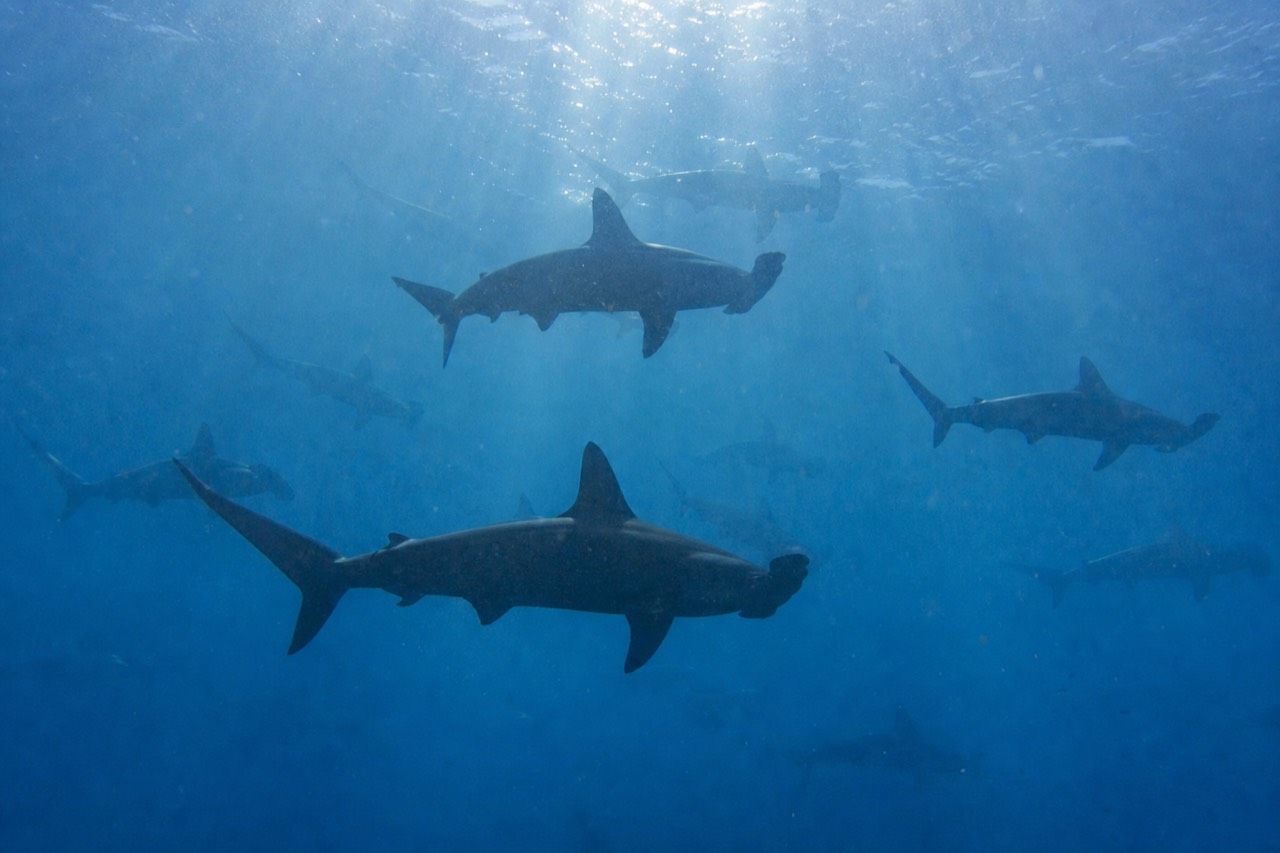
Darwin and Wolf, where whale sharks pass between June and November, sit far north of the inhabited islands and are reachable only by liveaboard. From a hotel base you can dive Kicker Rock off San Cristóbal, Gordon Rocks off Santa Cruz for experienced divers, the Seymour channel, and shore sites near the ports. Water runs 19 to 24°C depending on season.
Type "Galapagos diving" into any search box and the first screen is hammerhead walls, whale sharks and a column of divers hanging in blue water off a rock in the far north. I have been to the islands three times and never once been within a day's sailing of that place, and neither will you if you are staying in a hotel. Those photographs come from Darwin and Wolf, two small islands hundreds of kilometres north of anywhere you can sleep, and the only way to dive them is on a liveaboard boat that spends its whole week up there.
That gap between the marketing images and the day-trip reality is the single most useful thing to understand before you book anything.
Can You Dive Darwin And Wolf On A Day Trip?
No. Darwin and Wolf sit far to the north of the inhabited islands, well beyond the range of any day boat, and diving them requires a multi-day liveaboard with a specific northern-itinerary permit. Whale sharks pass those sites between June and November, which is why the images circulate, but no hotel-based trip reaches them.
This is not a scheduling problem you can solve with an early start. The crossing takes a night of sailing in each direction, the sites are exposed open ocean, and liveaboard operators hold limited permits for the northern route. Those boats sell out far in advance and are priced accordingly.
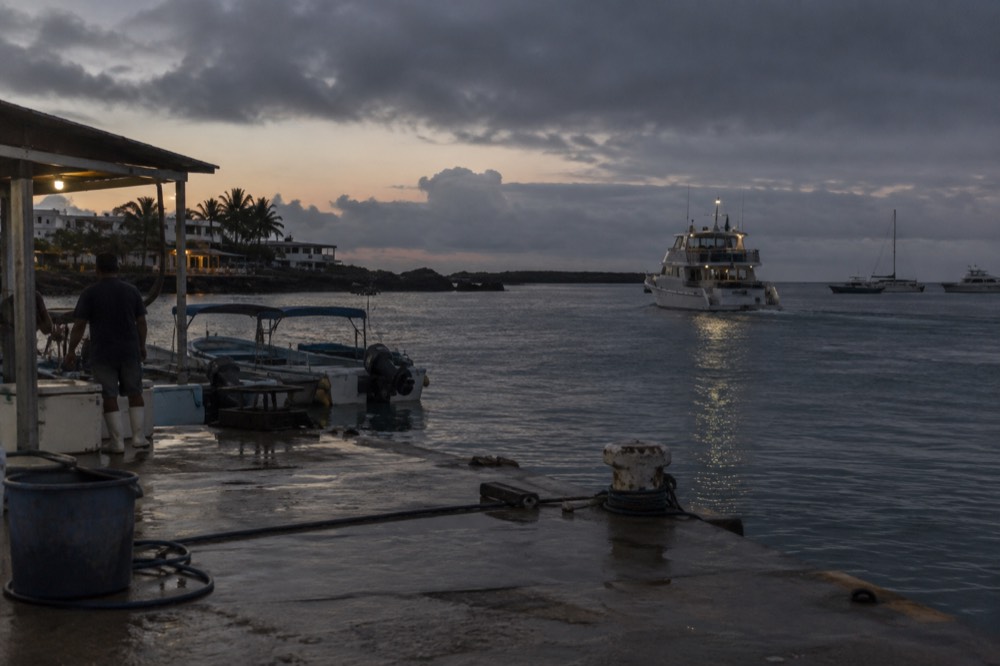
We do not list liveaboards on this site, and saying so plainly is more useful than pretending a day boat gets you close. If Darwin and Wolf are the reason you are going, book a dedicated liveaboard directly, plan around the June to November whale shark window, and treat everything below as separate.
The wider context is that all of this water is managed. The Hermandad Marine Reserve, created in January 2022, added 60,000 km² and brought the total protected marine area to 198,000 km², and the expansion announcement explains why those northern corridors carry so much large marine life in the first place.
Before you write the northern islands off entirely, price the commitment as well as admiring the photographs. A week on a Galapagos cruise typically costs $3,000 to $10,000 or more per person, and the dedicated dive boats sit inside that bracket, which puts Darwin and Wolf in a different budget category from anything in the rest of this guide. Some divers respond by making the liveaboard the whole trip. Others file the northern route under a future, richer visit and dive the day sites now. Both positions are sensible; booking a hotel week in Puerto Ayora and expecting the liveaboard's animals to show up is not.
The second thing to understand about the north is that even the right boat does not guarantee the headline animal. Whale sharks pass Darwin and Wolf between June and November, peak season, and a week spent inside that window still involves luck, because the sharks move through open water on their own schedule. Operators will show you their best footage from their best week. Your week will be an average of the two.
What Can You Actually Dive From The Islands?
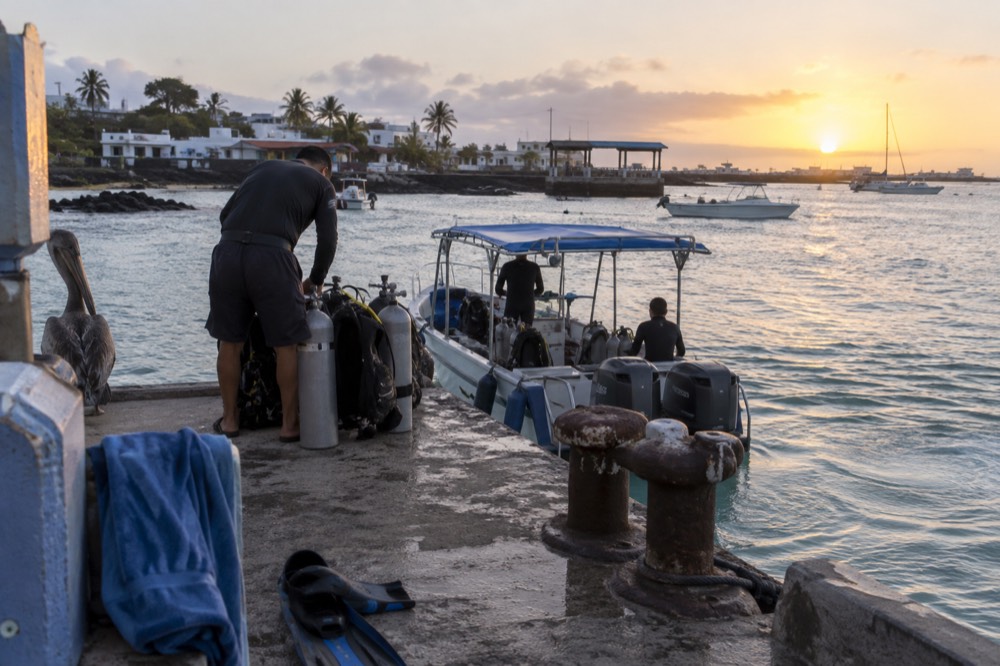
Four realistic options from a hotel base. Kicker Rock off San Cristóbal, the headline day site. Gordon Rocks off Santa Cruz, an advanced site with strong currents. The Seymour channel north of Baltra. And shore or shallow bay dives near the port towns, which are where most training dives happen.
Kicker Rock, León Dormido on the charts, is a sheer tuff cone split by a narrow channel, and the channel is the dive. Currents funnel through it, and it is known for sharks and rays passing in the blue. It runs as a full day from Puerto Baquerizo Moreno and often pairs with a beach stop.
Gordon Rocks is the one that separates divers. It is a submerged crater rim off eastern Santa Cruz with genuinely strong, shifting currents, and it is treated as an advanced site for that reason rather than for depth alone. Operators turn people away from it, which is a good sign.
The Seymour channel offers current-driven drift diving with reliable large fish. Shore and bay dives near the ports are calmer, shallower and the usual venue for a first dive or a refresher, which is exactly what they should be used for.
Of the day sites, Kicker Rock has the most listings and the most variation in how the day is packaged. The certified five-hour trip, Scuba Diving at Kicker Rock for Certified Divers, is run from San Cristóbal by Galapagos Underwater Exploration and is the tight version: a local instructor as dive guide, full scuba gear, lunch, bottled water and private transportation all included, from $220, and rated 4.7 from 3 reviews on the listing. A professional photographer guide is included too, which is unusual on a day boat and matters more than you would expect in water where visibility swings.
| Site | Departs from | Typical level | What draws people |
|---|---|---|---|
| Kicker Rock (León Dormido) | Puerto Baquerizo Moreno, San Cristóbal | Certified, some experience expected | Channel dive, sharks and rays in the blue |
| Gordon Rocks | Puerto Ayora, Santa Cruz | Advanced, strong currents | Submerged crater rim, big pelagic traffic |
| Seymour channel | Santa Cruz or Baltra | Certified, comfortable with current | Drift diving with large fish |
| Shore and bay dives | All three port towns | Beginner and training | Calm water, sea lions, first dives |
| Darwin and Wolf | Liveaboard only | Experienced, current-certified | Whale sharks June to November |
What Certification Do You Need To Dive In The Galapagos?
At minimum an open water certification for the standard day sites, and a logged history plus an advanced qualification for Gordon Rocks. Uncertified visitors can usually do an introductory dive in sheltered water. Bring your card and your logbook, because operators here do check, and the currents are the reason they check.
The honest version of this is that the Galapagos is not a good place to learn casually. Cold water, current and surface chop are a difficult combination for a new diver, and the sites that make the archipelago famous are precisely the ones where inexperience becomes a safety problem. Several listings sold as multi-day packages exist specifically to certify people on site over several days, which is a more sensible route than turning up qualified on paper and unpractised in reality.
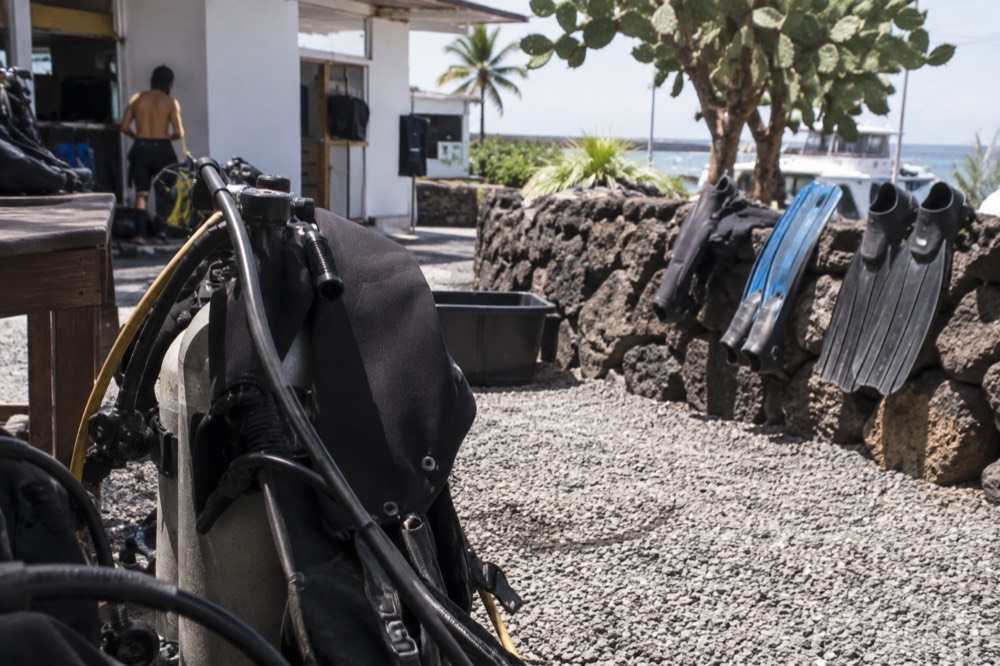
If you are already certified but have not been in the water for a year or two, do a shallow refresher dive on your first day rather than starting at a current site. Nobody regrets that. The park's general visitor rules also apply underwater, including the two-metre distance from wildlife, which sea lions will ignore on your behalf.
| If you are | Realistic options | What to avoid |
|---|---|---|
| Not certified | Introductory dive in sheltered water, or a multi-day certification course on the islands | Booking a current site and hoping |
| Certified, recent dives | Kicker Rock, Seymour channel, shore sites | Gordon Rocks without checking the operator's requirement |
| Certified, out of practice | Refresher dive first, then day sites | Starting the trip at an advanced site |
| Advanced with current experience | Gordon Rocks and the full day-site list | Assuming a day boat can reach Darwin or Wolf |
Two practical notes on the check itself. Bring the physical card or a clear copy, and bring the logbook rather than a certification number alone, because the people enforcing the requirement are the dive shop staff at the pier, not a computer system. The reason the checks are serious is structural: every visitor moving through protected areas of the national park does so with a guide authorised by the park directorate, and a dive boat is no exception to that arrangement.
The check-in conversation is also where a good operator earns their fee, and it is worth treating it as part of the product rather than an obstacle to it. Expect honest questions about your last dive, your total number of dives and how you feel about current. An operator who asks none of those before taking you to Gordon Rocks is telling you something, and it is not something encouraging.
How Cold Is The Water, And Do You Need A Wetsuit?
Colder than most people expect from the equator. The warm season from December to May sits around 23 to 24°C. The cool garúa season from June to November drops to about 19 to 22°C. A full wetsuit is standard in both, and the cool months are the ones where thin gear ruins a second dive.
The Galapagos sits on a cold upwelling, which is the entire reason there are penguins here. That same water makes diving productive and makes divers cold. On a two-tank day, the first dive is fine and the second is where an underspecified suit shows up, especially in September when the water is at its lowest.
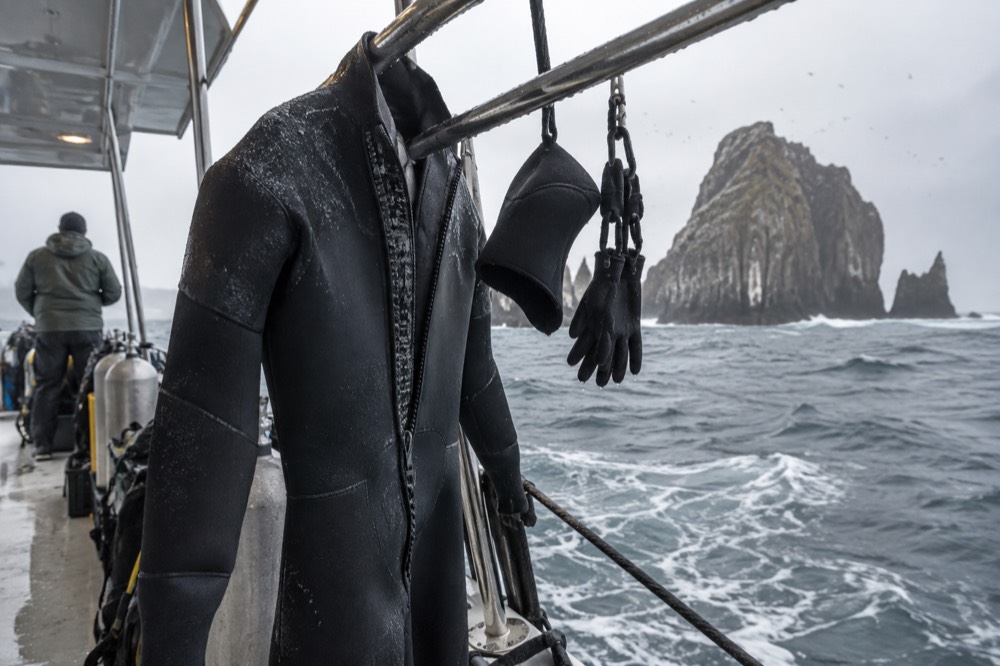
Rental gear normally comes with the trip. Confirm the suit thickness offered rather than assuming, and if you feel the cold, ask whether a hood is available. Nobody has ever complained about being slightly too warm on a Galapagos dive.
| Season | Months | Sea temperature | Conditions |
|---|---|---|---|
| Warm season | December to May | About 23 to 24°C | Calmer surface, better visibility on average, warmer air |
| Cool garúa season | June to November | About 19 to 22°C | Colder, more nutrients and plankton, more large-animal activity |
The seasons change what you see as much as how cold you get. The cool months push more nutrients into the water, which is when the larger animals that follow the plankton are most active around the day sites. The warm months trade some of that traffic for calmer surfaces and, on average, better visibility, which matters more to a nervous newer diver than a hammerhead sighting that never materialises. Neither season is the wrong one. They are simply different trips, and the June to November whale shark window at Darwin and Wolf runs deliberately against the warmer, clearer water.
That temperature swing shapes the whole trip, not only the diving, and the best time to visit guide sets it against the wildlife calendar and prices.
Why Is There So Little Galapagos Diving On Booking Platforms?
Because almost all of it is booked directly with dive shops in the port towns. The islands have a small number of operators with limited daily capacity, and they fill through their own channels, walk-in traffic and repeat customers. What reaches the booking sites is a thin slice, often with no listed price and very few reviews.
This is unusual, and it is worth stating rather than hiding. On most destinations a booking platform shows you the whole market. Here it shows you a corner of it. Several diving listings carry no rating at all and several show no price, in which case the figure appears in the booking flow rather than on the card.
What a booking-site reservation does give you is a confirmed slot before you fly, in a place where boats are small and high-season capacity genuinely runs out. If that certainty is worth more to you than the widest choice, the Gordon Rocks day trip is the straightforward option: a 7 to 8 hour day from Puerto Ayora, from $280, rated 4.3 from 6 reviews on the listing, with scuba equipment, private transportation and lunch included, run by GalapagosBKtours. You can Check availability. Everything else we list underwater sits on the diving tours page.
If you want the widest choice instead, arrive with a day or two of slack and walk into the dive shops in Puerto Ayora or Puerto Baquerizo Moreno. Both approaches are legitimate. Pretending the platform list is the full market is not.
| What we list | Shape of the day | Rating | From price |
|---|---|---|---|
| Gordon Rocks Daily Dive | 7 to 8 hours | 4.3 from 6 reviews | $280 |
| Night Dive, Academy Bay | 3 to 4 hours | 4.8 from 5 reviews | $303 |
| Certified Scuba, Kicker Rock | 5 hours | 4.7 from 3 reviews | $220 |
| Kicker Rock Dive, 7 Hours, Pickup | 7 hours | No rating on the listing yet | $226 |
| Bahia Darwin and Carahua Dive | 4 hours | No rating on the listing yet | $269 |
The slice that does reach the listings we track rewards close reading, because the shape of each day differs more than the prices do. Bahia Darwin and Carahua, run by BM TOURS SA, is a four-hour water day from $269 with dive equipment, snacks, underwater photos and a specialised guide included, and no rating on the listing yet. It suits a diver who wants a shorter day without giving up a guided dive, and the included underwater photos spare you the choice between watching what is in front of you and documenting it.
Read the gaps the same way you read the numbers. A listing with no rating in this market is usually a new listing or a small operator selling online for the first time, not a warning sign, so read the inclusions and the cancellation terms instead of the star count. Cancellation terms carry real weight here, because the two things that end dive plans are weather and sea state, and operators handle both differently. Where a listing shows free cancellation, that flexibility is worth money in a place where boats genuinely stay in port when the swell is wrong.
How Does Diving Fit Into An Island-Hopping Trip?
Awkwardly, unless you plan for it. Dive sites are tied to specific port towns, so a Kicker Rock day requires a San Cristóbal base and a Gordon Rocks day requires a Santa Cruz base. Standard dive safety guidance is to leave at least 24 hours between your last dive and flying, which costs you a day at the end.
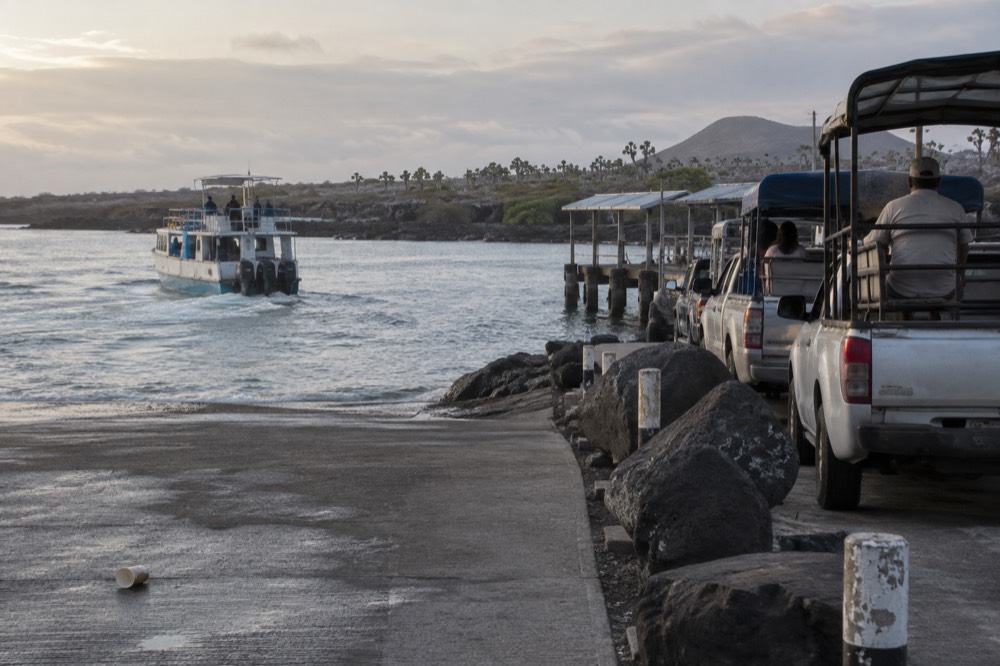
The ferry problem compounds it. Crossings between islands take 2 to 2.5 hours each way and cost about $30 to $35, so you cannot dive one island's sites while sleeping on another. Two dive days in different towns means a relocation between them, which is a full travelling day. The mechanics of that are in the island hopping guide.
The no-fly interval is the one people forget. Your flight out of Baltra or San Cristóbal is usually mid-morning, so a dive on your final full day is fine but a dive the afternoon before departure is not. Build the last day around a land activity instead, a highlands trip or a beach walk, and dive earlier in the week. The Conservancy's trip planning pages are a good sanity check on the wider sequencing, and if Kicker Rock is your priority the Kicker Rock guide goes deeper on that one site.
A concrete sequence makes the constraint obvious. Say you have six nights. Fly into Baltra, pay the $200 park fee to the rangers at the airport on arrival, having pre-registered the $20 transit card online before you left home, and base in Puerto Ayora for three nights, which is where Gordon Rocks and the Seymour channel are dived. Ferry to San Cristóbal, about $30 to $35 and 2 to 2.5 hours, and base there for your last two or three nights, which is where Kicker Rock is dived. Keep the final full day on land, and fly out of San Cristóbal rather than backtracking to Baltra. One relocation, both dive sites, no wasted days, and the no-fly interval lands on a day you would have spent travelling anyway.
The reverse direction works too, and some divers prefer it: San Cristóbal first, while ears and sea legs are fresh, the Kicker Rock channel early in the week, then Santa Cruz to finish with calmer shore sites or a night dive in Academy Bay as an easy final water day. Whichever way you run it, the rule holds: dive on the island you sleep on, and never book a dive against a ferry crossing or a flight on the same day. Note also that there is no direct ferry between Isabela and San Cristóbal at all, so an itinerary touching all three port towns needs two relocations, and that is before you count the days when the water is too rough to leave.
Which Kicker Rock Dive Should You Book?
Two scuba listings cover Kicker Rock and they are not the same day: one is a five-hour certified trip from $220 with a 4.7 rating from 3 reviews, the other a seven-hour day from $226 with hotel pick-up and no rating on the listing yet. The prices are barely $6 apart, so the choice comes down to the shape of the day rather than the cost.
The five-hour option, Scuba Diving at Kicker Rock for Certified Divers, is run by Galapagos Underwater Exploration and is the efficient version of the site: a local instructor as dive guide, full scuba gear, lunch, bottled water and private transportation all included, from $220. The 4.7 rating comes from only 3 reviews, so treat it as a good sign rather than a verdict, and the inclusion of a professional photographer guide means the day doubles as a record of it.
The seven-hour option, Diving Tour: Kicker Rock in the Galapagos, is run by BM TOURS SA from Puerto Baquerizo Moreno, from $226, and it builds a fuller day around the same rock: hotel pick-up, lunch, a professional bilingual guide and use of snorkelling equipment are all in the listing's inclusions. There is no rating on the listing yet, which leaves you reading the inclusions and the cancellation terms rather than other people's opinions. That is less comfortable, and it is not a bad way to choose.
Price being nearly identical, ask the questions the cards do not answer. How many tanks does the day include, and how much of the listed duration is spent on the water rather than getting to it? Put both questions to the operator through the listing's message flow before you commit, and compare the answers, because at a channel site the number of dives matters more than the number of hours.
| Certified Scuba, Kicker Rock | Kicker Rock Dive, 7 Hours | |
|---|---|---|
| Operator | Galapagos Underwater Exploration | BM TOURS SA |
| Duration | 5 hours | 7 hours |
| Departs from | San Cristobal (Kicker Rock) | Puerto Baquerizo Moreno (San Cristobal) |
| From price | $220 | $226 |
| Rating | 4.7 from 3 reviews | No rating on the listing yet |
| Standout inclusions | Local instructor dive guide, professional photographer guide, private transportation | Hotel pick-up, bilingual guide, snorkelling equipment |
Is A Night Dive Worth Adding?
Often yes, and Academy Bay off Puerto Ayora is where it happens. The night dive listing we track runs 3 to 4 hours from Puerto Ayora, from $303, rated 4.8 from 5 reviews, with scuba equipment, a dive guide, towel and flashlight included. On a small sample it is the highest-rated dive listing we track.
The listing is run by Galapagos a la Carte, and its shape tells you what the dive is: a flashlight in the inclusions means the diving happens on a narrow beam, and a 3 to 4 hour duration means you are back in town the same evening. Academy Bay is the sheltered water directly off Puerto Ayora, the same bay where introductory and refresher dives run in daylight, so this is calm, close, shallow-water diving with the daytime crowds gone. It is the opposite end of the archipelago's spectrum from Gordon Rocks, and it is priced above it, from $303, which tells you something about how niche night diving is here.
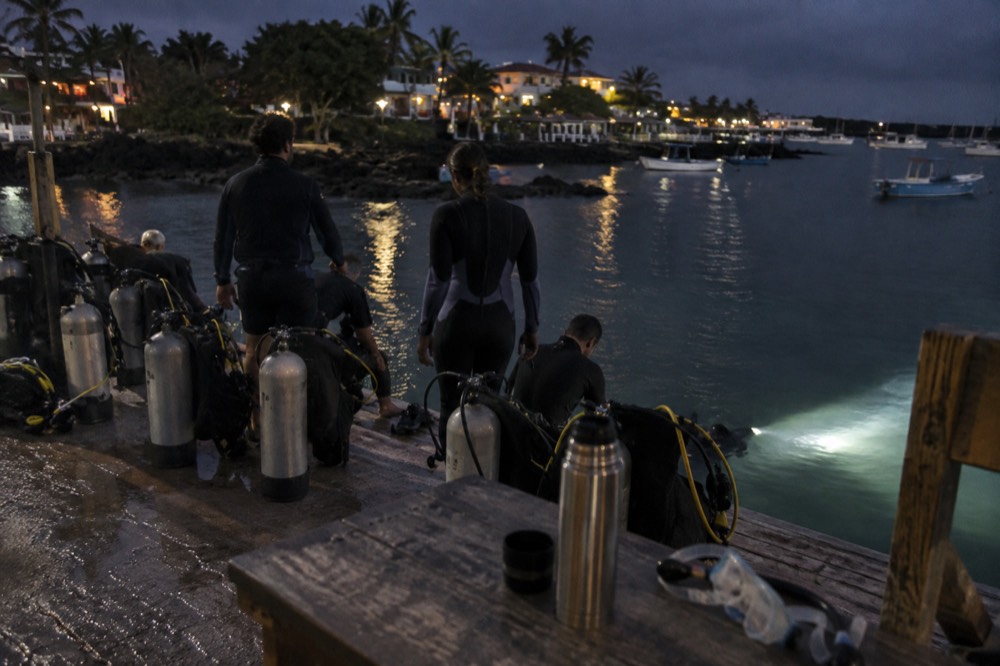
The practical value is where the night dive slots into a land-based week. It departs from town in the evening, so it converts a day that would otherwise be written off, the afternoon you arrive, or a day broken by a ferry crossing, into a water day. Diving after flying carries no restriction; it is flying after diving that carries the 24-hour rule, so an evening dive on your arrival day costs you nothing except energy.
What you give up is sleep and, in the cool season, warmth. Two daytime dives plus a night dive is a big day in 19 to 22°C water, and the wetsuit that felt adequate at midday can feel thin at nine in the evening. If your week has room for one, treat the night dive as its own event rather than stacking it onto a full dive day, and book it in the first half of your trip so weather has a fallback slot if the boat cannot go out.
What If Someone In Your Group Does Not Dive?
They have better options here than almost anywhere, and the strongest from San Cristóbal is the 360° snorkel circuit that includes Kicker Rock. It runs 9 hours from Puerto Baquerizo Moreno, from $270, and carries a 4.4 rating from 47 reviews, the highest review count of any listing we track. Sea lions, turtles and reef sharks are routine snorkel sightings, and the channel gives a real, though not guaranteed, chance of bigger animals from the surface.
The tour, run by Howlanders, is a circuit of San Cristóbal rather than a single-site shuttle: lunch with a vegan and vegetarian menu, snacks and drinks, a bilingual naturalist guide in Spanish and English, snorkelling equipment plus a neoprene wetsuit, a microfiber towel, and transport on the HAMMERHEAD boat. The wetsuit inclusion matters more than it sounds from June to November, when a snorkeller in a swimsuit lasts minutes rather than hours. Nine hours is a long day, but it buys the island's coastline in one move, and the review count, 47, is the deepest pool of customer evidence on any listing we track.
The split-day pattern works particularly well on San Cristóbal because the dive boats and the snorkel boats visit the same rock. One of you dives Kicker Rock on a scuba trip while the other snorkels it on the 360° tour, and you reconverge in Puerto Baquerizo Moreno in the evening with two versions of the same channel. On an island where the headline site is shared, mixed groups do not have to choose between splitting up and disappointing someone.
The temptation to fix the mismatch by putting a non-diver through an introductory dive the same week is real, and sometimes it is the right call, but only in sheltered water. An introductory dive in one of the sheltered bays is a fair trial of whether diving suits them. An introductory dive pitched as a shortcut into a current site is not, and no honest operator will sell it that way. If the trial does not take, the snorkelling here is genuinely world class, and the diver in the pair loses nothing by booking a surface day alongside it.
What Does A Week Of Diving Actually Cost?
More than the dive ticket, always. A foreign adult pays US $200 for park entrance at the airport and US $20 for the Transit Control Card, and typically $250 to $600 for round-trip flights from the mainland, before a single hotel night or tank of air. The dive day itself, from $220 to $303 across the listings we track, is the smallest line of the week.
| Line item | Typical figure | Notes |
|---|---|---|
| Park entrance fee | US $200 per foreign adult | Paid to park rangers at Baltra or San Cristóbal airport on arrival; US $100 for children under 12 |
| Transit Control Card | US $20 per person | Pre-registered and paid online before travel |
| Flights from the mainland | $250 to $600 round trip | From Quito or Guayaquil; only Avianca and LATAM fly the route direct |
| Inter-island ferry | About $30 to $35 per crossing | 2 to 2.5 hours each way |
| Hotel | $30 to $65 budget, $65 to $150 mid-range | Per night, Puerto Ayora listings |
| Dive day | From $220 to $303 | Across the listings we track |
| Non-diving day tour | $145 to $245 from Santa Cruz | For the days you are not underwater |
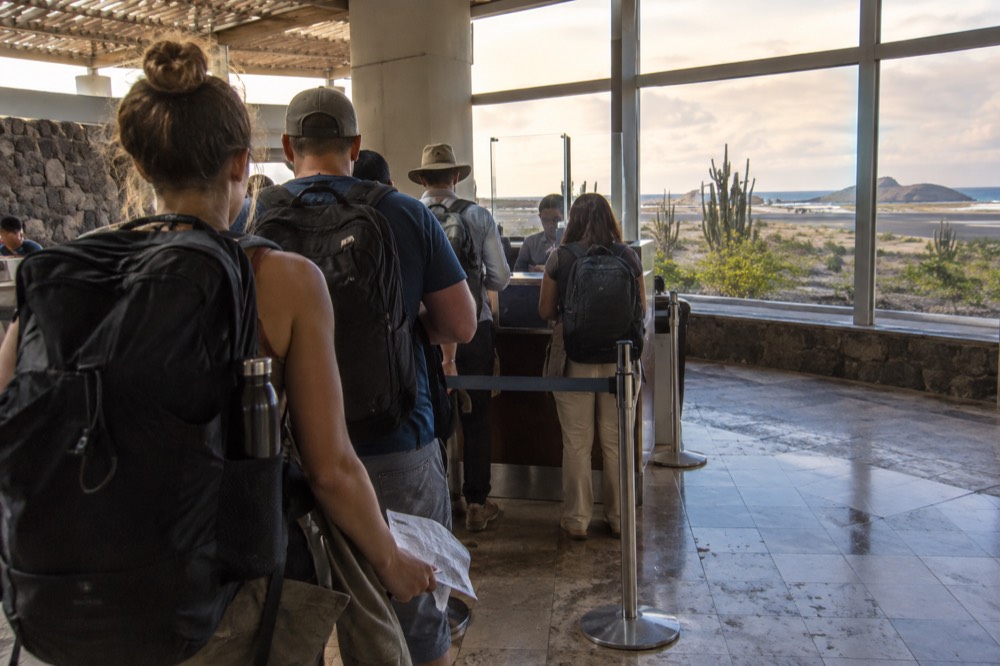
The two airport charges are the ones people plan for least well. The park fee rose from $100 to $200 for foreign adults in August 2024, so older trip reports and forum threads quote numbers that no longer apply, and there is no official confirmation that card payment is accepted for the fee at the airport, so plan on carrying cash for that line. The transit card is the opposite: it is bought online before travel, and arriving without it is a problem you solve at the airport counter with a queue behind you.
Against that fixed floor, the diving itself is a modest and knowable cost. Mid-range land-based island hopping typically runs $250 to $350 per person per day with hotels, day tours and transport bundled, and a dive week bends that structure rather than breaking it: the dive ticket, at $220 to $303, replaces one of the pricier land day tours and everything around it stays in place. What changes is the slack. If a dive cancels for sea state, the day still costs a hotel night and a hole in the itinerary, which is why the flexible-cancellation listings deserve a second look and why you should never schedule a dive for your departure morning.
Families should read the fee structure carefully. Children under 12 pay US $100 for park entrance rather than US $200, while the transit card is US $20 per person. A family week with one diving parent is really two parallel itineraries with one shared hotel bill, so budget it that way, and plan the non-diving days against the San Cristóbal and Santa Cruz day-tour pages rather than improvising on the pier.
Can You Fit Diving Into A Three-Day Trip?
Only with strict sequencing, and the packaged short trips are not built around diving. The one short-trip listing we track, a three-day itinerary run by GAGV, is priced per group from $5,600 and includes hotel, breakfast and lunch, transfers, a navigable snorkel tour and a tour leader who photographs the trip. It is a compressed land-based sampler, not a dive trip.
Three days is genuinely tight for scuba, and the calendar is the reason. Day one is half consumed by travel: the flight from Quito runs around 3 hours including the stop in Guayaquil, and the mandatory biosecurity inspection of your luggage happens at the mainland airport before check-in, not after you land. Day two is your only full day, which makes it your only realistic dive day. Day three ends with a mid-morning flight, and the 24-hour no-fly rule eliminates any dive on it. Your entire scuba window is therefore one morning, and only if the operator can take you.
If that window is too narrow, the packaged option is the honest alternative, provided you read its pricing basis correctly. The 3-Day Galapagos Trip for Traveler Without Much Time is priced per group, from $5,600, not per person, which makes it look wildly expensive next to a $280 dive day until you divide by your party. What it buys is logistics handed to someone else: hotel, breakfast and lunch, transfers, a navigable snorkel tour and a tour leader who doubles as photographer, with free cancellation on the listing. What it does not buy is a tank on your back, and the snorkel tour is the water experience in that package.
There is one compressed pattern that does work for a determined diver. Fly in as early as possible, dive Gordon Rocks or Kicker Rock on the morning of day two, and spend day three on land, highlands or a beach, inside the no-fly interval. Or skip the day site entirely and take the Academy Bay night dive on the evening you arrive, which fits a short trip because it runs from town and leaves your single full day free for something else. Both patterns accept the same trade: one dive, booked well in advance, in a place where high-season boats fill and short-notice slots rarely exist.
Common Questions
Is the Galapagos a good place to learn to dive?
Not casually. Cold water, current and open-ocean chop make it a demanding place for a first dive, and the best sites are the ones where inexperience matters most. Multi-day certification courses do run on the islands and are a reasonable route, but a quick introductory dive followed by an advanced site is not.
Can I snorkel instead and still see the big animals?
Often yes. Sea lions, turtles, rays and reef sharks all show up on snorkel stops attached to standard day tours, and white-tipped reef sharks are routinely visible from the surface at sheltered sites. Hammerheads in numbers are a diving proposition.
How far in advance should I book diving?
Earlier than you would for a land-based trip. Dive boats are small, operator capacity is limited, and high-season slots at Kicker Rock and Gordon Rocks disappear. If your trip is fixed, book the dive days first and arrange the rest around them.
Do I need my own gear?
Rental kit is normally included, so most people bring only a mask they trust and possibly a computer. Confirm the wetsuit thickness before you travel, since the cool season water is genuinely cold and the second dive of the day is where that gets uncomfortable.
Why do some dive listings show no price?
Because the operator sets the figure inside the booking flow rather than on the listing card, usually where pricing varies by group size, date or included gear. Open the listing and step into the date selection to see the real number rather than assuming a card price applies.