When Is The Best Time To Visit The Galapagos?
There is no bad month in the Galapagos, but there are months that suit you badly. The difference comes down to water temperature, sea state and which animals are doing something.
Short answer
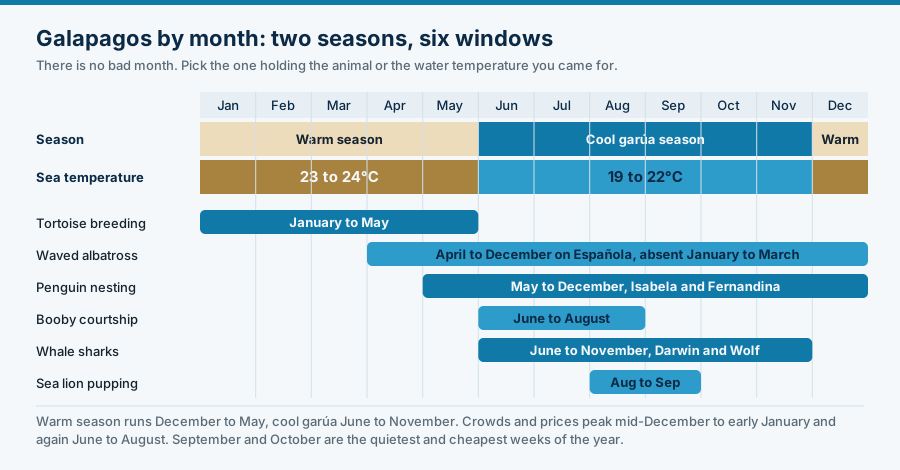
There is no closed season. December to May is the warm season with sea temperatures around 23 to 24°C, calmer water and short heavy showers. June to November is the cool garúa season, 19 to 22°C in the water, greyer skies, choppier crossings and the richest marine feeding. Pick by wildlife and water temperature, not by rainfall.
The sea here swings by roughly five degrees Celsius across the year, and that single number decides more about your trip than the name of any month. I have been to the islands three times and the thing I remember most clearly is not weather at all, it is how differently the same stretch of water behaves. Warm and glassy on one visit, cold and full of life on another. Nobody tells you that when they hand you a calendar of average temperatures.
Is There A Bad Month To Visit The Galapagos?
No month is closed, and no month is empty of wildlife. The archipelago sits on the equator, so daylight barely changes and animals stay resident year-round. What changes is sea temperature, sea state and which species are breeding, and those differences are large enough to reshape your trip.
The islands run on two seasons rather than four, and the naming is genuinely useful. From December to May the warm season brings hotter air, sea temperatures around 23 to 24°C, calmer crossings and short intense showers that usually clear by afternoon. From June to November the cool garúa season takes over, named after the fine coastal mist that hangs over the highlands. Sea temperature drops to roughly 19 to 22°C, skies grey over, and the Humboldt Current pushes nutrient-rich water up from the south.
That upwelling is the reason experienced visitors often prefer the season that sounds worse on paper. Cold water means plankton, plankton means fish, and fish mean everything else. Sea lions hunt harder, seabirds feed closer to shore, and the snorkelling gets busier under the surface even as the sky above it turns flat.
| Warm season, December to May | Cool garúa season, June to November | |
|---|---|---|
| Sea temperature | About 23 to 24°C | About 19 to 22°C |
| Wetsuit | Optional for most people | Recommended, usually provided |
| Sky | Bright, with short heavy showers | Overcast, fine drizzle in the highlands |
| Sea state on crossings | Generally calmer | Choppier, windier |
| Underwater visibility | Clearer on average | More plankton, more marine action |
| Suits | Swimmers, families, photographers wanting blue skies | Snorkellers, divers, seabird watchers |
One thing the two-season split hides is how little the daylight moves. Straddling the equator, the islands get roughly twelve hours of light in every month, and Ecuador keeps no daylight saving, so the boats leave at the same early hour whether you travel in July or in January. What changes is the layering on the dock. A cool-season departure asks for a fleece under your life jacket; a warm-season one asks for sunscreen and a hat before you have finished your coffee. Planning around light is pointless here, which is exactly why local schedules feel so stable across the year.
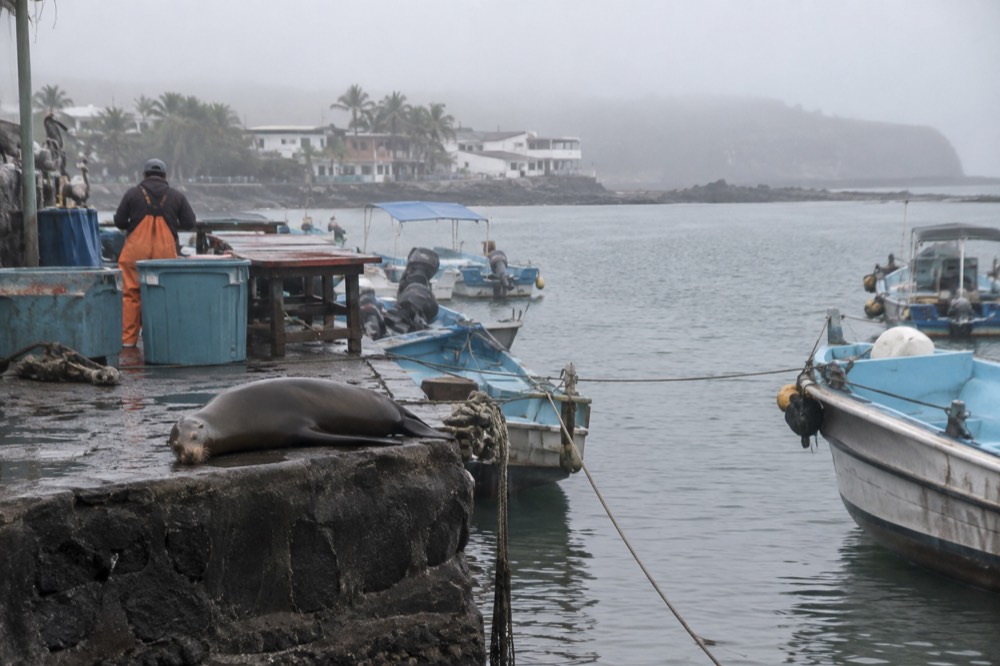
The wetsuit question is the one to settle before you book rather than on the boat. At 23 to 24°C plenty of swimmers are happy in a rash guard, while at 19 to 22°C most people want neoprene within twenty minutes. Most day boats carry suits on board, and the better listings say so plainly: the Pinzón tour, for example, includes short or long wetsuits as you prefer, alongside towels and lunch. If you run cold, read the inclusions line of any tour you are comparing, because a boat that does not carry suits changes the arithmetic of a cool-season trip more than any air temperature does.
Which Month Is The Wettest, And When Should You Not Go?
The heaviest rain falls in the middle of the warm season, typically February and March, arriving as short tropical downpours rather than all-day rain. Avoid January to March if the waved albatross is on your list, since the entire colony is away at sea. Avoid June to November if cold water bothers you.
Rain here rarely cancels anything. A warm-season shower lasts twenty minutes, soaks the trail, and then the sun returns and dries you before you reach the boat. The garúa season produces far less measurable rain but far more grey, a persistent mist over the Santa Cruz highlands that can sit all day. If your mental image of the Galapagos is a blue sky over a white beach, the warm months deliver it more reliably.
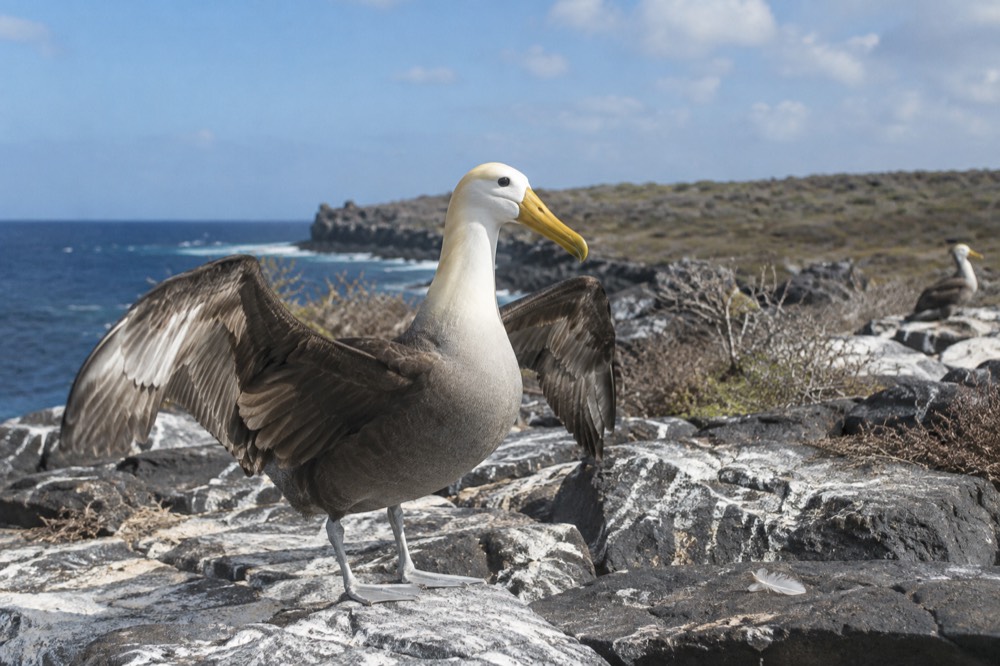
The honest "do not go now" advice is species-specific rather than weather-specific. Waved albatross are on Española from around April to December or January and are absent from the island entirely between January and March, so a January trip built around them will fail. Blue-footed booby courtship, the foot-lifting dance everyone has seen in photographs, peaks between June and August and is much harder to catch outside that window.
Sea state deserves more of your attention than rain does when you are planning. The inter-island ferries that connect Santa Cruz with Isabela and San Cristóbal take two to two and a half hours and cost around 35 USD one way, and in the garúa months those crossings run choppier as a rule. If you are prone to motion sickness, that single fact should shape your season choice as much as any wildlife calendar entry. The day boats to the nearer islands face the same water, which is why calm crossings get cited as a reason to travel in the warm season at all.
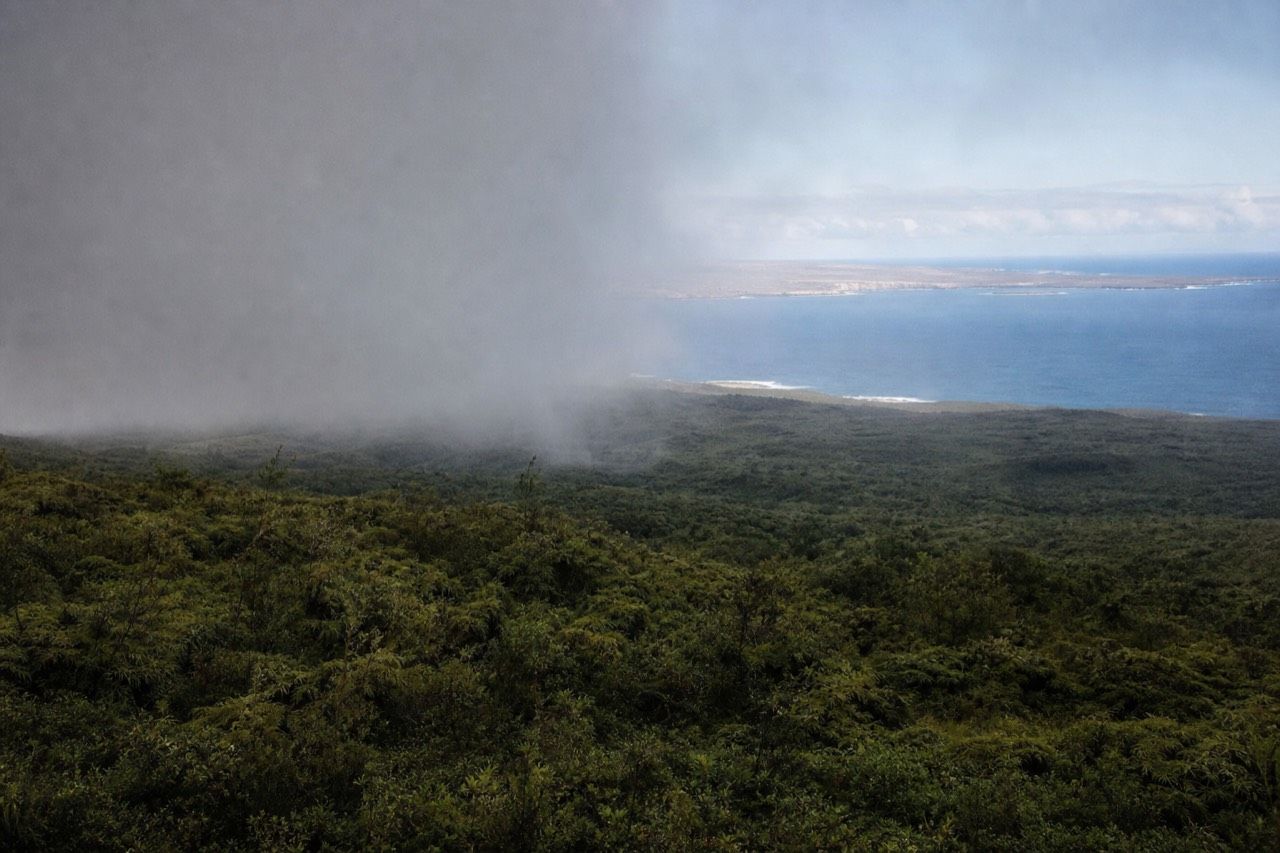
The mist also behaves differently with altitude, which matters if your plans include the highlands. A garúa day can be grey and drizzly up at the tortoise reserves while the coast around Puerto Ayora stays merely overcast, and in the warm season the relationship flips, with the highlands catching heavy showers that the town shrugs off by lunchtime. Pack a light shell whatever the forecast says. On lava fields and sandy trails the rain disappears fast, so waterproof boots are overkill; quick-drying shoes and a foldable rain layer cover almost every downpour you will meet in either season.
What Is The Galapagos Wildlife Calendar Month By Month?
Giant tortoises breed through the hot season from January to May. Blue-footed booby courtship runs June to August. Waved albatross occupy Española April to December. Sea lion pupping peaks in August and September. Whale sharks pass Darwin and Wolf June to November. Penguins nest across May to December.
That list is the real reason to pick a month. Everything else, the temperature and the cloud, is secondary once you know what you specifically want to see.
| Window | What is happening | Where it matters most |
|---|---|---|
| January to May | Giant tortoise breeding season, eggs hatching after about 130 days | Santa Cruz highlands, tortoise reserves |
| April to December | Waved albatross present and courting | Española |
| May to December | Galapagos penguin nesting possible | Isabela, Fernandina, Bartolomé |
| June to August | Blue-footed booby courtship and mating | North Seymour, Española |
| June to November | Whale sharks at Darwin and Wolf | Liveaboard dive routes only |
| August to September | Sea lion pupping peaks | San Cristóbal, Santa Fe, most beaches |
| Year-round | Penguins breed; marine iguanas, tortoises, sea lions resident | All inhabited islands |
Sea lion pupping is the one that surprises people. Beaches in late August and September fill with pups that have no fear of humans and every intention of investigating your camera bag. The two-metre rule still applies, and it applies to you even when the animal is the one closing the distance.
If snorkelling with sea lions is the whole point of your trip, the day boats out of Santa Cruz are the most reliable way to get there. A seven-hour run to Pinzón Island and La Fé Bay covers snorkelling and fishing in one day, and you can Check availability for the dates you are considering. It is the best rated boat in our Santa Cruz day tours list, though like most island operators it shows its price in the booking flow rather than on a listing page.
Two calendar entries deserve a planning note of their own. Whale sharks pass Darwin and Wolf between June and November, but those far-northern sites sit on liveaboard dive routes, so no day tour from the inhabited ports will get you there; if the biggest fish in the sea is the goal, our Galapagos diving tours page is where that planning starts. Penguins nest anywhere from May to December and breed year-round, which makes them the most forgiving headline species on the calendar, and the west coast of Isabela is the classic place to look because the water there stays cold even in the warm months.
The other thing worth internalising is that you will not be timing the wildlife alone. Park rules require visitors to be accompanied by a naturalist guide authorised by the Galapagos National Park Directorate inside protected areas, so the person reading the animals is a professional who does this daily. Day boats build their landings around feeding and resting patterns rather than the clock, which is why itineraries read loosely. Bring a dry bag, wear shoes that can handle a wet landing, and let the guide do the calendar maths.
North Seymour is the island that makes the June to August window concrete. The table above lists it alongside Española as a blue-footed booby courtship site, and it is the closer of the two from Santa Cruz. The North Seymour day trip runs nine hours from Puerto Ayora, from $360, with a bilingual guide, towels and lunch included; the listing shows a rating of 5, though from just three reviews so far, so read the recent feedback yourself before committing. Go between June and August and the courtship dance is the reason everyone is on that boat.
The pattern repeats across the calendar: every month is peak season for something. Matching your dates to the species you actually care about beats chasing a generic best month, because the generic answer does not exist. What exists is a shortlist of two or three animals or behaviours, and a month that serves most of them.
When Is The Galapagos Busiest And Most Expensive?
Visitor numbers peak in the northern hemisphere summer, June to August, and again from mid-December through early January when Ecuadorian and North American holidays overlap. Flights and hotels rise hardest in those windows. April, May, September and October are the quietest and cheapest good months.
The archipelago received 290,404 visitors in 2025, up 4% on the previous year, and the pressure is not spread evenly across the calendar. Ecuadorians make up 38% of arrivals and travel heavily around national holidays, while Americans account for 29% and cluster into summer and Christmas. Add European and Australian visitors into the same July and August peak and you get boats that sell out weeks ahead.
| Period | Crowds | Prices | Practical effect |
|---|---|---|---|
| Mid-December to early January | Highest | Highest | Book flights and boats months ahead |
| June to August | High | High | Popular day boats sell out; best booby courtship |
| April to May | Low to moderate | Moderate | Warm water, calm seas, albatross arriving |
| September to October | Lowest | Lowest | Cool water, sea lion pups, easiest availability |
| February to March | Moderate | Moderate | Warmest water, wettest weeks, no albatross |
Cost is not only about season. The fixed charges, the $200 park fee and the $20 transit card, are the same in every month, and they are laid out fully in the full Galapagos cost breakdown.
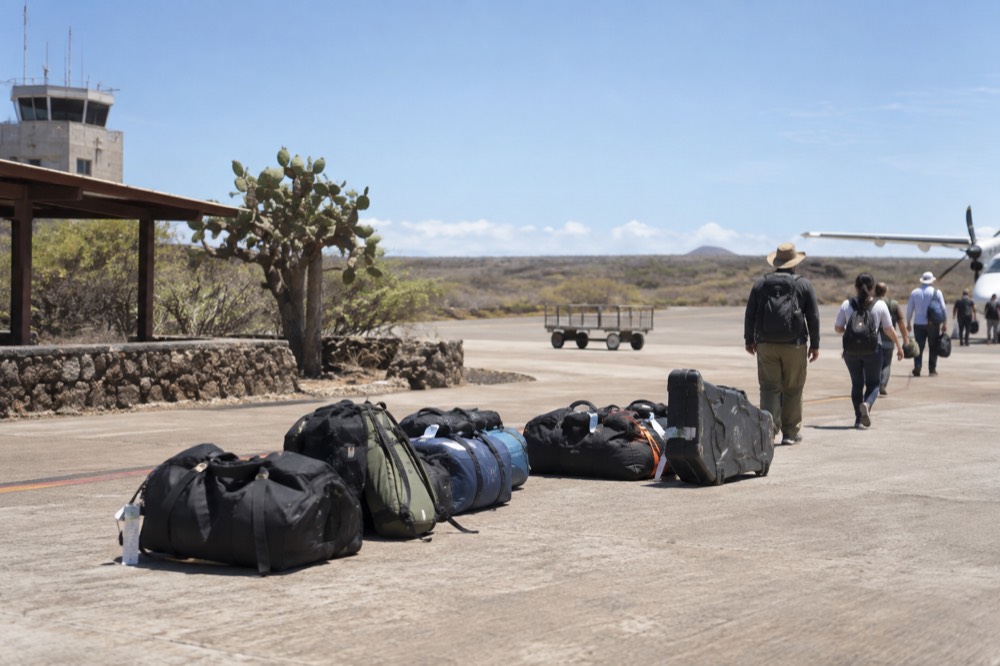
Flights are where peak season bites hardest, because the supply side is fixed. Avianca and LATAM are the only two airlines flying direct from Quito and Guayaquil into Baltra and San Cristóbal, and round-trip fares typically run $250 to $600 depending on dates. The flight itself is short, roughly two hours from Guayaquil and about three from Quito with the stop, but in July and August the seats at the lower end of that range vanish early. Booking the domestic leg together with your international ticket, where the airline allows it, is the usual workaround.
Baggage and biosecurity also eat time at the mainland end. The standard allowance is one checked bag up to 23 kg plus a carry-on of 8 to 10 kg, and every piece, including hand luggage, must pass the SICGAL/Agrocalidad inspection before check-in. Fresh fruits, vegetables, seeds and many animal products are restricted or prohibited outright, and the official ABG list is the reference to check before you pack a snack for the plane. None of this changes with the season, but in a crowded July terminal the queues make it feel as though it does.
On the ground, the quiet months translate into hotel pricing more than tour pricing. Budget rooms in Puerto Ayora start from around $30 to $65 per night and mid-range options from $65 to $150, and September and October are when those bands sit at their lowest. Tours discount less predictably, because boat capacity is limited regardless of demand, but availability is the real prize: in the shoulder months you can decide your week's plan after arrival, which peak-season visitors cannot.
So Which Month Should You Actually Pick?
For warm water and blue skies, choose March or April. For the best marine life and the fewest people, choose September or October. For blue-footed booby courtship, choose June or July. For calm crossings with a young family, choose April or May.
I keep coming back to the same short answer when people ask me directly: April is the most balanced month in the Galapagos calendar. The water is still warm, the seas have settled, the albatross are returning to Española, and the July crowd has not arrived. September is the specialist's answer, colder and greyer but alive underwater, with sea lion pups on every beach and the lowest prices of the year.
| If your priority is | Go in | Why |
|---|---|---|
| Warmest snorkelling water | February to April | Sea around 23 to 24°C, no wetsuit needed |
| Marine life density | August to November | Cool nutrient-rich water, active feeding |
| Booby courtship displays | June to August | Peak mating window |
| Waved albatross | April to December | Colony present on Española |
| Sea lion pups | August to September | Pupping peak |
| Lowest prices and crowds | September to October | Off-peak flights and hotels |
Whatever month you land in, the shape of the trip matters as much as the timing. Work out how many days you need first, because a well-planned five days in a mediocre month beats a rushed nine days in a perfect one.
When your priorities conflict, the calendar forces a trade rather than a tiebreak. Warm water and sea lion pups do not overlap: pupping peaks in August and September, precisely when the sea is at its coldest. The workable compromise is a wetsuit, not a different month, because a good suit turns a 20°C sea into a non-issue for most people. Decide which of your two wishes is weather-dependent and which is gear-dependent, then spend your money on the gear.
Single-species trips need a different discipline again. If waved albatross are the reason you are flying to the equator, the only question that matters is whether your itinerary actually reaches Española between April and December, because the colony is simply not there in the early months of the year. The same logic applies to booby courtship and North Seymour, or to penguins and the Isabela coast. Build the itinerary around the island first, then pick the month, and not the other way round.
How Do The Seasons Change From Island To Island?
The two-season pattern holds across the whole archipelago, but altitude and position sharpen it locally. The garúa mist that greys the Santa Cruz highlands barely touches the lowland coasts, and the waters around the western islands run colder and richer than the central islands at any time of year. In practice your month and your island choice work together, and one can offset the other.
Santa Cruz shows the effect most clearly because its inhabited strip climbs quickly from the coast into farmland. On a garúa morning, Puerto Ayora can sit under plain overcast while the tortoise reserves up the road are wrapped in fine drizzle that lasts the day. In the warm season the relationship flips, with the highlands catching heavy showers that the town dries out from by lunchtime. If a highlands visit is central to your plan, expect the coast forecast to understate what you will feel at altitude in the cool months.
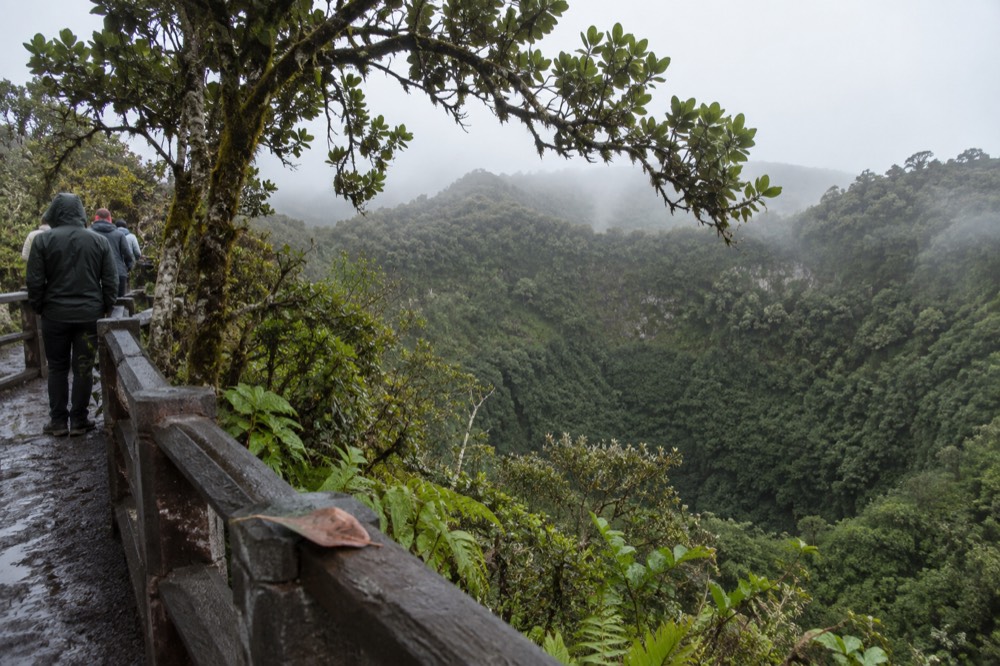
Isabela, the largest island, adds a volcanic layer to this. Puerto Villamil on its southern coast is low, flat and sandy, so its weather tracks the sea closely, while the volcano slopes inland catch the mist on their southern flanks. The island also sits closest to the colder western waters, which is why penguins feature around Isabela even in months when the central islands feel almost tropical. A single ferry ticket from Santa Cruz, two to two and a half hours each way, moves you into a noticeably different climate regime.
The Sierra Negra volcano hike is the standard way to see that vertical weather stack in one morning. It runs five to six hours from Puerto Villamil, from $66.99 per person, with private transport, breakfast with a box lunch, and a Galapagos National Park guide included; the listing shows a 4.3 rating from 24 reviews and free cancellation. Warm-season months give you the better odds of a clear view from the rim, while the garúa months trade the vista for saturated greens on the way up. Either way it is one of the few big Galapagos experiences priced under a hundred dollars.
The practical takeaway is that island choice can rescue a month, and a month can rescue an island. A September trip built around Isabela's western waters feels rich and alive in a way the same month on a central-island beach day does not, and an April morning in the misty highlands often turns out brighter than the garúa statistics suggest. Our Isabela island tours page goes deeper on that trade; the island rewards travellers who commit to it for two or three days rather than treating it as a ferry stopover.
What Does A Full Day On The Water Actually Cost?
Budget in three layers: the fixed park charges, the flights, and the tour itself. The Galapagos National Park entrance fee is $200 per foreign adult and $100 per child under 12, the transit control card is $20 per person, and among the day tours we track the boats run from $185 to $360 per person while the volcano hike sits at $66.99.
The fixed charges are the same in every month and are worth getting right, because they catch out first-time visitors at the airport. The entrance fee is paid to park rangers at Baltra or San Cristóbal on arrival, and it doubled from $100 to $200 effective August 1, 2024, so any older budgeting you have read is stale on this point. The $20 transit control card is handled earlier, through online pre-registration and payment on the official system before you fly. Neither is included in any tour price, and both apply per person regardless of season.
| Tour | Departs from | Duration | Price | Guest rating |
|---|---|---|---|---|
| Sierra Negra Volcano hike | Puerto Villamil, Isabela | 5 to 6 hours | From $66.99 per person | 4.3 from 24 reviews |
| Cabo Rosa tunnels snorkelling | Puerto Villamil, Isabela | 5 hours | From $185 per person | 4.5 from 70 reviews |
| Santa Fe snorkelling and fishing | Puerto Ayora, Santa Cruz | 7 hours | From $229 per person | 4.9 from 91 reviews |
| Pinzón snorkelling and fishing | Puerto Ayora, Santa Cruz | 7 hours | From $249 per person | 4.9 from 154 reviews |
| Floreana snorkelling and fishing | Puerto Ayora, Santa Cruz | 7 to 9 hours | From $259 per person | 4.8 from 41 reviews |
| North Seymour day trip | Santa Cruz / Puerto Ayora | 9 hours | From $360 | 5 from 3 reviews |
Reading the table, the value logic is distance and duration. Seven-hour fishing and snorkelling days from Santa Cruz cluster in the $229 to $259 range, with Floreana's longer water taxi and sailing time pushing it toward the top of the band. The inclusions differ in ways that matter at the margins: the Pinzón tour includes short or long wetsuits, towels, lunch and drinks; Santa Fe includes lunch, bottled water, soda and coffee; Floreana includes the water taxi before and after the tour, all fees and taxes, and snorkel gear. Pinzón also carries the highest review count of any day boat we track, 154 reviews against Santa Fe's 91, both rated 4.9.
Floreana is the one that rewards a second look, because the island is changing faster than any other in the archipelago. In February 2026, 158 juvenile Floreana-lineage giant tortoises were released there, the first tortoises of that lineage back on Floreana in more than 180 years, and by 2025 more than 600 Floreana-lineage hatchlings had already been bred in the captive program on Santa Cruz. The Floreana day tour from Puerto Ayora runs seven to nine hours, from $259 per person, rated 4.8 from 41 reviews, with snorkelling, fishing and the water taxi both ways included. If you want to say you saw an island mid-restoration, this is the boat to be on, and you can Check availability for your dates.
The fuller cost picture, including hotels, ferries and a realistic daily budget by style of travel, is laid out in the Galapagos cost breakdown. The short version is that the tour is rarely the line item that breaks a Galapagos budget. Flights, fees and hotel nights add up faster, which is another argument for the shoulder months, where every one of those lines sits lower at once.
Cruise Or Island Hopping: Which Suits Which Season?
In 2025, 79% of visitors stayed land-based and 21% travelled aboard cruise boats, and both styles work in every season. Cruises typically run $450 to $1,000 or more per person per day against $250 to $350 per person per day for island hopping with hotels, tours and transport included, so the real question is which sites and which sea conditions each style exposes you to.
What a cruise buys is reach. The far sites on the wildlife calendar, Española for the waved albatross and Darwin and Wolf for the whale sharks, sit beyond the range of the day tours we track from the inhabited ports, so reaching them in the right months generally means a cruise or a liveaboard. If albatross are non-negotiable, check that your chosen itinerary actually calls at Española between April and December; not every route does, and for the rest of the year the point is moot anyway.
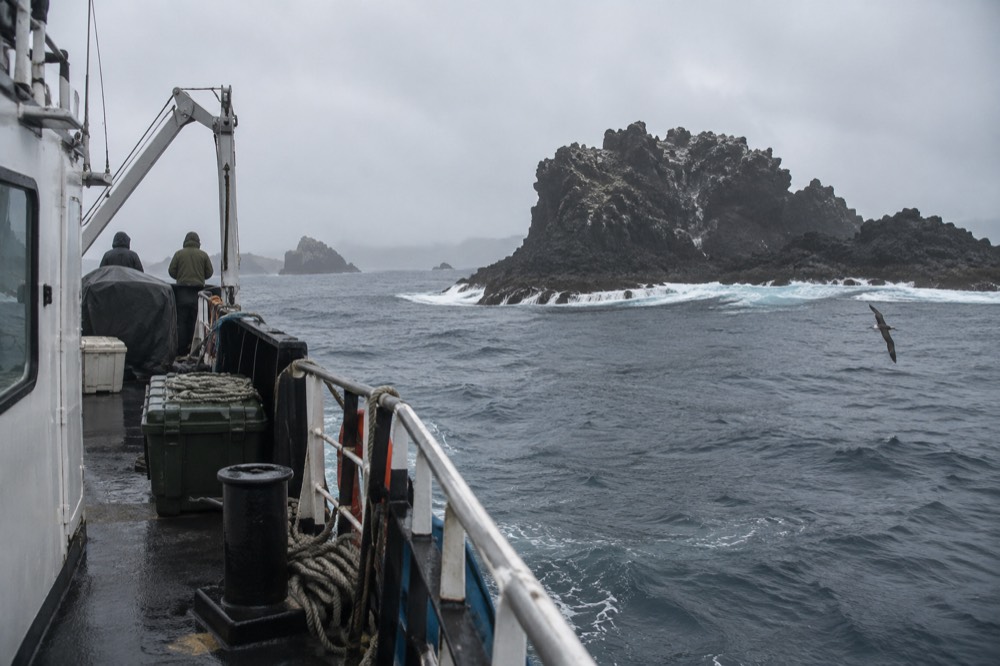
Island hopping buys flexibility and evenings in towns, and in the cool season it also buys shorter exposure to choppy water, since you can pick calmer inshore days for boat trips and save highland visits for grey mornings. The ferries between Santa Cruz, Isabela and San Cristóbal cost about $30 to $35 one way and take two to two and a half hours, with no direct link between Isabela and San Cristóbal, so routes run through Santa Cruz. The classic land-based arc, three or four nights on Santa Cruz with a hop to Isabela or San Cristóbal, is covered on our island hopping page.
Whichever base you choose, if marine life is your priority then Isabela deserves the ferry ticket. The Cabo Rosa tunnels, the lava formations usually called Los Tuneles, sit close to Puerto Villamil and concentrate sea life the way a reef does, and the cool season's nutrient-rich water makes them busier still. The snorkelling tour runs five hours from Puerto Villamil, from $185 per person, rated 4.5 from 70 reviews, and includes breakfast, a wetsuit, snorkel gear and private transport, with free cancellation on the listing. It is the strongest sub-$200 marine day we track, and it pairs naturally with a Sierra Negra morning for a two-activity Isabela stay.
For travellers with very little time, there is a middle path that skips most of the planning. The 3-Day Galapagos Trip for Traveler Without Much Time is priced per group rather than per person, from $5600, and starts at José Joaquín de Olmedo International Airport with the trip running through San Cristobal. It includes the hotel, breakfast and lunch, a navigable snorkelling tour, transfers, and a tour leader who photographs the whole thing; there is no guest rating on the listing yet, and free cancellation applies. It suits a long weekend more than a slow exploration, which is precisely the gap it fills.
How Far Ahead Should You Book For Each Season?
For June to August and mid-December through early January, book flights and boats months ahead. For April, May, September and October, booking a few weeks out is usually enough, and some things can safely wait until you are on the islands.
The squeeze is structural, not psychological. Two airlines serve the islands with a fixed number of seats, and the number of berths on boats is capped year-round, so a 4% annual rise in visitors lands entirely on availability rather than capacity. In July and August the popular day boats out of Puerto Ayora sell out weeks ahead, and domestic fares climb toward the top of their range. Reserve the flights first, because everything else can flex around them.
Cancellation policies are the tool that makes early booking low-risk. Several listings we track, including the Cabo Rosa tunnels trip, the Sierra Negra hike and the 3-day short trip, offer free cancellation, which means locking a peak-season date early costs nothing but attention if your plans shift. Read the terms on the live listing before you rely on that, because cancellation windows differ between operators and the details sit in the booking flow rather than the summary.
The one thing you cannot leave late is guided access itself. National park rules require a naturalist guide in protected areas, so turning up without bookings and wandering in on your own is not a fallback that exists. In the quietest weeks you can arrange next-day tours from Puerto Ayora, and that spontaneity is a genuine perk of September and October, but the headline trips still deserve a day or two of lead time even then.
What Should You Pack For Each Season?
Pack for the water, not the air. The cool season asks for a fleece, a windproof layer, motion-sickness remedies for the crossings and a wetsuit you will actually wear; the warm season asks for serious sun protection and a light shell against the afternoon showers.
Across three trips I have stopped packing for the forecast and started packing for the sea temperature, because that is the number that decides comfort on the water. High-factor sunscreen and a wide hat belong in the bag in every month; the equatorial light does not negotiate with cloud cover. Quick-dry clothes beat cotton, a dry bag protects cameras on every boat day, and water shoes earn their space on rocky landings in both seasons.
The warm season is the easier list. A rash guard covers most snorkellers in 23 to 24°C water, the afternoon downpour needs nothing more than a packable rain layer, and evenings stay warm enough for shorts. If you are travelling with children the same kit works doubled: the showers are short, the sun is the one variable to manage, and a spare set of dry clothes on the boat solves most of what the day can throw at a family.
The cool season is where the extras earn their weight. A fleece for early departures and highland visits, a windproof jacket for the crossings, and tablets or bands for motion sickness on the two-hour inter-island legs. Most boats supply wetsuits, and the listings that include towels, like the Pinzón and North Seymour trips, spare you the wet-towel-in-the-daypack problem that nobody warns you about. Pack the wetsuit expectation rather than the suit itself, and the garúa months stop looking like a compromise.
Is the rainy season a reason to avoid the Galapagos?
No. Warm season rain comes in short heavy bursts, usually in the afternoon, and clears quickly. Day tours run through it. The greyer, drizzlier feel actually belongs to the cool garúa season, which produces less rain but more cloud.
Do I need a wetsuit for snorkelling?
Between June and November the water sits around 19 to 22°C and most people want one. Operators usually include a shorty or full wetsuit in the day tour price. In the warm season many swimmers manage without.
Which month has the best underwater visibility?
Visibility is generally clearer in the warm season, December to May, because there is less plankton in the water. The cool season trades some clarity for far more marine activity, which is why many divers prefer it anyway.
Can I see giant tortoises at any time of year?
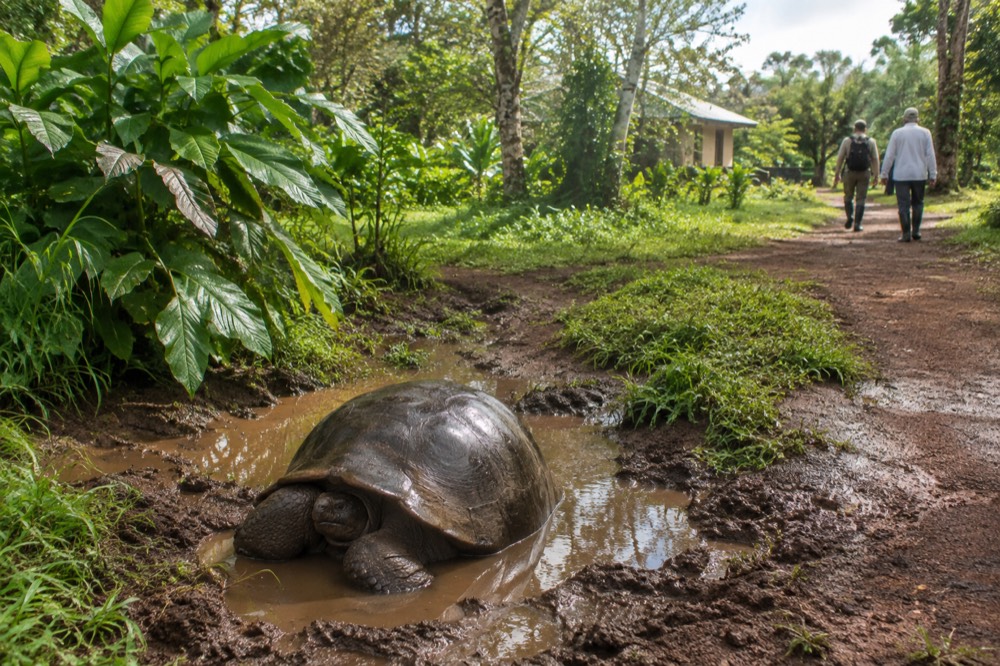
Yes. Tortoises are resident and visible year-round in the Santa Cruz highlands and at breeding centres. What changes is behaviour: the hot season from January to May is when breeding happens, with eggs hatching roughly 130 days later.