How Much Does A Galapagos Trip Actually Cost?
Two hundred dollars in cash before you leave the airport, and that is only the first line of the budget. Here is what the rest of it looks like.
Short answer
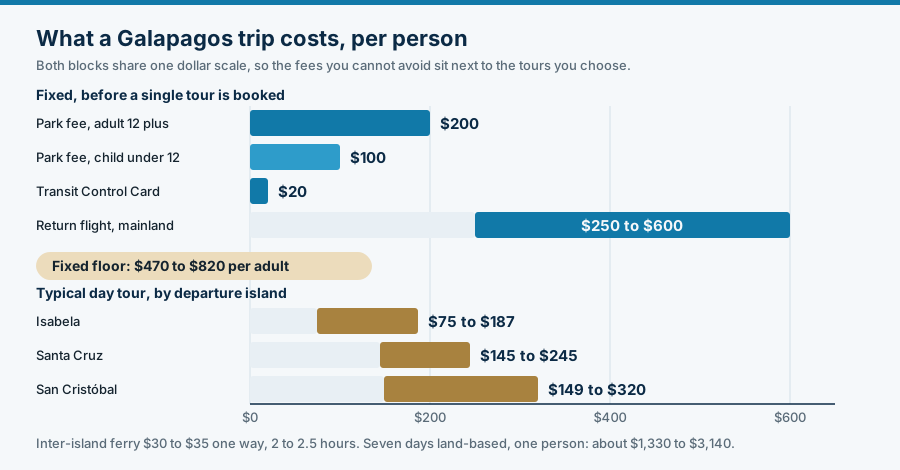
Budget roughly $250 to $350 per person per day for a mid-range land-based trip, plus fixed extras that hit everyone: a $200 national park fee, a $20 transit control card, $250 to $600 for round-trip flights from mainland Ecuador, and $30 to $35 per inter-island ferry. Cruises run $450 to $1,000 or more per person per day.
The first time I flew out to the islands, in 2021, the national park entrance fee was one hundred dollars. I paid it again in 2023 when I booked a cruise at the last minute. Anyone landing at Baltra today counts out two hundred dollars in cash at a desk before they have seen a single tortoise, and that one line tells you most of what you need to know about Galapagos pricing. The cost is set by protection and logistics, not by what the market will bear.
Why Is A Galapagos Trip So Expensive?
Almost everything on the islands arrives by boat or plane from the mainland, guiding at protected sites is legally restricted to licensed naturalists, and visitor numbers are capped by permit. Those three facts, not greed, put a floor under every price you will be quoted.
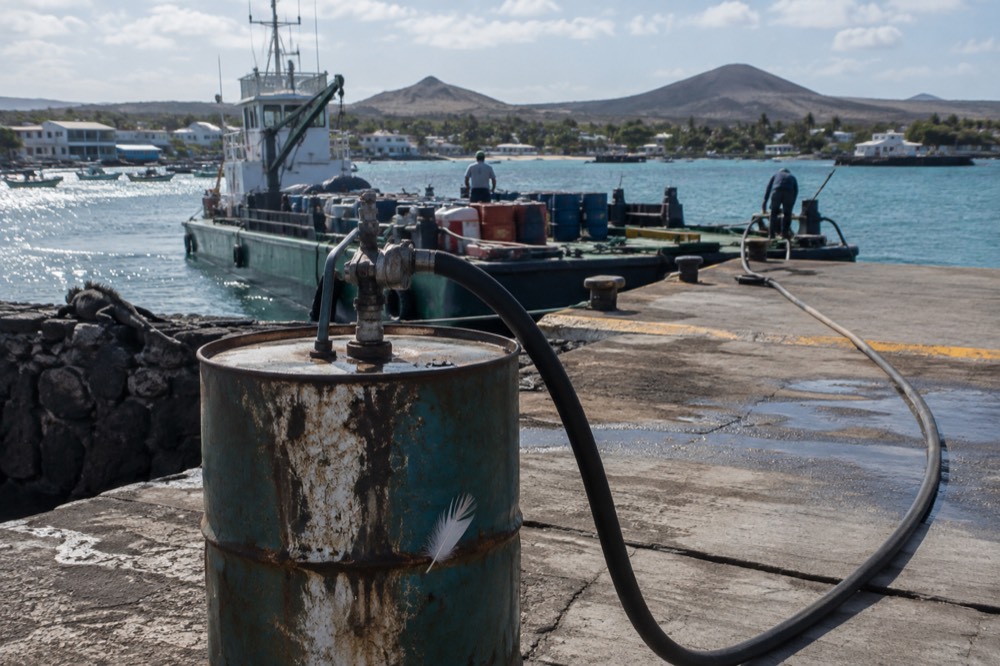
Fuel, food, building materials and bottled water all cross roughly a thousand kilometres of open Pacific before they reach a shop in Puerto Ayora. A boat that carries sixteen snorkellers needs a national park permit, a licensed captain and a GNPD-authorised naturalist guide on board at every protected visitor site. None of that scales the way a city walking tour does. When you compare a $180 Galapagos day boat with a $40 excursion somewhere else, you are comparing two entirely different cost structures.
The second reason is that the archipelago charges you before it sells you anything. Mainland Ecuador is cheap. Cross to the islands and you enter a separate fee regime, one that no tour price online includes, payable by you in cash at the airport.
The rules themselves carry a price, too. Every visitor inside a protected area must be accompanied by a naturalist guide authorised by the park directorate, and on a small shared boat that guide's day is spread across a dozen passengers rather than a hundred. Drones are banned outright across the national park and the marine reserve, so nobody shoots the cheap aerial marketing that subsidises other destinations. You are also required to keep at least two metres from the wildlife even when it waddles straight at you, which limits how many people can stand at any one viewpoint at any one time and pushes operators toward smaller groups.
The market is small and strongly seasonal, which is the quieter part of the answer. The 290,404 people who visited the protected areas in 2025, up 4% on the year before, would be a slow summer for a single mid-sized European city. Nearly four in ten of them were Ecuadorian and just under three in ten American, and most arrive inside a compressed high season. Operators price for the peaks and have to survive the troughs on the same revenue.
What Do You Pay Before You Have Booked A Single Tour?
Four fixed costs hit every foreign visitor: the $200 park entrance fee, the $20 transit control card, a round-trip flight from Quito or Guayaquil at $250 to $600, and $30 to $35 for each inter-island ferry. For a couple doing two ferry hops, that is well over $1,000 before any tour.
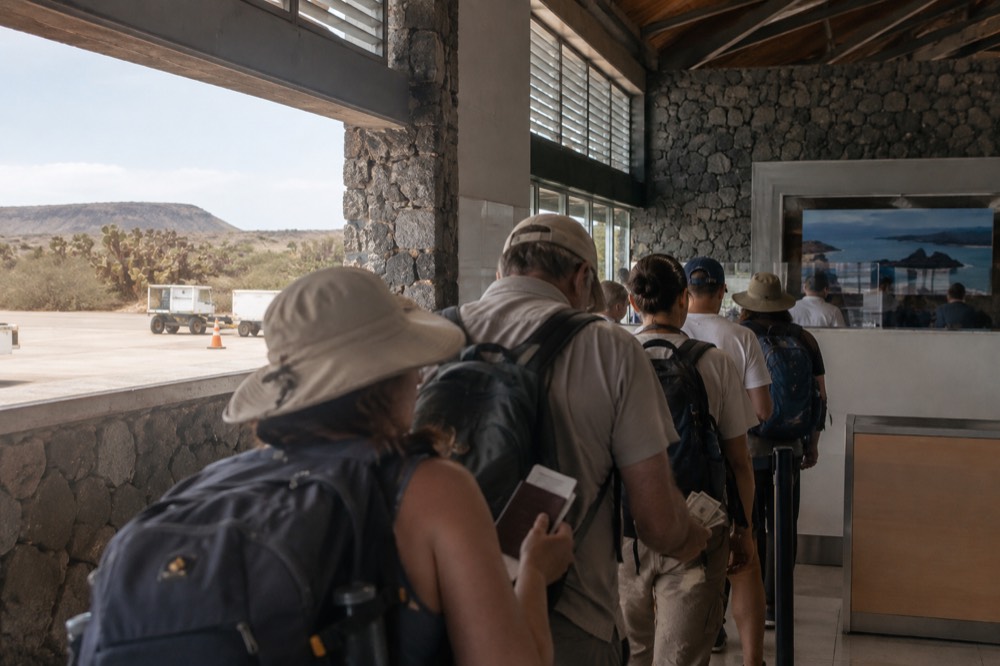
The park fee doubled from $100 to $200 for foreign adults over twelve, effective 1 August 2024, and it is published by the park directorate rather than by any tour operator. Children under twelve pay $100. You pay it to park rangers on arrival at Baltra or San Cristóbal, and cash is the reliable option. The transit control card, the TCT run by INGALA through the CGREG system, is $20 per person and is registered and paid online before you travel.
| Fixed cost | Amount per person | When and where you pay |
|---|---|---|
| National park entrance fee (adult, foreign) | $200 | Cash, on arrival at Baltra or San Cristóbal |
| National park entrance fee (child under 12, foreign) | $100 | Cash, on arrival |
| Transit Control Card (TCT / INGALA) | $20 | Online before travel, via CGREG |
| Round-trip flight, mainland to islands | $250 to $600 | At booking, Avianca or LATAM |
| Inter-island ferry (lancha), one way | $30 to $35 | Cash at the dock, 2 to 2.5 hours each way |
One detail that catches people: there is no direct ferry between Isabela and San Cristóbal. You transfer through Santa Cruz, which means two crossings and most of a day gone. That routing constraint shapes your whole itinerary, and it is worth reading alongside how many days you actually need before you lock in flights.
The flight itself is a two-airline market, which is worth understanding before you shop. Avianca and LATAM are the only carriers flying direct from Quito and Guayaquil into Baltra and San Cristóbal, roughly two hours from Guayaquil and around three from Quito including the stop. One-way fares start around $150 and round trips commonly sit between $285 and $600 depending on dates and airline. Baggage is tight by international standards: one checked bag up to 23 kg and a carry-on of 8 to 10 kg. Every bag, hand luggage included, passes a SICGAL biosecurity inspection at Quito or Guayaquil before check-in, and fresh fruit, vegetables, seeds, plants and many animal products are restricted or prohibited. Eat your mainland snacks before the airport; the inspection is not a formality.
One more note on money itself. The park fee is collected on arrival, and there is no official confirmation that card payment is accepted for it at the airport, so the safe plan is $200 per adult in cash, in hand, before you land. The TCT is the opposite animal: it exists only online, pre-registered and prepaid through the official system before travel. Get both right and the arrival queue takes minutes instead of turning into a negotiation.
What Does A Galapagos Day Tour Cost By Island?
Day tours from Santa Cruz typically run $145 to $245. From San Cristóbal, $149 to $320. Isabela is the cheapest departure point at $75 to $187, largely because its headline trips are shorter boat rides or land-based hikes rather than long ocean crossings.
The spread inside each island comes down to boat time and fuel. A three-hour bay tour or a highlands tortoise reserve visit sits at the bottom. A ten-hour run out to Bartolomé, with a long crossing each way and a full crew, sits at the top. Snorkelling trips to Pinzón or Santa Fe land in the middle, usually around seven hours door to door with lunch and gear included.
| Departure island | Typical day tour band | What sits at the low end | What sits at the high end |
|---|---|---|---|
| Santa Cruz | $145 to $245 | Bay tour, highlands and lava tunnels (3 to 4 hours) | Bartolomé full day (10 hours) |
| San Cristóbal | $149 to $320 | Shorter Kicker Rock snorkel runs | Full 360 circumnavigation (9 hours) |
| Isabela | $75 to $187 | Sierra Negra volcano hike, Tintoreras half day | Los Túneles / Cabo Rosa snorkelling |
Isabela is where a tight budget breathes. A hiking day on the volcano rim costs a fraction of a boat day and still gives you one of the largest active calderas on earth. If your money is running low by day five, the Sierra Negra volcano hike is the honest answer, and you can Check availability before you commit. The rest of the Isabela day tours sit in the same friendly band.
A note on prices you see quoted online: several island operators do not publish a fixed headline figure, because the rate moves with group size, fuel and season. Where that is the case the number is shown in the booking flow rather than on a comparison page, and any site printing a confident third-party price for those listings is guessing.
To make the bands concrete, it helps to look at what individual Santa Cruz listings charge and what each one bundles. The bottom of the range is a half-day affair with a meeting point in town rather than a hotel pickup: you walk to the dock, you get a guide and a mask, and you are back by early afternoon. That kind of trip exists because not every day of your week needs to be a boat day, and mixing one or two of them into an itinerary is how the low end of the seven-day maths stays honest.
The clearest example at the bottom of the band is the Half Day Bay Tour in Santa Cruz Island. It runs three hours from Puerto Ayora, costs from $75 per person, and carries a 4.3 rating from 61 reviews, with free cancellation on the listing. The price covers a professional guide, snacks and snorkelling equipment, mask and fins, while the operator, Perfect Destiny, gives you a meeting point rather than a pickup. If your budget says one paid excursion and free sites for the rest of the week, this is the shape of that excursion.
Even cheaper, and technically not a boat day at all, is the highlands tortoise circuit on Santa Cruz. Giant tortoises wander through ranchland in the highlands, the same area riddled with lava tunnels you can walk through, and a short guided visit covers both without a fuel-heavy crossing or a marine park permit. Somewhere between 20,000 and 25,000 giant tortoises live across the islands today, and Santa Cruz highlands is one of the easiest places on the archipelago to see them at liberty, which is why this trip anchors the low end of the Santa Cruz band.
The Giant Turtle Watching and Lava Tunnels Tour is the concrete option: three hours from Santa Cruz, from $39.99 per person, rated 4.8 from 80 reviews, with free cancellation and coffee or tea included. The operator, Galápagos Frontier, runs it as a private tour, so you are not tied to a shared boat schedule. For a family, two of these cost less than one mid-range boat trip, and neither involves seasickness.
The middle of the band belongs to the snorkelling day boats, and Pinzón is the one to study closely. The island itself is closed to landing, so this is a water day: the boat anchors off Pinzón and La Fé or Palmitas bay, you snorkel through dense fish life with resident sea lions, and the crew fish for part of the lunch on the way home. Pinzón also has one of the park's quiet success stories attached to it, with more than 1,000 juvenile Pinzón giant tortoises repatriated after black rats were eradicated in 2012, the first time in a century that hatchlings survived there naturally.
The Day Tour to Pinzón Island and La Fé/Palmitas Bay with snorkeling and fishing runs seven hours from Puerto Ayora and costs from $249 per person. It carries a 4.9 rating from 154 reviews, the highest review count of any day boat we list, and the price is genuinely broad: wetsuits short or long as you prefer, snorkelling equipment, lunch, soda, all fees and taxes, even towels, with Guiding Galapagos Expeditions as the operator. Check availability once you have your dates, because the small-boat days are the ones that fill.
There is also a middle path for Isabela itself. If you would rather not commit two nights to the island, the Day Tour to Isabela Island with Tintorera Islet, Snorkeling Wetlands & Flamingos runs ten hours from Puerto Ayora, from $285 per person, rated 4.7 from 138 reviews. Guiding Galapagos Expeditions includes wetsuits, snorkelling equipment, lunch, drinks, the fuel surcharge and even the pier fee in Puerto Ayora inside that number. You see the islet, the wetlands and the flamingos in one long day and sleep on Santa Cruz, trading depth for simplicity.
At the top of the band sit the long crossings, and Bartolomé is the reference point. Ten hours door to door, an early start, and the most photographed landscape in the archipelago: a spear of golden sand under Pinnacle Rock with penguins in the shallows below. This is the trip people mean when they say they came to the Galapagos for the postcard, and it is priced accordingly, because the boat burns most of its day getting there and back.
The Bartolome Island Full Day Tour is the listing to compare against. It costs from $378 per person, which sits above the published shared-boat band because the price bundles hotel pickup from Santa Cruz, a bilingual professional guide, lunch, snacks and all taxes, fees and handling charges. Rated 4.8 from 21 reviews and operated by Galapagos Tours Nature Galapagos & Ecuador, it is a fair picture of what a fully loaded marquee day costs once nothing is left to pay on the dock. If you book only one expensive day all week, this is the category it belongs to.
Land-Based Or Cruise: What Is The Real Per-Day Difference?
Mid-range land-based island hopping runs about $250 to $350 per person per day including hotel, food and one excursion. Cruises run roughly $450 to $1,000 or more per person per day, or $3,000 to $10,000 and up for a week. The cruise premium buys remote islands, not better wildlife on the inhabited ones.
That gap is the single biggest lever in your budget, and it explains why 79% of the 290,404 people who visited in 2025 stayed on land. A cruise fare is all-inclusive in a way a land trip never is, so compare like for like: cabin, all meals, all excursions, all guiding, versus hotel plus restaurants plus tours booked one at a time.
| Cost line | Land-based, mid-range | Cruise, mid to upper range |
|---|---|---|
| Per person per day | $250 to $350 | $450 to $1,000+ |
| Accommodation | Hotel $30 to $65 budget, $65 to $150 mid-range | Included in fare |
| Meals | Paid separately, town restaurants | Included |
| Daily excursion | $75 to $320 depending on island | Included, two sites most days |
| Inter-island transport | $30 to $35 per ferry, on your own time | Included, overnight sailing |
| Flexibility to skip a day | Full | None |
The trade is real in both directions, and I have argued it out properly in the cruise versus land-based comparison. For pure budget purposes: land-based wins, and it is not close.
The cruise share of the market tells you how most people resolve this: 21% of 2025's visitors sailed, 79% stayed ashore. But a cruise does buy things a hotel cannot. Española's waved albatross, present for breeding from April through December and absent only in the early months of the year, is reachable almost exclusively by live-aboard. The same goes for the whale shark season at Darwin and Wolf, peaking June through November. If either of those is the reason you are flying out, the cruise premium is not a premium, it is the ticket.
The honest hybrid deserves a name, too. Base yourself on Santa Cruz, sleep in a mid-range room, and spend selectively on the two or three marquee day boats that reach the places a town-based day cannot. You keep the flexibility of island hopping, eat in town at mainland-adjacent prices, and still get proper guided boat days. For most first-time visitors, that plan beats both purist options on value per dollar.
What Does A Seven-Day Land-Based Trip Actually Add Up To?
A realistic seven-day, land-based Galapagos trip for one person, staying mid-range and taking four day tours, comes to roughly $2,100 to $3,000 including the park fee, transit card, flights and ferries. Two people share almost nothing except a hotel room, so a couple should budget close to double.
Here is the worked version, using the bands above rather than a best case. It assumes arrival at Baltra, four nights on Santa Cruz, three on Isabela, one ferry each way, and four excursions.
| Line item | Low | High |
|---|---|---|
| Round-trip flight from Quito or Guayaquil | $250 | $600 |
| Park entrance fee | $200 | $200 |
| Transit Control Card | $20 | $20 |
| Ferries, Santa Cruz to Isabela and back | $60 | $70 |
| Hotels, 6 nights | $180 | $900 |
| Food and water, 7 days | $210 | $420 |
| Four day tours (mixed islands) | $370 | $850 |
| Airport transfers, taxis, water taxis | $40 | $80 |
| Seven-day total, one person | $1,330 | $3,140 |
The low column is genuinely achievable if you stay in $30 hostels, eat at the Charles Binford street kitchens in Puerto Ayora, and pick Isabela hikes over Bartolomé boat days. The high column is a comfortable trip with a good room and the marquee excursions. Most people land between $2,100 and $2,600.
Read the table by how much control you have over each line. Flights, the park fee and the TCT, together $470 to $820, are fixed the moment you book the plane, and the ferry pair is close to fixed at $60 to $70. Everything else, hotels, food and tours, roughly $760 to $2,170 of the spread, is a dial you turn day by day. This is why two travellers on identical flights can spend wildly different totals without either of them being wrong.
The four-tours line is where people over- and under-spend. Two highland walks plus a bay tour plus one marquee boat day lands you near the low figure. Two ten-hour crossings plus a Pinzón snorkel day pushes you toward the top. If you would rather compress Isabela into a single long day instead of two nights and a ferry pair, the ten-hour Isabela, Tintoreras and flamingos trip from Puerto Ayora at from $285 per person is the alternative, and against the cost of two hotel nights and two ferry tickets it is closer than it first looks.
Where Can You Cut Cost Without Ruining The Trip?
The three biggest savings are staying land-based instead of cruising, basing yourself on one island to avoid ferry days, and choosing Isabela excursions over long Santa Cruz boat crossings. Skipping the park fee is not an option, and skipping a naturalist guide is illegal at protected sites.
Book flights early, because island routes are thin and fares climb hard in July, August and December. Eat where the boat crews eat. Bring your own snorkel mask if you have one, since rental is included on most day boats but fit matters more than price. Free sites cost nothing at all: Tortuga Bay on Santa Cruz is a forty-minute walk from town along a paved trail, and it is as good as anything you will pay for. I have walked it on every trip and never once wished I had booked something instead.
What not to cut: the guided day boats themselves. Those are the reason you flew here. Cutting from four excursions to two to save four hundred dollars, on a trip that already cost you two thousand to reach, is the worst trade on the list. Decide first which island to base yourself on, then spend the excursion budget from there. The Conservancy's trip planning notes are a sober starting point for the rest.
Timing is the quiet lever that never appears on an invoice. The cool season from June to November drops average sea temperatures to between 66 and 72°F, and that is when a wetsuit stops being optional on long snorkel stops. Several of the listings we track include wetsuits in the headline price, Pinzón and the Isabela day tour among them, so check that line before you rent anything. In the warm season, December to May, the water sits at 74 to 76°F and a rash guard is often enough, which quietly deletes a rental line from your budget.
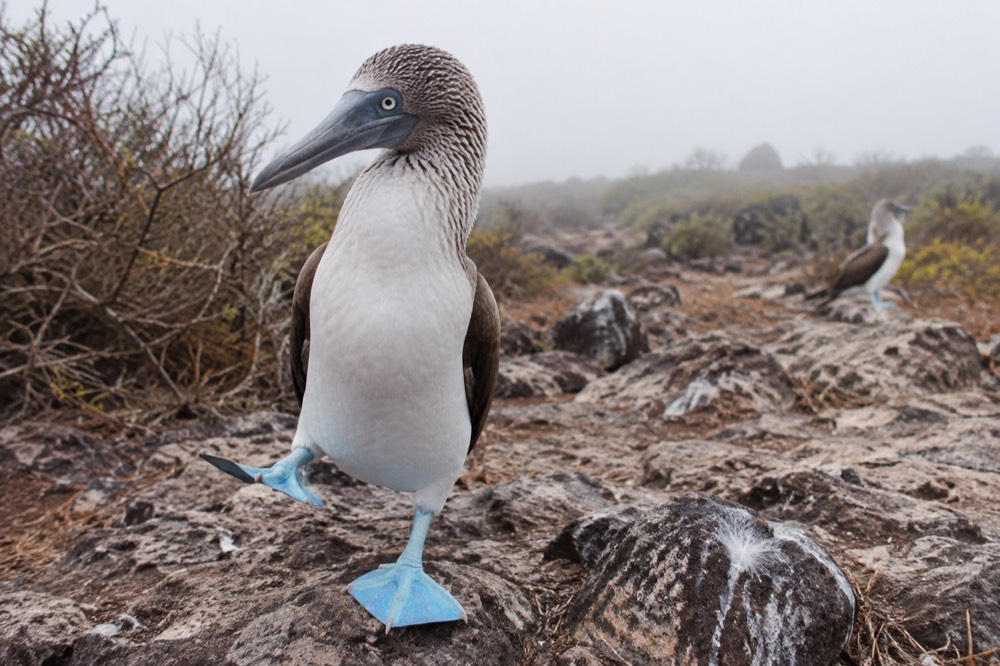
The other free lever is travelling when the show is on. Blue-footed boobies court and mate between June and August, and sea lion pupping peaks in August and September, with the colonies loud, crowded and completely viewable from public beaches. Giant tortoises breed mainly in the hot months, January to May. None of this costs a dollar more than travelling off-peak, and in some years it should be the thing that picks your dates for you.
Keep the small line items honest as well. The transfers, taxis and water taxis line of $40 to $80 is real money on a short trip, and card acceptance on Isabela is patchy, so a cash float saves you from accepting anyone's inconvenient terms on the dock. Bottled water is priced the way everything else on the islands is priced, which is to say it crossed a thousand kilometres of ocean before it reached you. A filter bottle is the least glamorous and most reliable saving on the list.
What Do Day Tour Prices Actually Include?
More than the headline number suggests, and the differences between listings matter more than the differences between the numbers. On the better day boats, snorkel gear, wetsuits, lunch, drinks and all park fees ride inside the price; on the short local trips, you are paying for the guide and little else.
The table below puts the five listings discussed above side by side, exactly as their listings describe them, so you can see what a given price actually buys before you compare it with another.
| Tour | Price | Duration | Rating and reviews | Included in the price |
|---|---|---|---|---|
| Half Day Bay Tour, Santa Cruz | from $75 per person | 3 hours | 4.3 from 61 reviews | Professional guide, snacks, snorkel equipment, meeting point in town |
| Giant Turtle Watching and Lava Tunnels, Santa Cruz | from $39.99 per person | 3 hours | 4.8 from 80 reviews | Private tour, coffee and tea |
| Pinzón Island day tour, from Santa Cruz | from $249 per person | 7 hours | 4.9 from 154 reviews | Snorkel gear, wetsuits, lunch, soda, all fees and taxes, towels |
| Bartolomé full day, from Santa Cruz | from $378 per person | 10 hours | 4.8 from 21 reviews | Hotel pickup, bilingual guide, lunch, snacks, all taxes and fees |
| Isabela, Tintoreras and Flamingos, from Santa Cruz | from $285 per person | 10 hours | 4.7 from 138 reviews | Snorkel gear, wetsuits, lunch, soda, pier fee, fuel surcharge |
Two words do a lot of work in those listing descriptions. "Included" means the item is not a dockside surprise, and "all fees and taxes" means you will not be asked for a park or pier contribution on the morning of the trip. Where a listing says wetsuits, it means both lengths, short or long, as you prefer, which matters more than it sounds in the cool season when the water sits in the high 60s Fahrenheit.
Read the pickup line as carefully as the price line. The bay tour gives you a meeting point; the Bartolomé listing includes hotel pickup across Santa Cruz. Neither is a better deal in the abstract, but if you are staying far from the dock, the meeting-point trip quietly adds taxi money and an earlier alarm. A cheap tour with three extras payable on the day is sometimes the worse buy than an expensive one with nothing left to pay, so add the totals up before you rank them.
Is It Cheaper To Book Tours Before You Fly Or Once You Are On The Islands?
Book the marquee long-distance boats before you fly, and fill in the short local trips once you are on the ground. The savings are small in either direction; the risk you are actually managing is seats, not price.
The ten-hour crossings and the full-day Isabela trip run on small passenger loads, and the popular dates fill first. If Bartolomé is the centrepiece of your week, hold that seat before you hold anything else, because no amount of local haggling in Puerto Ayora conjures a boat that has already left the dock. The same logic applies in peak weeks to any trip that only departs on certain days.
The short trips are the opposite. Tortoise highlands visits, bay tours and volcano hikes run frequently and rarely fill the same way, and deciding them on the island lets you work around the weather, your energy and the friends you have made by day three. Booking ahead costs you nothing on the flexible ones, either: several of the listings we track carry free cancellation, the Sierra Negra hike, the tortoise and lava tunnels tour and the bay tour among them, so an early booking is not a trap.
One practical note cuts across both approaches. Some operators collect the balance in cash on the day, so ask before you fly how the remainder is settled, and carry accordingly. The day trips overview is the sensible place to see which of the marquee days run on which schedule before you commit your week to one island.
Does The Season You Travel In Change The Price?
It changes flights and hotels more than it changes tour prices, and it changes what you see more than either. July, August and December are the expensive months; the sea, not the calendar, is the main comfort variable.
| Warm season, December to May | Cool season, June to November | |
|---|---|---|
| Average sea temperature | 74 to 76°F (23 to 24°C) | 66 to 72°F (19 to 22°C) |
| Wetsuit | Rarely needed for short swims | Usually welcome on snorkel stops |
| Signature wildlife | Giant tortoise breeding, January to May | Booby courtship June to August, sea lion pupping peaks August and September, whale sharks at Darwin and Wolf June to November |
| Flight price pressure | December holidays | July and August |
The wildlife column is the one people underuse. A visitor in August gets booby courtship dances, peak pupping and the whale shark window all at once, on the same fixed $200 park fee a March visitor pays. A visitor in March gets warmer water, greener lowlands and tortoise breeding season instead. Neither month is a better buy in the abstract; the honest move is to pick the wildlife you actually care about and let it choose the dates.
The sea temperature line affects the tour budget directly, because a cold-water trip without a wetsuit included becomes a rental trip, and a warm-water trip makes the rental unnecessary. If you are travelling in the cool season and torn between two similar listings, the one that includes wetsuits is usually the one to take, even at a slightly higher headline number. Check the inclusions before you let a ten-dollar difference decide a ten-hour day.
What Does A Trip Priced Per Group Actually Mean?
Some short private itineraries quote one number for the whole travelling party, not per head. The headline looks enormous next to a $75 day tour until you divide it by the people travelling with you, and for a full group the per-head arithmetic can land close to the ordinary land-based band.
Per-group pricing is common for private, multi-day packages because the operator incurs the same costs whether two people or six show up: one tour leader, one set of transfers, one block of hotel rooms, one boat charter. When you compare a per-group number against a per-person number you are comparing unlike things, so the first move is always to divide. The second move is to check what the group price covers, because these listings vary more than shared day tours in what they bundle.
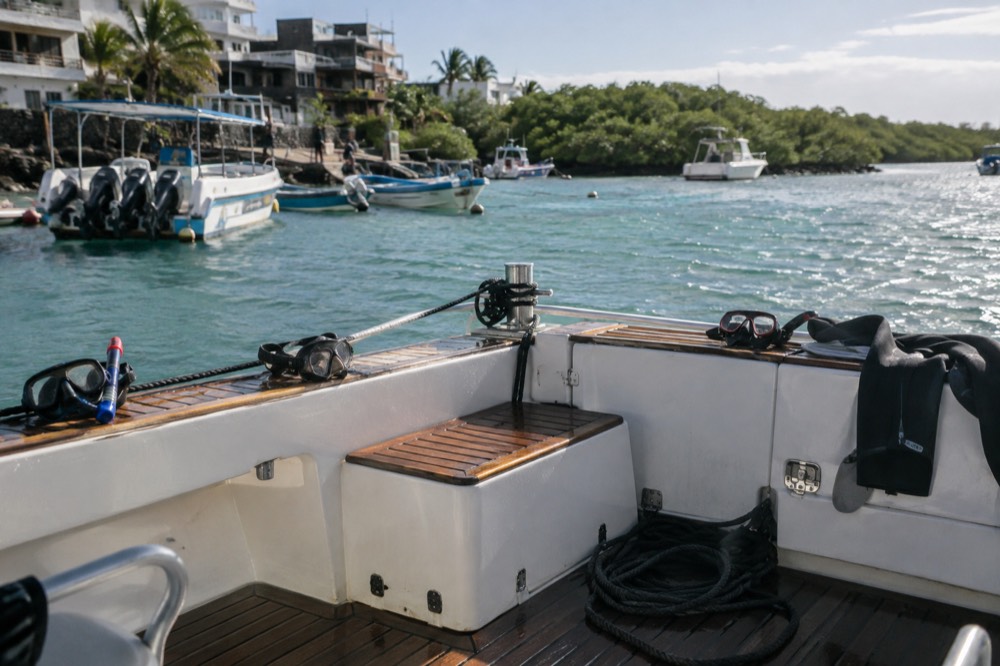
The concrete example from the listings we track is the 3-Day Galapagos Trip for Traveler Without Much Time, operated by GAGV, priced from $5600 per group and departing from José Joaquín de Olmedo International Airport in Guayaquil / San Cristobal. Three days buy a hotel, breakfast and lunch, a navigable tour with snorkelling, transfers and a tour leader who also photographs the trip, with free cancellation on the listing. It has no reviews yet, so weigh it on the itinerary and the inclusions rather than on a rating.
Now the arithmetic, which is the whole point of the section. Split four ways, that $5600 works out to $1,400 per head for three days, before you add flights, the park fee and the TCT. Against the $250 to $350 mid-range land-based band, that is comparable money for a trip with everything handled and a photographer attached. Split two ways, the same number is $2,800 per head, at which point doing it yourself is clearly cheaper. Per-group pricing rewards full groups and punishes couples, and knowing which one you are is half the decision.
Can You Realistically Do The Galapagos On $150 A Day?
On the islands, yes, on a stripped-down, Isabela-heavy plan that leans on free sites. All-in, counting flights and the fixed fees, no seven-day trip gets there, and pretending otherwise is how people run out of money on day four.
Build the daily budget from the low column of the worked table. A $30 hostel bed and $30 of street-kitchen food leave about $90 for the day, and on most days the honest answer for that $90 is nothing at all: Tortuga Bay is free, the town beaches are free, and the boardwalks are free. On the days that need a paid excursion, the model budget day is a hike rather than a boat. The Hiking Tour to Sierra Negra Volcano on Isabela runs 5 to 6 hours from Puerto Villamil at from $66.99 per person, rated 4.3 from 24 reviews, with private transportation, breakfast including a box lunch and a national park guide inside the price, which makes it one of the few excursions anywhere on the islands that does not need a second line in your ledger.
What breaks the $150 day is the marquee boat. A single Bartolomé crossing at from $378 eats two and a half days of that budget at a stroke, and a $249 Pinzón day eats most of two. The fixed fees bite even harder when you spread them thin: $200 for the park, $20 for the TCT and $250 to $600 for the flight are dead weight on every day of a short trip, and they are why a three-day budget trip has a worse daily rate than a slow week.
So budget it in two piles. Plan the on-island spend at $150 a day if you are genuinely tight, and keep the fixed costs in a separate pile you spend once. From the worked seven-day table, the low column works out to roughly $190 per person per day all-in, and that is the honest floor: the $150 figure describes your life on the islands, not the trip you paid to get to.
Is the $200 park fee ever waived or discounted?
Ecuadorian nationals and residents pay a lower rate, and foreign children under twelve pay $100. Foreign adults over twelve pay the full $200 with no tourist discount. It is collected on arrival at Baltra or San Cristóbal by park rangers.
Are day tour prices per person or per boat?
The published bands are per person on a shared boat. Private charters exist and cost considerably more. Where an operator shows no fixed price, the rate appears in the booking flow once you pick a date and group size.
Is a cruise ever cheaper than staying on land?
Rarely, and only on a last-minute discounted cabin in low season. A cruise fare includes meals, guiding and all excursions, so the gap narrows once you count what a land trip pays separately, but land-based still comes out lower at every comparable standard.
How much cash should I carry to the islands?
Enough for the park fee, taxis, water taxis, meals and any tour balance due in cash. ATMs exist in Puerto Ayora and Puerto Baquerizo Moreno but run dry, and card acceptance on Isabela is patchy. Plan for cash first and treat cards as the backup.