Which Galapagos Island Should You Stay On?
Three inhabited islands take visitors, and they are not interchangeable. One has the choice, one has the wildlife on the doorstep, one has the volcano.
Short answer
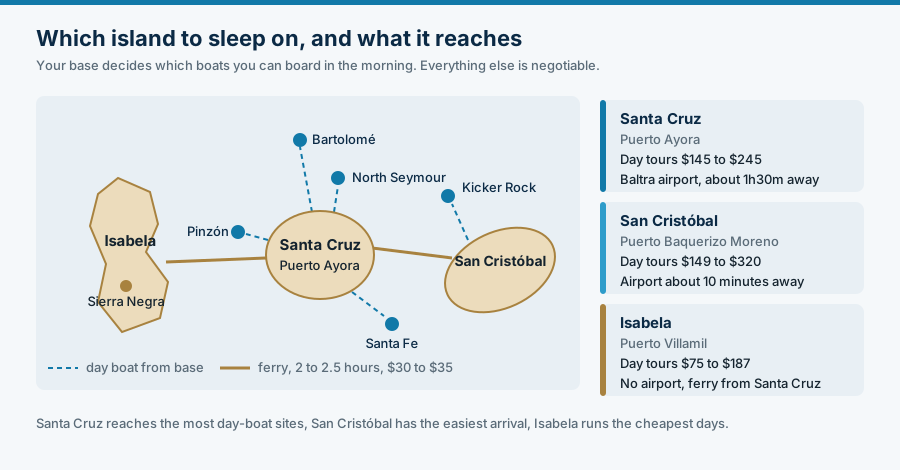
Stay on Santa Cruz if you want the widest choice of day tours and the easiest logistics; it is the busiest island and the natural first base. Stay on San Cristóbal for sea lions on the town beaches, Kicker Rock and a ten-minute airport transfer. Stay on Isabela for the volcano, penguins and the cheapest excursions. A seven-night trip usually splits four nights on Santa Cruz and three on Isabela.
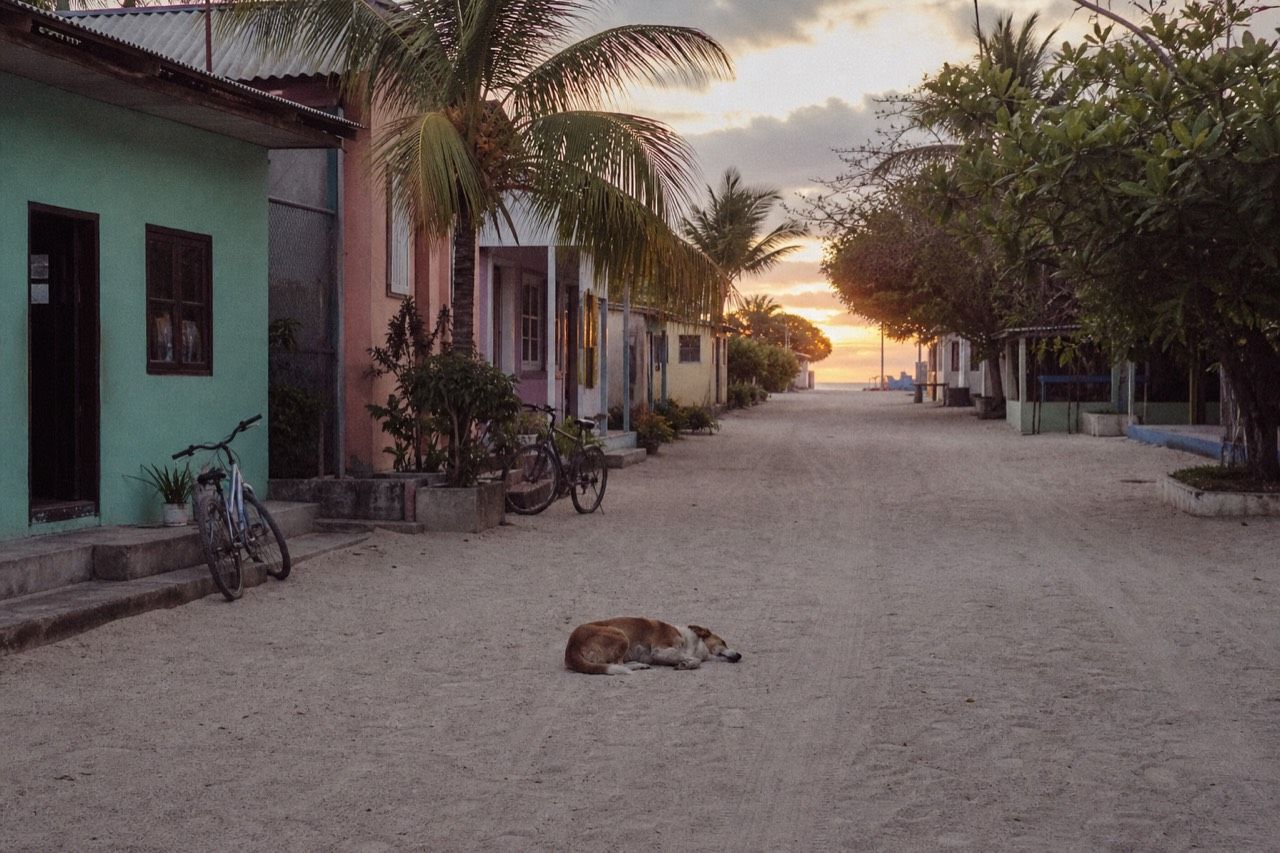
Puerto Ayora surprised me the first time. I had pictured a research outpost and found a working port town: fish market on the waterfront with pelicans and a sea lion waiting for scraps, taxis that are all white pickups, dive shops and bakeries and school kids. Forty minutes on foot from that noise, the trail opens onto Tortuga Bay, which is a kilometre of white sand with marine iguanas on it and almost nobody else. Both of those things are Santa Cruz, and understanding that is most of what choosing an island base comes down to.
Which Galapagos Island Should You Stay On?
Santa Cruz suits most first-time visitors: it has the widest day-tour choice, the most hotels and restaurants, and central position for boat trips. San Cristóbal suits people who want wildlife within walking distance and a painless airport transfer. Isabela suits volcano hikers, penguin seekers and tight budgets.
Only four islands are inhabited, and only three take meaningful numbers of visitors. Floreana has a tiny population and a handful of rooms; the other three each have a town, a dock and a fleet of licensed day boats. Everything else in the archipelago is protected national park where nobody sleeps except aboard a cruise ship.
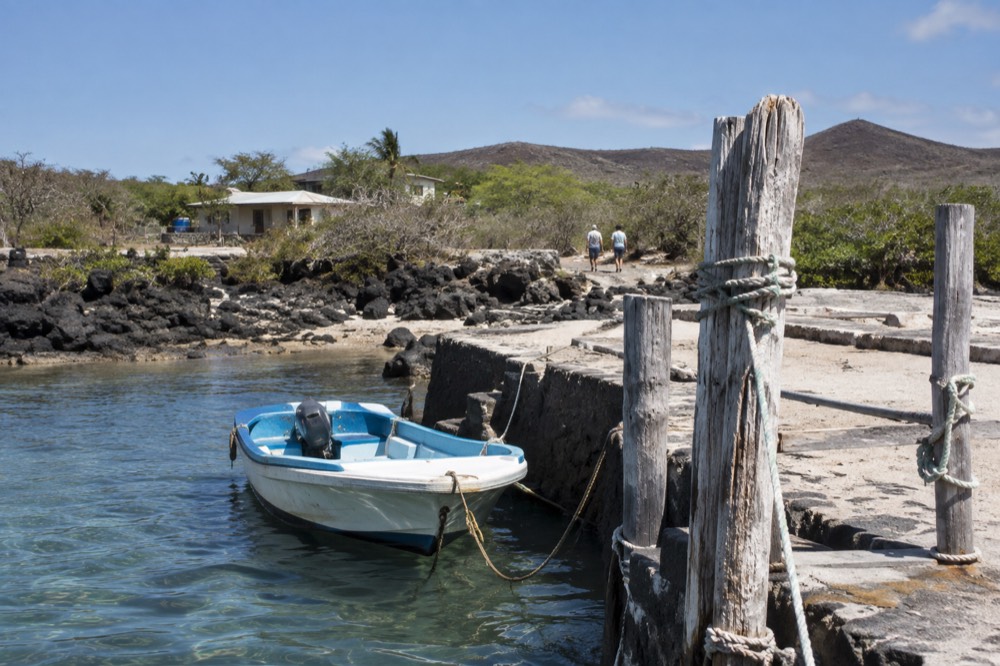
The mistake I see most often is treating the choice as a ranking. It is not. Santa Cruz is objectively the most convenient base and objectively the busiest. San Cristóbal has the best in-town wildlife and fewer boat options. Isabela has the most dramatic landscape and the least infrastructure. Pick the trade you want.
| Santa Cruz (Puerto Ayora) | San Cristóbal (Puerto Baquerizo Moreno) | Isabela (Puerto Villamil) | |
|---|---|---|---|
| Feel | Busiest town, working port | Relaxed capital, sea lions everywhere | Sandy streets, smallest and quietest |
| Airport transfer | Baltra, then bus, ferry and road, about 1h30m | About 10 minutes by taxi | No airport; ferry from Santa Cruz |
| Day tour choice | Widest in the archipelago | Moderate, Kicker Rock focused | Moderate, volcano and snorkelling |
| Typical day tour band | $145 to $245 | $149 to $320 | $75 to $187 |
| Hotels | Budget $30 to $65, mid-range $65 to $150 | Good range, fewer rooms than Santa Cruz | Fewest rooms, book ahead in high season |
| Restaurants and nightlife | Most options, street kitchens on Charles Binford | Decent, quieter | Limited, early nights |
| Free sites within walking distance | Tortuga Bay, Darwin Station, fish market | Playa Mann, La Lobería, Interpretation Centre | Concha de Perla, flamingo lagoon, tortoise centre |
The split in how people actually travel is wider than the guidebooks suggest. Of the 290,404 visitors who entered Galapagos protected areas in 2025, 79% stayed land-based and only 21% slept aboard, and total arrivals were up 4% on the previous year. Ecuadorians accounted for 38% of visitors and Americans for 29%, with the United Kingdom, Canada, Germany and Australia next in line. The practical consequence is simple: the three towns carry the growth, so the shoulders of high season feel busier every year, and quiet now means Isabela rather than a quieter week on Santa Cruz.
One caveat before the detail. If you already know you want a cabin rather than a hotel room, most of this article stops mattering, because a cruise chooses your islands for you and the base decision shrinks to where you sleep the night before boarding. For everyone else, this page and the island hopping guide between them cover the whole decision.
What Is Santa Cruz Like As A Base?
Santa Cruz is the transport hub and the practical default. Puerto Ayora has the most hotels, the most restaurants and by far the most day boats, plus the Charles Darwin Research Station and the highlands tortoise reserves. Its drawback is the long transfer from Baltra airport and the crowds in high season.
Position is the real advantage. Sitting in the centre of the archipelago, Santa Cruz puts more islands inside day-boat range than anywhere else: Pinzón, Santa Fe, Bartolomé, North Seymour, Floreana and even Isabela as a long day trip. If you only get one base, this is the one that gives you options when weather or availability changes your plans.
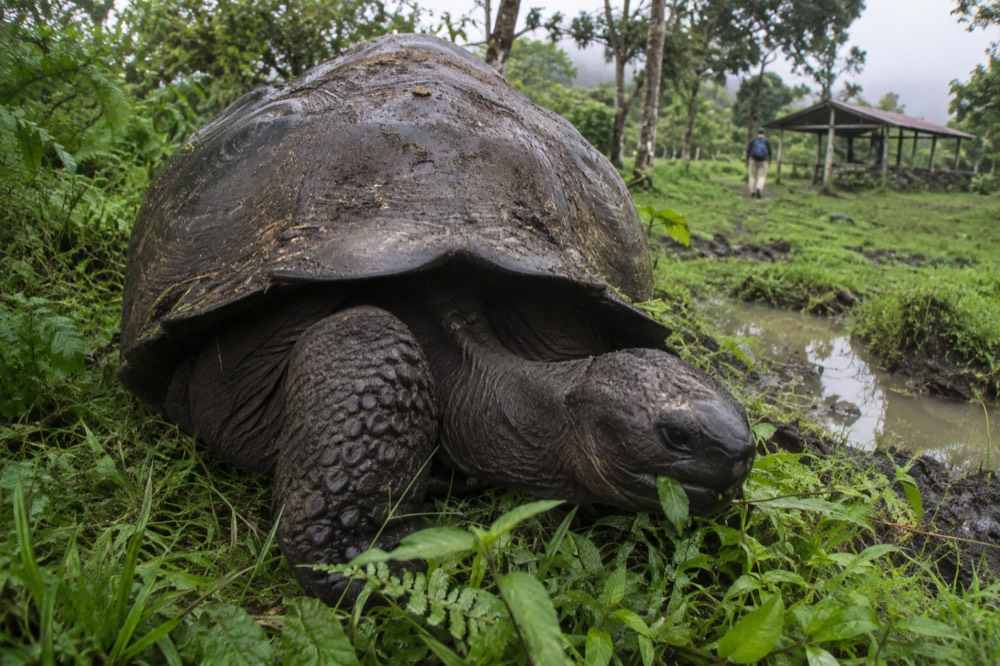
The highlands are the other reason. A short drive up from town takes you into misty farmland where wild giant tortoises move through the pasture on their own terms, past collapsed lava tunnels you can walk through. Of the 20,000 to 25,000 giant tortoises left across the archipelago, this is the population you can reach most easily without a breeding centre.
Price helps too. Budget rooms start around $30 to $65, mid-range runs $65 to $150, and the street kitchens beat the hotel restaurants. Full cost detail sits in the Galapagos cost breakdown.
Puerto Ayora is also where logistics are easiest to sort out on the ground. The offices for the licensed day boats sit within a few blocks of the pier, so you can walk the departure boards on your first afternoon and book face to face for the next morning. The marquee sailings, Bartolomé and North Seymour especially, still deserve booking a few days ahead in high season. Prices run $145 to $245 per person, with North Seymour from $230 and Bartolomé from $245, and the listings we track generally bundle lunch and snorkel gear, while wetsuits and park fees vary by operator.
The highlands also hold the cheapest bookable half-day on the island. The Giant Turtle Watching and Lava Tunnels Tour runs from Santa Cruz for about 3 hours, is rated 4.8 from 80 reviews, and costs from $39.99 per person with free cancellation on the listing. Galápagos frontier operates it as a private tour, with coffee or tea included. On a first afternoon, before the boat schedule starts and while the jet lag is still on you, it fills the gap better than anything else at that price.
Santa Cruz's centre position also buys insurance. Swell closes individual anchorages for days at a stretch, and a base with four or five alternatives absorbs that without costing you a whole day; a week on Isabela with Los Túneles cancelled twice has no plan B of equal weight. From June to November, when the garúa season brings cooler seas and less settled weather, that flexibility is worth real money, not just comfort.
A first week from Puerto Ayora tends to assemble itself: the highlands and lava tunnels on day one, a long boat day to Bartolomé or North Seymour, a second water day somewhere closer to town, Tortuga Bay and the Darwin Station on foot, and the fish market whenever the pelicans are working. Add an Isabela overnight or a day crossing and you have seen more of the inhabited islands than most visitors manage in the same span.
Of the boat days, Pinzón is the one first-timers overlook. The Day Tour to Pinzón Island and La Fé/Palmitas Bay with snorkeling and fishing, run by Guiding Galapagos Expeditions, leaves Puerto Ayora for 7 hours at from $249 per person, rated 4.9 from 154 reviews, the highest review count of any day boat we track. Lunch, soda, towels, snorkelling gear, wetsuits in short or long versions and all fees and taxes sit inside that price. The island itself is a conservation landmark: black rats were eradicated in 2012, since when giant tortoise hatchlings have survived in the wild again, and more than 1,000 juvenile tortoises have been repatriated.
What Is San Cristóbal Like As A Base?
San Cristóbal is the calmer alternative with the best wildlife access on foot. Sea lions occupy the town beaches and the harbour steps, the airport is ten minutes from your hotel, and Kicker Rock is one of the best snorkelling sites in the islands. Day-tour variety is narrower than on Santa Cruz.
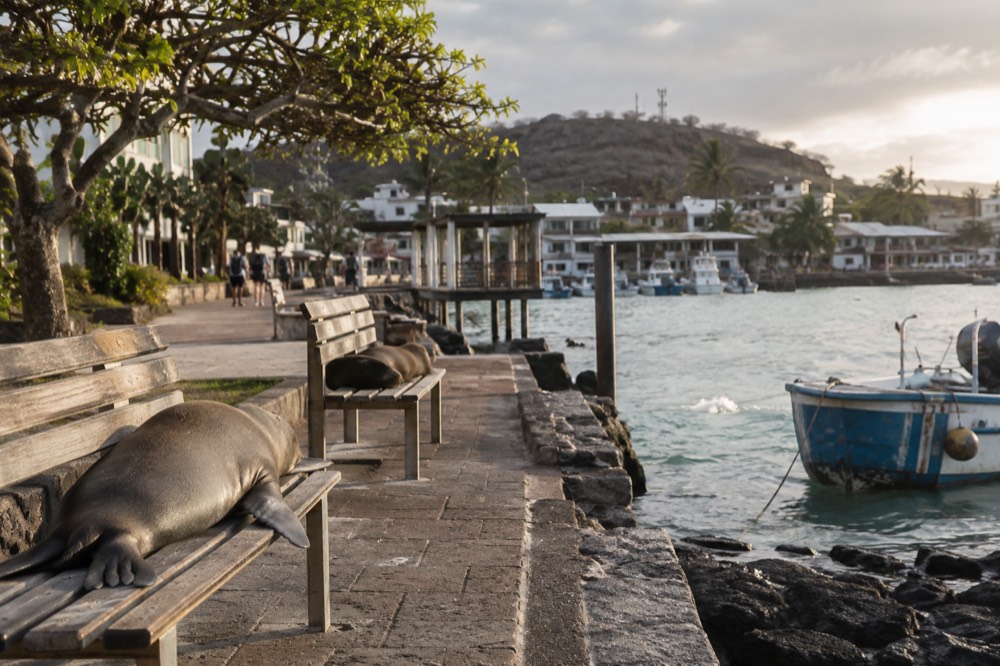
Puerto Baquerizo Moreno is the provincial capital and feels like a town where people live rather than one built for visitors. Galapagos sea lions haul out on Playa Mann and along the malecón in numbers that stop being remarkable by day two, and pupping peaks in August and September. The two-metre distance rule applies here more than anywhere, because the animals will not keep it for you.
On a short trip the airport matters. Reaching your hotel ten minutes after landing gives you back half of the arrival day a Baltra landing eats, which counts when you are working out how many days you need.
Kicker Rock, León Dormido on the charts, is the marquee excursion: two vertical tuff towers rising from open water with a channel between them, patrolled by hammerheads, Galapagos sharks and turtles. The full San Cristóbal 360 tour circles the island in nine hours with snorkelling at the rock, from around $270, and you can Check availability. Shorter and cheaper versions exist across the San Cristóbal day tours list if nine hours on a boat sounds like too much.
If nine hours on the water sounds long, there is a tighter version of the same rock. Galapagos San Cristóbal Full Day Kicker Rock Más Playa, run by GALAPAGOS SHARKSKY TRAVEL & CONSERVATION, leaves the pier at 8:00 am and runs approximately 7 hours, from $260 per person with free cancellation on the listing. It carries a 4.7 rating from 34 reviews and includes lunch with vegetarian and vegan options, snacks, fruit, beverages, a towel and a nature guide. You trade the circumnavigation for a beach stop, which on a hot afternoon is not a bad exchange.
The wider San Cristóbal tour board runs $149 to $320, with Kicker Rock sailings from around $160 and the full 360° circuit from around $190. What balances the narrower choice is how much of the island costs nothing: Playa Mann, La Lobería and the Interpretation Centre are all reachable on foot, and between June and August the blue-footed boobies are doing their courtship dance. If the swell cancels your boat day, the fallback here is genuinely good rather than a consolation prize.
For something slower, the Paddleboard Adventure with Sea Lions on San Cristobal Island puts you on a board in the bay where the colony swims. It costs from $65, holds a 4.6 rating from 14 reviews, and Galapagos Deep SA supplies the board, the life jacket, the guide and pictures from the session. The sea lions do the approaching; your job is to stay upright and let the guide manage the encounter.
What Is Isabela Like As A Base?
Isabela is the biggest island and the smallest town. Puerto Villamil has sand streets, a flamingo lagoon, a tortoise breeding centre and the cheapest excursions in the archipelago, plus Sierra Negra volcano and the Los Túneles snorkelling site. Accommodation is limited and you can only arrive by ferry.
The landscape is the argument for Isabela. Sierra Negra has one of the largest volcanic calderas on earth, and the hike out to its rim is a half-day rather than an expedition. Los Túneles at Cabo Rosa is a maze of collapsed lava arches in shallow water, full of turtles, rays and white-tipped reef sharks. Galapagos penguins nest in this part of the archipelago, with nesting possible anywhere from May to December.
Isabela is also where the day-tour price band drops. Excursions run $75 to $187, against $145 to $245 from Santa Cruz, because the sites are close and several are land-based. If your budget is under pressure by the second half of a trip, moving to Isabela is the single most effective adjustment you can make.
The trade-offs are real. You arrive by lancha, 2 to 2.5 hours from Santa Cruz for $30 to $35, and hotel stock is thin in July, August and around the New Year. Nightlife amounts to a few bars on the beach. Some visitors call it the best three nights of the trip; others get restless by day two.
You can also test Isabela before committing to it. The Day Tour to Isabela Island with Tintorera Islet, Snorkeling Wetlands & Flamingos runs out of Puerto Ayora as a 10-hour round, rated 4.7 from 138 reviews and priced from $285 per person. Guiding Galapagos Expeditions includes the snorkel gear, wetsuits in long or short versions, lunch, soda, the fuel surcharge and even the Puerto Ayora pier fee, so the headline price lands close to the real one.
Whether that beats staying depends on how much Isabela you want. Two ferry legs at $30 to $35 each, plus local excursions in the $75 to $187 band, can undercut the day tour once you are doing more than one site, and only overnighters get Sierra Negra in the early light or the flamingo lagoon at dusk. If Isabela is one line on a list, the day trip does the job. If it is the point of the trip, move hotels.
| Day trip from your base | Santa Cruz | San Cristóbal | Isabela |
|---|---|---|---|
| Pinzón Island snorkelling | Yes | No | No |
| Santa Fe Island | Yes | No | No |
| Bartolomé and Pinnacle Rock | Yes, long day | No | No |
| North Seymour | Yes | No | No |
| Kicker Rock | No | Yes | No |
| Isabela: Tintoreras and wetlands | Yes, long day | No | Yes, on your doorstep |
| Sierra Negra volcano | No | No | Yes |
| Los Túneles / Cabo Rosa | No | No | Yes |
| Highlands tortoise reserves and lava tunnels | Yes | Yes, own version | Yes, breeding centre |
Which Island Suits Which Kind Of Traveller?
First-timers and anyone on a short trip should base on Santa Cruz. Families with young children and wildlife photographers often do better on San Cristóbal. Hikers, budget travellers and second-time visitors get more from Isabela. Divers should base wherever their operator runs, usually Santa Cruz or San Cristóbal.
| You are | Base on | Why |
|---|---|---|
| A first-time visitor with 5 nights | Santa Cruz | Most day tours, most fallback options if weather closes a boat |
| Travelling with young children | San Cristóbal | Sea lions and beaches on foot, ten-minute airport transfer |
| On a tight budget | Isabela | Excursions from $75, and free sites within walking distance |
| A hiker wanting a volcano | Isabela | Sierra Negra caldera, half-day hike from town |
| A photographer chasing wildlife on foot | San Cristóbal | Sea lion colonies in town, pupping peak in August and September |
| A certified diver | Santa Cruz or San Cristóbal | Dive operators and permitted sites cluster on both |
| Returning for a second trip | Isabela | You have already done the Santa Cruz highlands |
| Short on time and unwilling to move hotels | Santa Cruz | Reaches Isabela, Bartolomé and North Seymour as day trips |
Two rows deserve a caveat. The diver's row assumes certification; the shops on Santa Cruz and San Cristóbal will want proof, and the headline sites for big pelagics, Darwin and Wolf with their whale sharks from June to November, belong to liveaboards rather than day boats. The family row quietly depends on sea state, because young children and a two-hour lancha crossing do not mix, which is exactly why walkable San Cristóbal wins. And if you are a second-time visitor whose first trip was a cruise, treat yourself as a first-timer here: a cabin shows you the islands and almost none of the towns.
How Should You Split A Week Across Two Islands?
Four nights on Santa Cruz and three on Isabela is the standard seven-night split, using one ferry each way. It gives you the highlands, one or two snorkelling boat days, the volcano and the lava tunnels. Adding San Cristóbal properly needs ten nights, not seven.
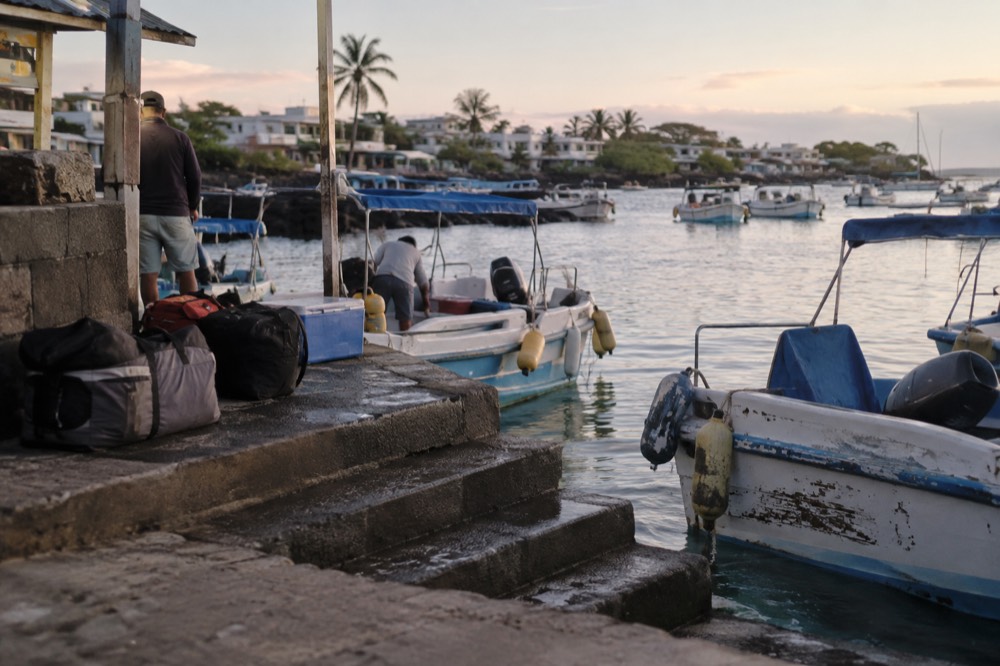
The constraint is the ferry map. Santa Cruz sits in the middle, so any two-island pairing that includes it costs you one crossing each way. Pairing Isabela with San Cristóbal costs you two crossings in each direction, since there is no direct service, and that is most of two days gone from a seven-night trip.
| Nights | Split | Ferries | What you cover |
|---|---|---|---|
| 5 | Santa Cruz only | None | Highlands, one big boat day, Tortuga Bay |
| 7 | 4 Santa Cruz, 3 Isabela | 2 | Adds volcano, Los Túneles, penguins, flamingos |
| 7, alternative | 4 Santa Cruz, 3 San Cristóbal | 2 | Adds Kicker Rock and sea lion colonies |
| 10 | 4 Santa Cruz, 3 Isabela, 3 San Cristóbal | 4 | All three inhabited islands |
| 10, open-jaw | Fly into Baltra, out of San Cristóbal | 3 | Removes one crossing, saves half a day |
One practical tip that saves a crossing: book an open-jaw flight, arriving at Baltra for Santa Cruz and departing from San Cristóbal. Airlines price island routes as separate legs, so this rarely costs more, and it turns a there-and-back itinerary into a loop. If you are still deciding between staying ashore at all and taking a cabin, the cruise versus land-based comparison settles that question first, and the Conservancy's planning notes are worth a read alongside it.
Two ferry habits make the splits above run smoothly. Book the lancha a day ahead in July, August and the Christmas fortnight, and take the morning sailing, both because seats go first and because the afternoons can be lumpier. Remember that the two to 2.5 hours each way are open water for long stretches, so if you are prone to seasickness, dose before boarding; there is no sheltered lane between these islands.
What Does A Day On The Water Actually Cost?
Expect $145 to $245 per person from Santa Cruz, $149 to $320 from San Cristóbal and $75 to $187 from Isabela, with the flagship trips at the top of each band. What separates a $160 Kicker Rock sailing from a $270 circumnavigation is hours on the water and how many sites you touch, not the quality of the wildlife.
| Tour | Departs from | Duration | Rating | Price |
|---|---|---|---|---|
| San Cristóbal 360 with Kicker Rock (Howlanders) | Puerto Baquerizo Moreno | 9 hours | 4.4 from 47 reviews | from $270 |
| Kicker Rock with a beach stop (GALAPAGOS SHARKSKY TRAVEL & CONSERVATION) | San Cristóbal pier, 8:00 am | Approximately 7 hours | 4.7 from 34 reviews | from $260 per person |
| Pinzón Island and La Fé/Palmitas Bay (Guiding Galapagos Expeditions) | Puerto Ayora | 7 hours | 4.9 from 154 reviews | from $249 per person |
| Isabela day with Tintoreras and flamingos (Guiding Galapagos Expeditions) | Puerto Ayora to Isabela | 10 hours | 4.7 from 138 reviews | from $285 per person |
Read the includes column before you compare the numbers, because the bundles differ more than the prices do. The Pinzón and Isabela days fold in lunch, drinks, snorkel gear, wetsuits and every fee and tax, the pier fee included on the Isabela run. The 360 tour adds a vegan and vegetarian lunch, a microfiber towel and a bilingual naturalist guide to its snorkel gear and wetsuit. A headline saving of $20 means little if the wetsuit rental arrives as a separate line at the dock.
The bands themselves track geography rather than greed. Isabela's excursions are the cheapest in the archipelago because its best sites sit close to Puerto Villamil and several are reached with a short hop or on foot. Santa Cruz sits in the middle of everything, so fuel and sailing time, not dockside distance, set the fare. San Cristóbal spans the widest range because Kicker Rock alone can be a focused sprint or the centrepiece of a nine-hour lap of the island.
For budgeting, one rule of thumb holds up: the mid-range land-based traveller spends $250 to $350 per person per day all-in, with hotels, tours, ferries and food counted. A single flagship boat day can eat half of that, which is why three boat days plus a volcano hike usually beats five boat days with no slow mornings. The Galapagos day trips hub carries the fuller price detail island by island.
How Do Flights And Ferries Shape The Choice?
Avianca and LATAM are the only two airlines flying direct from Quito and Guayaquil to both Baltra and San Cristóbal, and every public ferry route in the archipelago passes through Santa Cruz. That geography is why Santa Cruz is the default base and why any Isabela or San Cristóbal itinerary prices in at least one crossing.
Only two carriers operate the routes, so inventory is finite and fares move fast around holiday weeks. Expect roughly 1 hour 55 minutes to 2 hours in the air from Guayaquil, or around 3 hours total from Quito including the stop. One-way fares start from around $150, and round trips commonly run $285 to $600 depending on dates and airline. The baggage allowance, one checked bag up to 23 kg and a carry-on up to 8 to 10 kg, is worth knowing before you pack for a two-island trip.
The airport sequence has its own choreography. Your bags, carry-ons included, go through a mandatory biosecurity inspection by SICGAL before check-in, so arrive earlier than a domestic flight normally demands. On landing at Baltra or San Cristóbal you pay the national park entrance fee to the rangers, $200 per foreign adult and $100 per child under 12, and since there is no official confirmation that card payment is accepted at the counter, plan on cash. Before any of that, the Transit Control Card costs $20 per person and is handled by online pre-registration and payment through the official system before you fly.
Inside the archipelago the ferry map is a hub and spokes. Lanchas run daily from Santa Cruz to Isabela and from Santa Cruz to San Cristóbal, $35 one way and 2 to 2.5 hours on either leg, and there is no direct Isabela to San Cristóbal service at all. That pairing always routes through Santa Cruz, whichever direction you travel, which is the single biggest reason the ten-night three-island itinerary exists and the seven-night version does not.
When Should You Go And Does It Change Where You Stay?
The warm season from December to May brings sea temperatures of 74 to 76°F and the clearer, calmer water snorkellers want. The cool garúa season from June to November drops the sea to 66 to 72°F, brings haze and cooler mornings, and rewards a different island.
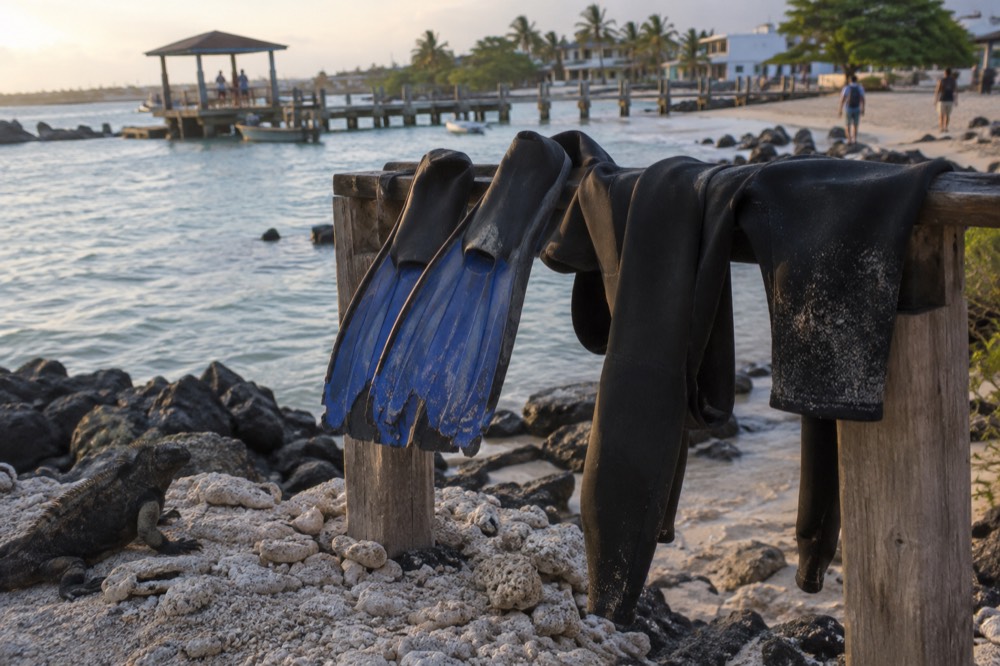
The warm months are the snorkeller's season. Water at 74 to 76°F means shorter wetsuit time and better visibility at exposed sites like Kicker Rock and Los Túneles, and the seas settle enough that small boats run closer to schedule. It is also the giant tortoises' breeding season, concentrated January to May, so a highlands visit on Santa Cruz falls inside the most active window.
The garúa season trades some comfort for spectacle. Sea temperatures sit between 66 and 72°F, so a wetsuit stops being optional, and the light turns flat and grey. What you get in return is the best of the wildlife calendar: sea lion pupping peaks in August and September, which is exactly what a San Cristóbal photographer wants, and blue-footed boobies are dancing their courtship between June and August.
Two calendar items sit outside the base decision. Galapagos penguins, an Isabela speciality, breed year-round with nesting possible from May to December, so no month is a bad month for them. The waved albatross is different: present on Española for breeding from April through December and absent only January to March, it is the one sighting that usually pushes a trip toward a cruise, since it anchors itineraries reaching the far south-east.
Whichever season you pick, book rooms first for July, August and the Christmas fortnight. Puerto Villamil's thin stock sells out first, and once the cheap rooms on Isabela are gone, the budget argument for basing there weakens considerably.
What Rules Apply No Matter Which Island You Pick?
Every visitor to a protected area within the national park must be accompanied by a naturalist guide authorised by the Galapagos National Park Directorate, and drones are banned throughout the park and the marine reserve. The two rules that change your day-to-day behaviour are the two-metre distance from wildlife and the biosecurity controls on what you carry.
The guide requirement explains most of what looks strange about Galapagos logistics on first contact. You cannot walk into the park zone at a visitor site on your own; the licensed day boats, the guided highlands tours and the naturalist-led hikes are not an upsell but the legal format for visiting. It is also why the free sites like Tortuga Bay and Playa Mann feel like such a release valve after a guided morning: no ticket, no group, no schedule.
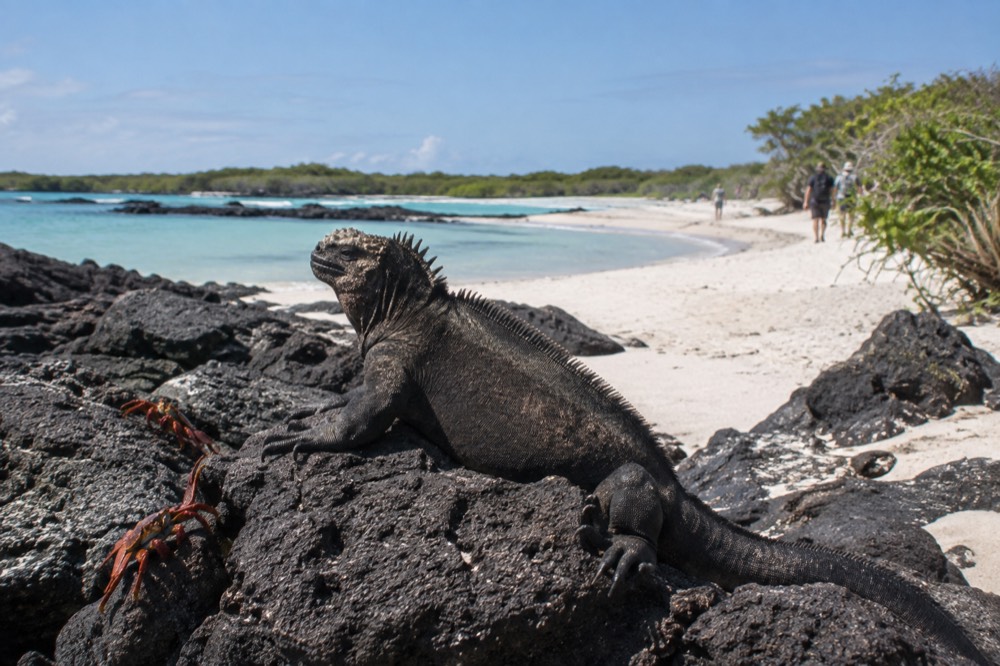
The two-metre rule sounds abstract until a sea lion pup takes a liking to your flipper. On San Cristóbal the animals will close the distance themselves, and the rule still holds: you do not touch, you do not corner, you give way. Marine iguanas basking across the Tortuga Bay trail get the same respect, and stepping around them rather than over them is the habit that keeps the whole system working.
Biosecurity is the rule that catches people out. Fresh fruits, vegetables, seeds, plants and many animal products are regulated or prohibited for entry to the islands, and the inspection at Quito or Guayaquil happens before check-in, all luggage scanned, carry-ons included. Check the official ABG list before you shop on the mainland, and leave the drone at home: aerial tourism activities are not permitted in the national park or the marine reserve.
What If You Only Have Three Days?
Three days works only if you pick one island and do not move hotels. A fixed short trip is bookable, priced per group from $5600 with hotel, breakfast and lunch, transfers, a boat day with snorkelling and a tour leader included, but at that price it suits groups rather than solo travellers.
The packaged option is the 3-Day Galapagos Trip for Traveler Without Much Time, run by GAG from Guayaquil's José Joaquín de Olmedo airport or from San Cristobal. It is priced per group, from $5600, and that price includes the hotel, breakfast and lunch, a navigable tour with snorkelling, transfers and a tour leader who photographs the trip as you go. Free cancellation is on the listing. There is no rating yet, so there is no review history to lean on; you are buying the operator's plan rather than a crowd-tested one.
The arithmetic tells you who it suits. Split four ways, that is $1400 per head before flights and park fees, against the independent island-hopping benchmark of $250 to $350 per person per day, which lands at $750 to $1050 for three days. For a family of four, that gap buys a single point of contact, a locked schedule and a photographer travelling with you; for a couple it is hard to justify. If the maths fits your group, Check availability.
Short clocks punish improvisation more than any other trip shape. Book the marquee boat day before you leave home, because a sold-out Kicker Rock or Bartolomé sailing cannot be recovered later in a three-day window. Do not schedule a ferry at all, and keep one afternoon loose for weather. If you are going independent rather than packaged, base on San Cristóbal for the easy arrival or on Santa Cruz for the boat choice, and treat every hour between landing and the first snorkel as the scarce resource it is.
Can you stay on Floreana?
Yes, in a very small way. Floreana has a tiny resident population and a handful of guesthouses, and it works as an overnight or a day trip from Santa Cruz rather than a base. Ferry connections are limited and infrequent.
Do I need to book Isabela hotels in advance?
In high season, yes. Puerto Villamil has the smallest room stock of the three towns and it sells out. Outside the peak months you can usually arrive and find something, but the good places still go first.
Which island has the best snorkelling?
They differ rather than rank. San Cristóbal has Kicker Rock for sharks and open-water drama. Isabela has Los Túneles for turtles and rays in calm shallow water. Santa Cruz reaches Pinzón and Santa Fe, which are the most reliable all-round snorkelling day boats.