Galapagos Entry Rules, Fees And Flights Explained
Two payments, one inspection and a flight that leaves early. The Galapagos entry process is simple once you know the order it happens in.
Short answer
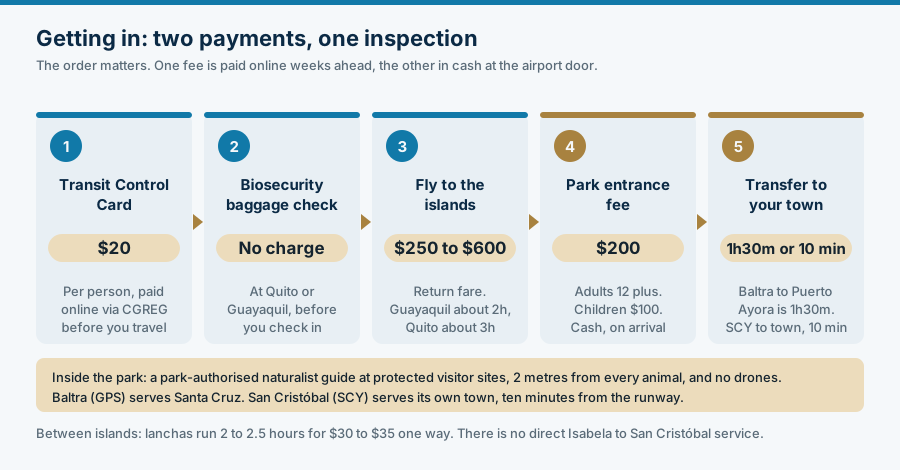
Every foreign adult pays a US$200 Galapagos National Park entrance fee on arrival, US$100 for children under 12, plus a US$20 Transit Control Card registered and paid online before travel. Avianca and LATAM fly from Quito and Guayaquil to Baltra (GPS) or San Cristóbal (SCY), and all luggage goes through a biosecurity inspection before check-in.
On my most recent trip the park fee cost $200. On my first, in 2021, the same desk took half that. The increase landed on 1 August 2024 and it is the single biggest change to Galapagos trip budgets in years, yet plenty of older blog posts still quote the old number and send people to the counter with the wrong cash in hand.
Entry to the islands is genuinely straightforward. It is also sequential, and the sequence catches people out more than the rules do. Here is the order it actually happens in, and the two payments nobody can skip.
What Does It Cost To Enter The Galapagos?
Two mandatory payments. The Galapagos National Park entrance fee is US$200 for foreign visitors over 12 and US$100 for children under 12, paid to park rangers on arrival at Baltra or San Cristóbal. Before that, every traveller registers and pays a US$20 Transit Control Card online through the CGREG system.
The park fee is the one that stings, and it is worth understanding what it buys. It funds the park directorate, the marine reserve patrols and the conservation programmes that keep the archipelago functioning as a wild place rather than a zoo. The official schedule sits on the national park's own fee page, which is the only source worth trusting when a tour operator quotes you something different.
| Payment | Amount | When | Where |
|---|---|---|---|
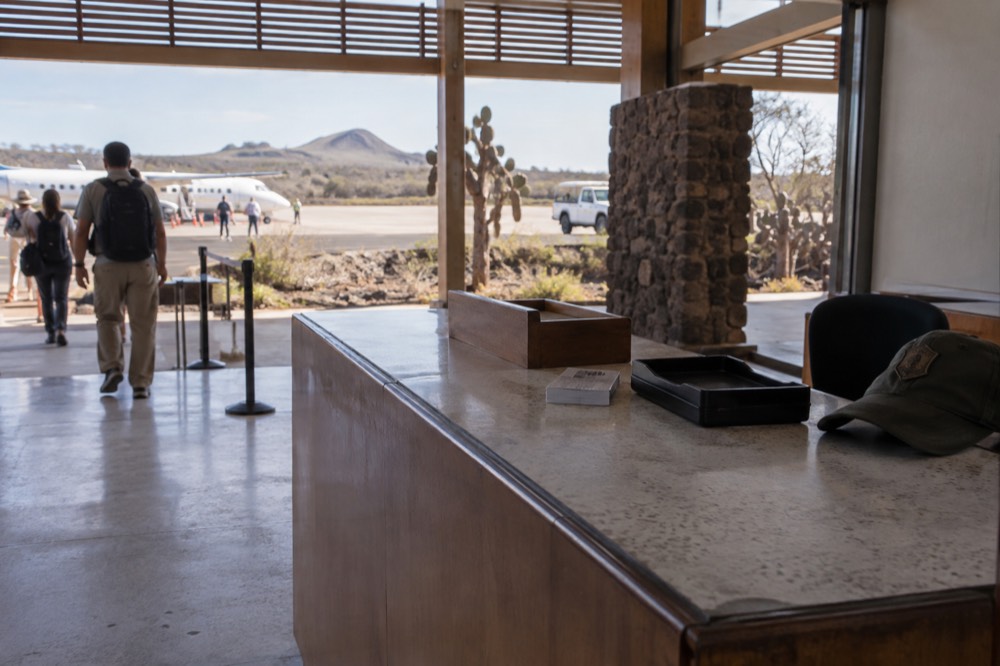
| Park entrance, foreign adult (12+) | US$200 | On arrival | Park ranger desk, Baltra or San Cristóbal airport |
| Park entrance, foreign child (under 12) | US$100 | On arrival | Same desk |
| Transit Control Card (TCT/INGALA) | US$20 per person | Before you fly | Registered and paid online via the CGREG system |
| Flight, mainland return | About $250 to $600 | At booking | Avianca or LATAM |
The Transit Control Card changed in recent years. It used to be a paper card bought in a queue at the mainland airport. Now you pre-register online and pay before travel, which removes one queue but adds one task to do at home. Do it before you leave, because sorting it out in a departures hall at five in the morning is nobody's idea of a good start.
Bring cash for the park fee. Card acceptance at the arrival desks has improved but is not something to gamble a $200 payment on, and there is no ATM standing between you and the exit.
The doubling catches returning visitors as much as first-timers. Anyone who travelled before August 2024 paid US$100 at the same desk, so a couple's entrance cost went from $200 to $400 in one revision. Add the Transit Control Card at $20 each and the fixed cost of simply setting foot in the islands now runs $220 per adult before a single hotel night or tour is booked.
Set that fixed cost against the rest of the budget early. Round-trip flights from the mainland commonly land between $250 and $600, so flights plus entry for one adult sit somewhere between $470 and $820 before anything else is spent. Families feel it most: two adults and two children under 12 hand over $600 at the ranger desk, which is exactly the kind of number you want to know months in advance rather than at the airport.
Do I Need A Visa For Ecuador?
Citizens of the United States, the United Kingdom, Canada, Australia and most of the EU do not need a visa for tourist stays in Ecuador of up to 90 days in a 12-month period. You need a passport valid for at least six months. The Galapagos are part of Ecuador, so no separate entry document applies beyond the transit card.
The 90-day allowance is per rolling year, not per entry, which matters if you are combining the Galapagos with a longer South American loop and plan to re-enter Ecuador. Overstaying carries fines.
On safety, the US State Department rates Ecuador at Level 2, Exercise Increased Caution, with higher-level warnings attached to specific mainland provinces rather than to the Galapagos. The islands themselves are among the calmest places in the country, with a small resident population and an economy built entirely on visitors.
Same-sex couples have no extra paperwork to worry about. Ecuador legalised same-sex marriage in 2019 after a Constitutional Court ruling, and the constitution bars discrimination based on sexual orientation. Transgender travellers will find the legal environment relatively progressive for the region, since Ecuadorians can change their gender marker through self-identification without surgery.
There is one significant gap, and it is worth naming honestly: adoption by same-sex married couples remains prohibited under the constitution. None of this makes the islands different from the mainland, since the rules are national, and the State Department advisory carries no LGBTQ-specific restrictions. The Galapagos towns that live off visitors are calm, easygoing places by most travellers' reporting.
Which Airport Should I Fly Into, GPS Or SCY?
Baltra (GPS) serves Santa Cruz and is the busier hub, with more flights and more day-tour choice, but it needs a bus, a channel ferry and a road transfer before you reach Puerto Ayora. San Cristóbal (SCY) drops you a ten-minute drive from Puerto Baquerizo Moreno, with fewer flights and a quieter base.
This is the first real decision of the trip and it shapes everything after it.
| Baltra (GPS) | San Cristóbal (SCY) | |
|---|---|---|
| Island served | Santa Cruz | San Cristóbal |
| Flight frequency | Highest, both airlines | Fewer daily services |
| Transfer to town | Bus, Itabaca Channel ferry, then road to Puerto Ayora, most of a morning | Short taxi ride into town |
| Day-tour choice | Widest in the archipelago | Good, more focused on Kicker Rock |
| Ferry connections | Direct lanchas to Isabela and San Cristóbal | Direct lancha to Santa Cruz only |
| Best for | First visit, island hopping, most itineraries | Slower trips, sea lions, diving |
Most people fly into Baltra and out of San Cristóbal, or the reverse. The airlines price open-jaw Galapagos routings much the same as returns, and it saves you a backtracking ferry day. If you want the arithmetic on how those days add up, how many days you need works through it properly.
The Baltra transfer deserves a warning. You clear the fee desk, collect bags, take a shuttle bus to the Itabaca Channel, cross on a small vehicle ferry, then take a bus or taxi south across the island to Puerto Ayora. It is not difficult and it is well signposted, but it eats a chunk of the day. Anyone landing at midday should assume they reach their hotel mid-afternoon.
The temperament of the two towns matters as much as the logistics. Puerto Ayora is the largest town in the islands, with the deepest choice of restaurants, hotels and tour offices, and it suits people who want options every evening. Puerto Baquerizo Moreno is smaller and sleepier, sea lions stretched along the waterfront, with a visitor economy centred on a handful of boat trips.
San Cristobal's flagship day on the water is the San Cristobal Galapagos 360 snorkeling tour, which spends nine hours circling the island and includes the channel at Kicker Rock. It costs from $270, carries a 4.4 rating from 47 reviews, and the operator, Howlanders, includes lunch with vegan and vegetarian options, snacks and drinks, a bilingual naturalist guide, snorkelling equipment with a neoprene wetsuit, a microfiber towel and transport aboard the Hammerhead. Straightforward Kicker Rock trips start lower, from about $160, and the full run of options sits on the San Cristobal tours page.
Who Flies There, And How Much Does It Cost?
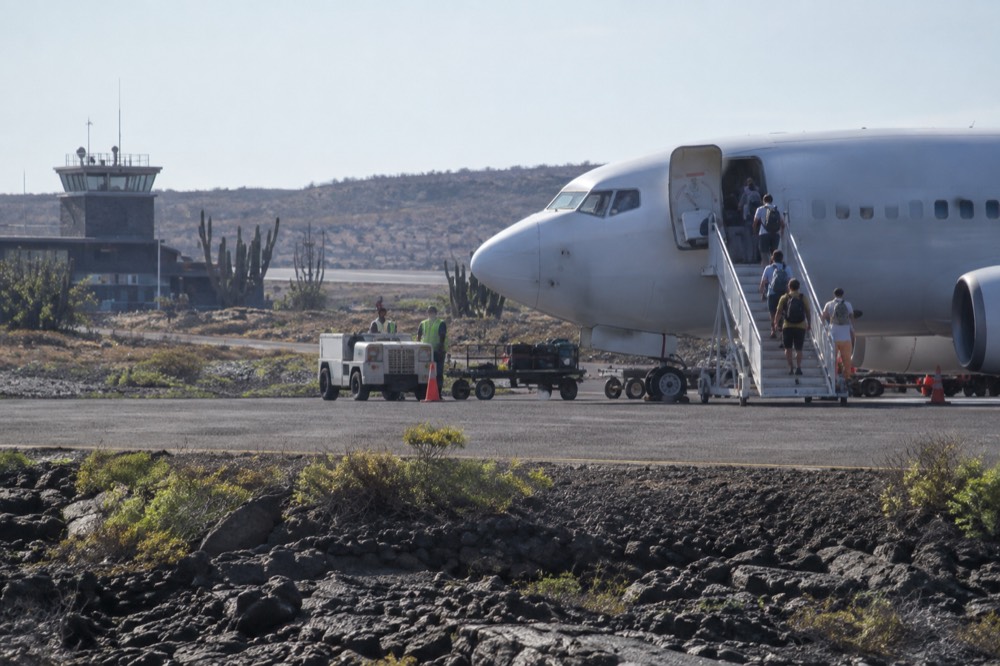
Avianca and LATAM operate the Galapagos routes from Quito (UIO) and Guayaquil (GYE). Guayaquil to the islands takes about 1h55m to 2 hours. From Quito it runs roughly 3 hours in total, because almost every Quito service stops in Guayaquil. Round-trip fares commonly land between $250 and $600.
Every flight from Quito touches down in Guayaquil. You usually stay on board, passengers get on and off, and the aircraft continues. That stop is why the Quito routing takes half as long again for the same distance covered.
| Route | Typical block time | Notes |
|---|---|---|
| Guayaquil (GYE) to Baltra (GPS) | About 1h55m to 2h | The shortest, most direct option |
| Quito (UIO) to Baltra (GPS) | About 3h total | Includes the Guayaquil stop |
| Guayaquil (GYE) to San Cristóbal (SCY) | About 2h | Fewer services per day |
| Quito (UIO) to San Cristóbal (SCY) | About 3h total | Also via Guayaquil |
There is a real argument for overnighting in Guayaquil before an early island flight rather than doing a pre-dawn start from Quito at 2,850 metres of altitude. Which mainland city makes the better staging post is its own question, and Quito versus Guayaquil compares them on the things that matter for a Galapagos connection.
Fares move with season. The June to August and December to January peaks push toward the top of that range, and residents pay a different, much lower fare structure that foreign visitors cannot access.
Watch the baggage rules, because they bite harder here than on a mainland domestic hop. The standard allowance is one checked bag up to 23 kg and one carry-on of 8 to 10 kg, and the small inter-island aircraft that appear later in many itineraries are stricter still. Pack with the smallest aircraft of your trip in mind, not the largest.
Both airlines fly the same two island airports from the same two mainland cities, so there is rarely a route reason to prefer one over the other. The practical move is to price both on your exact dates before booking, because the difference between the two carriers on the same day can be substantial.
What Happens At The Biosecurity Inspection?
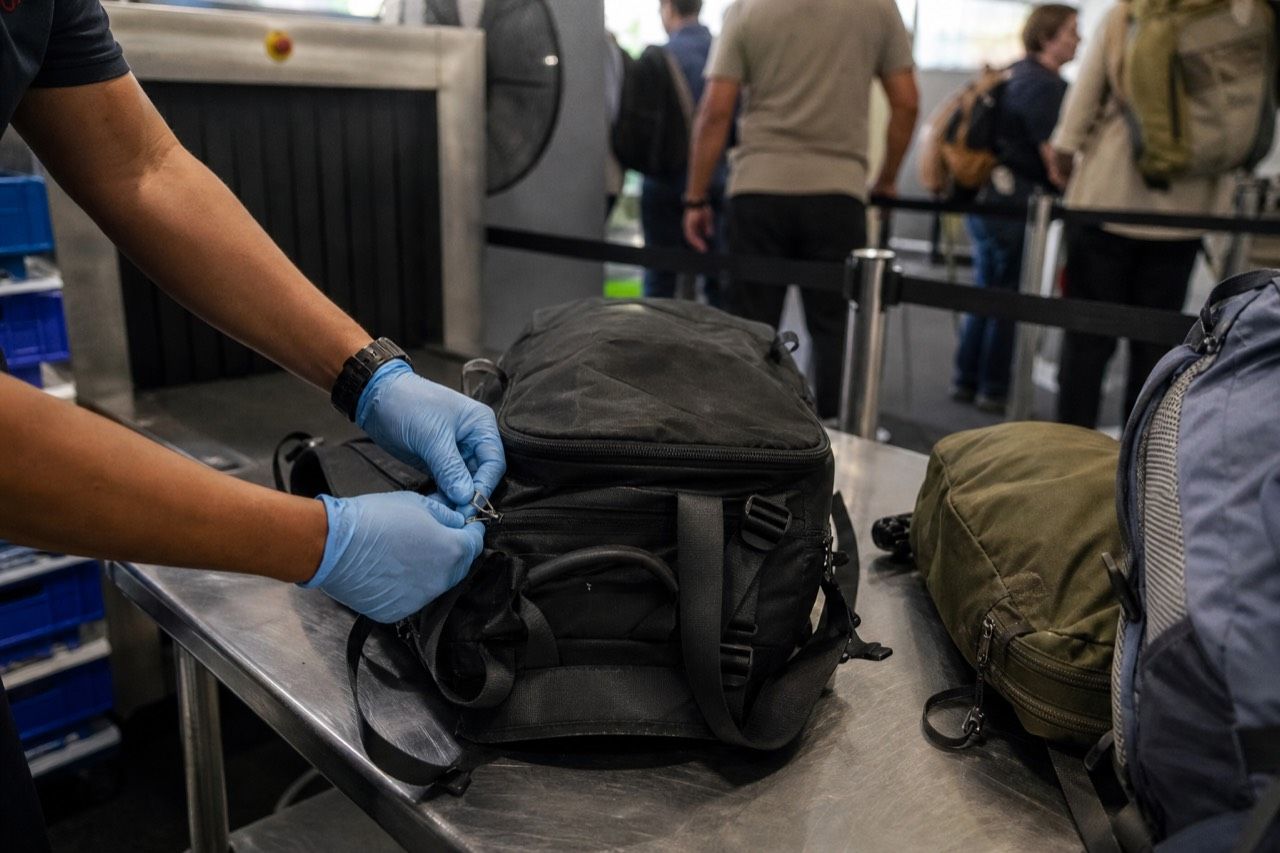
Before you check in at Quito or Guayaquil, all luggage passes a mandatory SICGAL and Agrocalidad inspection. Bags are scanned, occasionally opened, and any fresh fruit, vegetables, seeds, plants, soil or restricted animal products are removed. Allow twenty extra minutes and arrive earlier than you would for a normal domestic flight.
The inspection sits at a separate counter before the airline desks, and the queue for it is not part of your check-in queue. This is the most common reason people who allowed ninety minutes end up sprinting.
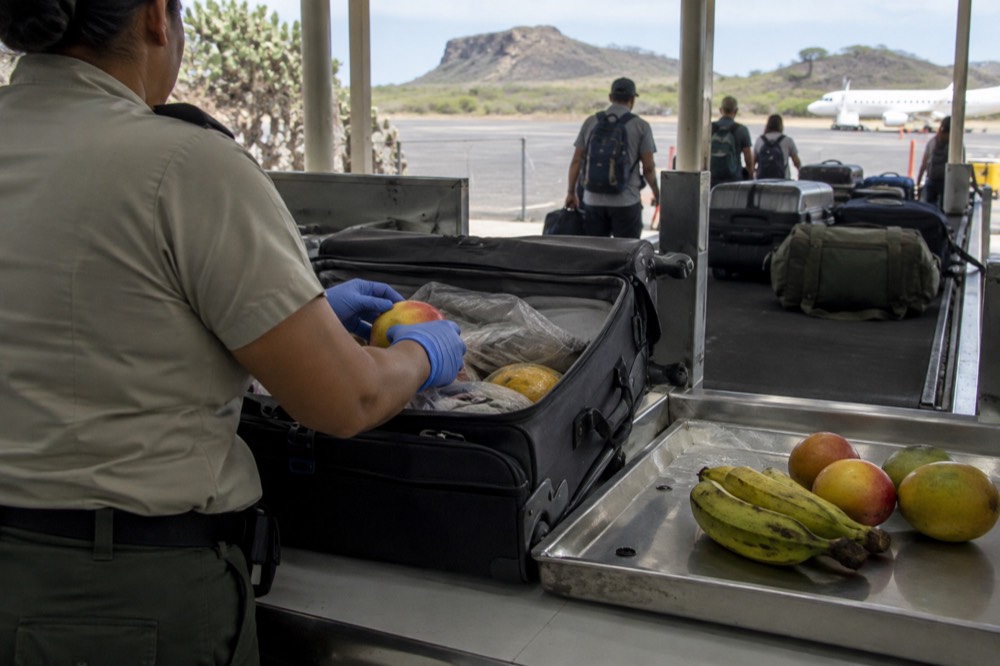
The restricted list is published by the Galapagos biosecurity agency, and the full product list is worth a glance the night before you pack. Most of it is common sense once you understand the logic: introduced species are the archipelago's biggest threat, and a seed, an insect egg or a scrap of soil in a boot tread is how new ones arrive. Our packing guide goes through the confiscation list item by item.
There is a second, lighter check on arrival in the islands, and again when you move between islands by ferry on some routes. Nobody makes a fuss if your bag is clean.
The list changes, too. Permitted, restricted and prohibited items are set by resolution, with the current version issued under Resolución N° D-ABG-065-11-2023, so older packing advice online can steer you wrong. If you are unsure about a specific item, the ABG list is the authority, not a forum thread.
My own record at the scanner is three flights through it and nothing confiscated, mostly because I stopped packing anything fresh after the first trip. The inspectors are friendly and quick with clean bags. It is the queue that costs time, not the inspection itself.
How Do You Get Between The Islands?
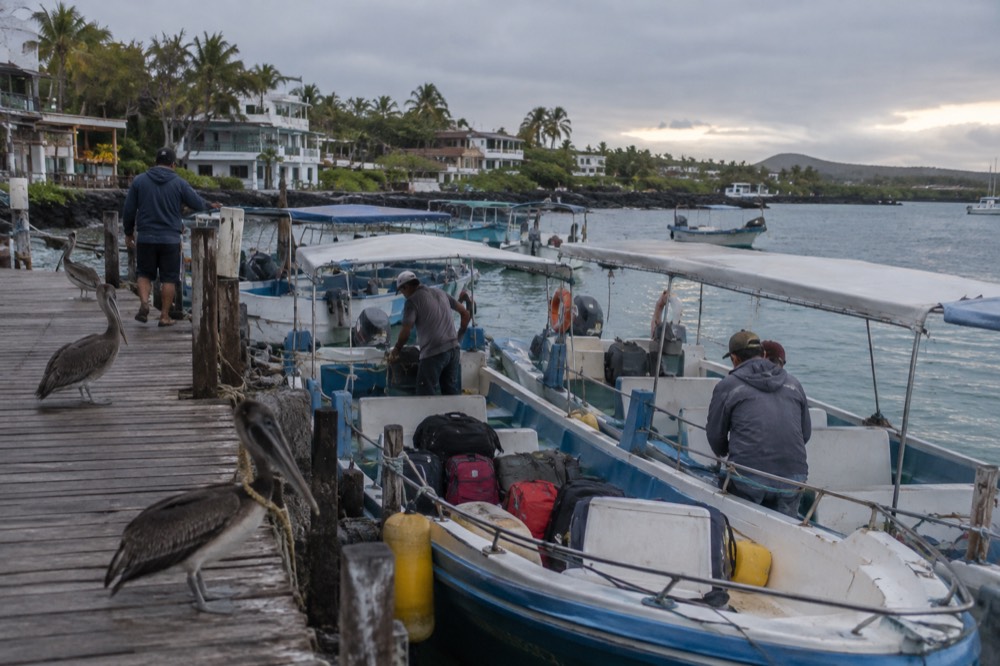
Public speedboats called lanchas run daily between Santa Cruz and Isabela, and between Santa Cruz and San Cristóbal. Each crossing costs about $30 to $35 one way and takes two to two and a half hours. There is no direct Isabela to San Cristóbal service: you transfer through Santa Cruz, which costs a full day.
Santa Cruz is the hub, and that geography dictates most land-based itineraries. Boats typically leave in the early morning and again in the afternoon, so a transfer day is really a half day plus a wasted afternoon.
| Route | Time | Cost one way | Notes |
|---|---|---|---|
| Santa Cruz to Isabela | About 2 to 2.5 hours | $30 to $35 | Open ocean, often rough |
| Santa Cruz to San Cristóbal | About 2 to 2.5 hours | $30 to $35 | Similar conditions |
| Isabela to San Cristóbal | A full day | $60 to $70 | No direct boat, transfer via Santa Cruz |
| Inter-island flights (Emetebe) | Around 30 minutes | Considerably more | Small aircraft, tight baggage limits |
The lanchas are small, fast and exposed. Swell in the channels is real, seats near the back move less, and motion-sickness tablets taken an hour before departure make the difference between an unpleasant morning and a fine one.
Because every crossing eats half a day, sequencing decides how much of your trip you spend on tours rather than on boats. The workable pattern is two nights minimum on Isabela, which has enough half-day excursions to fill the gaps around the ferry schedule, and one or two on San Cristobal depending on whether you want a Kicker Rock or 360 day. A single night anywhere buys you an arrival afternoon and a departure morning and little else.
Isabela's easiest first excursion is Los Tintoreras, the chain of lava islets just off Puerto Villamil, where white-tip reef sharks rest in the narrow channels and marine iguanas stack themselves along the rocks. The Half Day Tintoreras tour from Isabela Island covers it in a half day with a morning departure: from $90, rated 4.3 from 17 reviews, run by Perfect Destiny. The listing includes hotel pickup within the urban perimeter of Puerto Villamil, breakfast, a box lunch, snorkelling mask and fins, a professional guide and free cancellation. More of the island's options sit on the Isabela Island tours page.
What Should You Do On Your First Day?
Book something short and near the airport road rather than a full-day boat. Flights land late morning at the earliest, transfers eat the afternoon, and a ten-hour ocean tour on arrival day is a bad trade. The Santa Cruz highlands work because they sit on the route from Baltra to Puerto Ayora.
Wild giant tortoises graze the highland farms year-round, and the collapsed lava tunnels nearby take twenty minutes to walk. A short trip like the Giant Tortoise and Lava Tunnels tour runs about three hours from Puerto Ayora, which fits an arrival afternoon without any risk of missing it if your flight slips. You can see what the operator includes and Check availability. The rest of the island's options sit on the Santa Cruz day tours page.
Save the long boat days for when you have a full morning and no luggage to think about.
There are two ways to spend that first afternoon in the highlands. The Giant Turtle Watching and Lava Tunnels tour is the short version, about three hours from $39.99 per person, rated 4.8 from 80 reviews, with coffee or tea included and free cancellation on the listing. The Galapagos Tortoises, Lava Tunnels and Craters tour, from $68 with a 4.4 rating from 70 reviews, adds the twin craters of Los Gemelos on the road between the airport channel and town, and folds in transport, juice and site admissions. Same wildlife, different radius.
If you would rather end the day on the water, the Half Day Bay Tour in Santa Cruz Island from Puerto Ayora is the right size for a short visit: three hours, from $75, rated 4.3 from 61 reviews, operated by Perfect Destiny. There is no pickup, the operator gives you a meeting point, and the listing includes a professional guide, snacks and the use of a mask and fins, with free cancellation if your arrival day gets rearranged.
What Are The Rules Once You Are Inside The Park?
Two rules govern every visitor inside the Galápagos National Park: in protected areas you must be accompanied by a naturalist guide authorised by the park directorate, and you must stay at least six feet, two metres, from any wild animal, even when the animal approaches you. Drones and other aerial tourism activity are banned throughout the park and the marine reserve.
The guide rule explains a great deal about how the islands work for a visitor. It is why nearly everything worth seeing beyond the towns is sold as a tour, why a licensed naturalist appears on almost every listing you will read, and why a share of what you pay for any trip goes toward that expertise. Wandering trail networks alone inside park boundaries is simply not how Galapagos visits are structured.
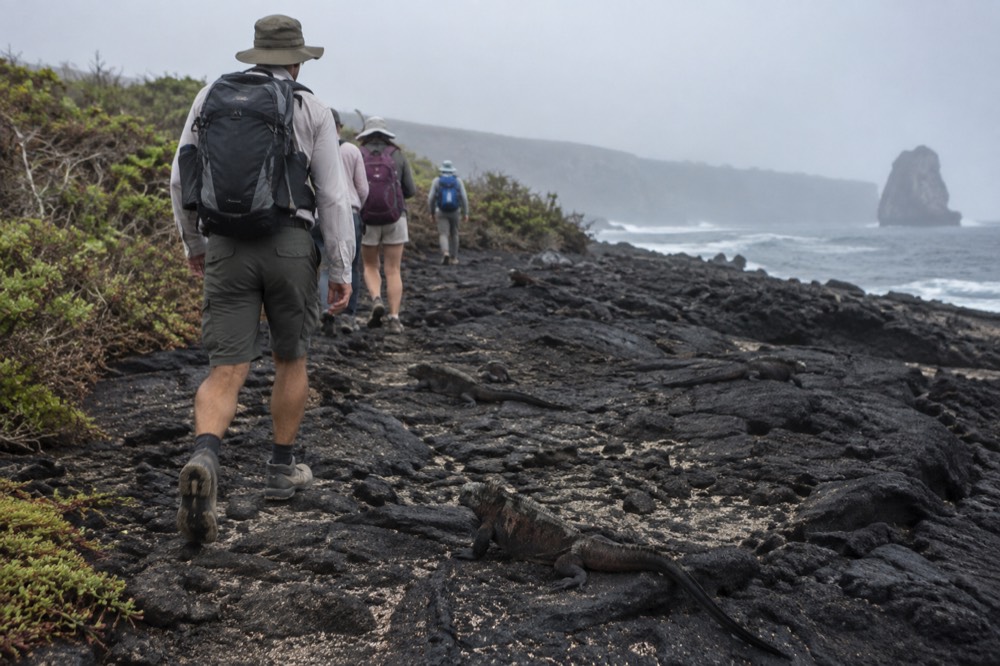
The distance rule sounds easy until you land. Galapagos animals evolved without large land predators, so they do not flee, and a sea lion pup will happily investigate your fins while you float. The rule still applies: no touching, no crowding, no backing an animal into a corner for a photograph. Nesting birds in particular stay put as you approach, which puts the responsibility for the two metres entirely on you.
The drone ban is absolute and covers the marine reserve as well as the land park. Leave it at home, because there is no permitted flying inside protected areas and no permit a tourist can obtain on arrival. If aerial imagery matters to your work, this is the wrong destination for it.
What Does A Day Tour Cost On Each Island?
Expect a typical boat day to cost $145 to $245 per person from Santa Cruz, $75 to $187 from Isabela and $149 to $320 from San Cristobal. Short land-based excursions undercut those ranges comfortably, and a handful of premium trips sit above them.
| Island | Typical per-person range | Examples from current listings |
|---|---|---|
| Santa Cruz | $145 to $245 | North Seymour from $230, Bartolome from $245 |
| Isabela | $75 to $187 | Sierra Negra Volcano from $77, Los Tuneles from $187 |
| San Cristobal | $149 to $320 | Kicker Rock from $160, the 360° tour from $190 |
The spread inside each island is wider than the spread between islands, and it mostly comes down to inclusions. A cheaper listing may exclude park-level fees, lunch or wetsuits, while a pricier one folds everything in. Compare what the numbers buy before you compare the numbers themselves, because two trips to the same site can differ mainly in what is covered. The Howlanders 360 listing, for instance, sits above the typical San Cristobal range at from $270, and its inclusions run correspondingly deep.
The short options are what make a land-based trip affordable. On Santa Cruz a highlands tortoise excursion runs from $39.99 and a three-hour bay tour from $75, and on Isabela the half-day Tintoreras trip is from $90. None of these need a full day, which matters when your calendar is already carrying ferry crossings and an arrival afternoon.
At the premium end from Santa Cruz sits the Day tour to Pinzón Island and La Fé/Palmitas Bay with snorkeling and fishing. It runs seven hours from $249 per person, is rated 4.9 from 154 reviews, the highest review count of any day boat we list, and Guiding Galapagos Expeditions includes lunch, soda, towels, snorkelling gear, your choice of short or long wetsuit and all fees and taxes. Check availability
Notice the last line of that inclusion list. When a listing states all fees and taxes, you are looking at the true price; when it does not, budget a margin for site charges. It is the single most common reason two apparently similar boats quote different figures.
If reading all of this makes you want to hand the sequencing to someone else, the packaged end of the market is the 3-Day Galapagos Trip for Traveler Without Much Time, priced per group from $5,600 with operator GAGV rather than per person. It includes the hotel, breakfast and lunch, a navigable snorkelling tour, all transfers and a tour leader who also photographs the trip, with free cancellation on the listing and departures from Guayaquil's José Joaquín de Olmedo International Airport or from San Cristobal.
When Should You Travel For The Wildlife You Want?
The islands deliver something every month, but specific animals keep specific calendars. Blue-footed boobies dance and mate between June and August, waved albatross are on Española from April through December, sea lion pups peak in August and September, and whale shark season at Darwin and Wolf runs June to November.
| Wildlife | Window |
|---|---|
| Blue-footed boobies, courtship and mating | June to August |
| Waved albatross on Española | April to December, eggs laid April to June |
| Sea lion pupping | Peaks in August and September |
| Whale sharks at Darwin and Wolf | June to November |
| Giant tortoise breeding | January to May |
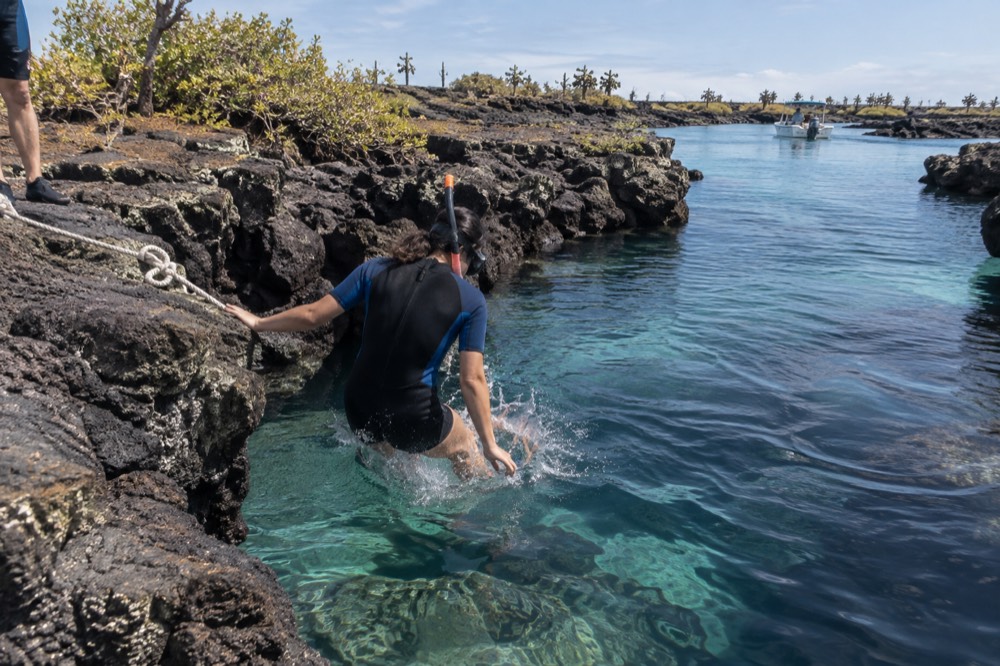
Sea conditions matter as much as the animals do. In the warm season, December to May, water temperatures average 74 to 76°F and most snorkellers are comfortable without a wetsuit. The cool garúa season, June to November, averages 66 to 72°F, and the listings that include neoprene suits earn their keep. Swell is a separate question again, worth raising with the operator before any open crossing.
Two caveats on that table. Waved albatross are the only ones with a real absence, gone from Española between January and March, so an albatross trip has to sit inside the long window or not happen at all. Galapagos penguins sit at the other extreme, breeding year-round with no clearly defined season, and nesting activity is possible anywhere from May to December.
Match the calendar to your island plan, not just to your month. Española lies at the southern edge of the archipelago and is normally visited on cruise itineraries, and Darwin and Wolf in the far north are for longer trips as well, so the albatross and whale shark rows of the table effectively describe cruises. Everything else is reachable on the day tours this site lists from Santa Cruz, Isabela and San Cristobal.
Is Island Hopping Or A Cruise The Better Choice?
In 2025, 79% of Galapagos visitors travelled land-based and only 21% by cruise. Mid-range island hopping typically costs $250 to $350 per person per day with hotels, tours and transport folded in, against $450 to $1,000 or more per person per day for a cruise, or $3,000 to $10,000-plus for a week. For most people with a week or less, island hopping now wins on value, while cruises win on reach.
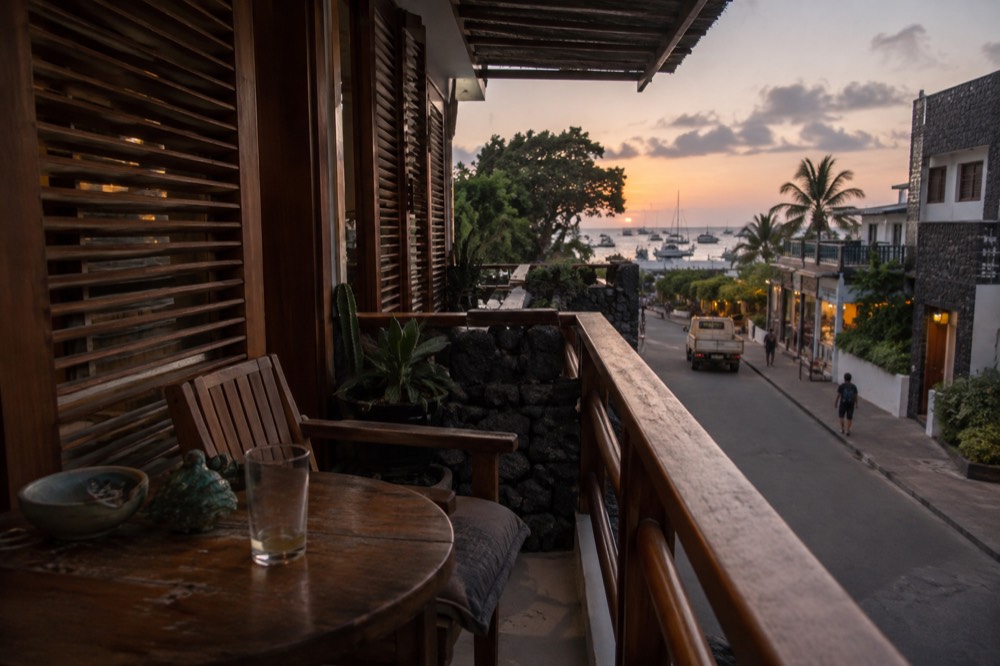
A generation ago those percentages ran the other way and the cruise was the default way to see the islands. The reversal is visible everywhere in Puerto Ayora, from the number of tour offices to the ferry schedules. Island hopping gives you towns to sleep in, restaurants that are not buffet lines, and the freedom to add or drop a day tour once you are there. Budget hotels start around $30 to $65 per night and mid-range ones around $65 to $150, and that is where much of the saving lives.
What cruises still do better is distance. Multi-day itineraries call at islands a day boat out of Puerto Ayora simply cannot reach inside a single day, and they move you between sites while you sleep. If your wishlist leans heavily toward the far-flung islands, a cruise is not a luxury but the only realistic shape of trip.
There is a hybrid worth considering, too: a short cruise segment bolted onto a few land-based days, or a base on Santa Cruz drawing on the strongest day boats. With total arrivals up about 4% year on year, the trips with the smallest groups and the best guides are the ones worth booking before you fly. The Galapagos island hopping page lays the itineraries out.
Where Can You Still See Wild Giant Tortoises?
Between 20,000 and 25,000 giant tortoises live across the islands today, and on Santa Cruz you can watch wild ones graze on a half-day highlands excursion, no cruise required. Breeding runs January to May, with nesting following and eggs hatching after roughly 130 days.
The highlands of Santa Cruz are the easy version of this encounter. Tortoises move between the farms and the park land on the slopes above Puerto Ayora, and the short tours from town put you among them with a guide, which the park rules require inside protected areas. The two highlands trips described earlier, from $39.99 and from $68, are the standard ways in.
The population numbers are a conservation story, not just a sightseeing one. On Española, a programme that repatriated the last 15 original adults of the island had built the population past 2,300 by June 2020. On Pinzón, the island reached on the seven-hour day tour from Puerto Ayora, more than 1,000 juvenile tortoises have been returned to the wild since black rats were eradicated in 2012, and hatchlings now survive there naturally.
The newest chapter is Floreana. In February 2026, 158 juvenile tortoises of Floreana lineage were released on the island, the first tortoises of that lineage back on Floreana in more than 180 years. They came from a captive breeding programme on Santa Cruz that has produced more than 600 Floreana-lineage hatchlings, which means the tortoise you photograph in the highlands has relatives actively repopulating islands their ancestors vanished from.
None of this requires planning beyond your arrival day. The highlands trips run daily from Santa Cruz, fit between a late flight and dinner, and cost less than a single night in most hotels. It is the cheapest reliably spectacular afternoon in the islands.