Galapagos Eco Tours: What Actually Makes A Tour Sustainable
The word eco is on half the signs in Puerto Ayora and it is doing almost no work. The national park already sets the rules. What is left to choose matters more than the label.
Short answer
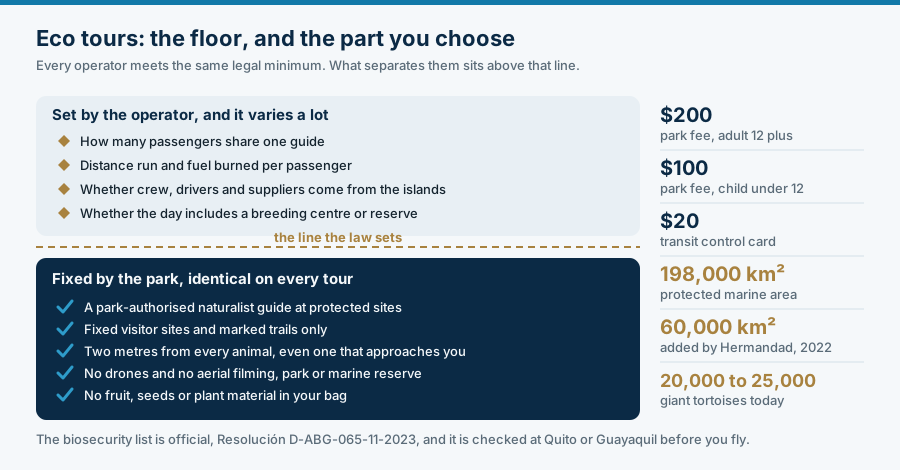
Nearly every licensed Galapagos tour is an eco tour by law: a naturalist guide, a fixed visitor site, a marked trail and a two-metre distance from wildlife are mandatory, not optional. Real differences sit elsewhere, in group size, how far the boat runs, who the operator employs, and whether the itinerary includes conservation sites.
Walk the length of Avenida Charles Darwin in Puerto Ayora and you will count the word "eco" on more signs than you count sea lions, and there are a lot of sea lions. Eco hotel. Eco lodge. Eco boat, eco tour, eco taxi. My first trip out here, in 2021, was land-based island hopping, which meant a lot of standing around waiting for a ferry with time to read those signs. They wore me down. Nobody audits that word. In a place where the national park writes the rules for every single visit, "eco" mostly describes a legal baseline rather than a decision the operator made.
That is not a reason to stop caring about the question. It is a reason to point the question somewhere more useful.
Does "Eco Tour" Mean Anything Different In The Galapagos?
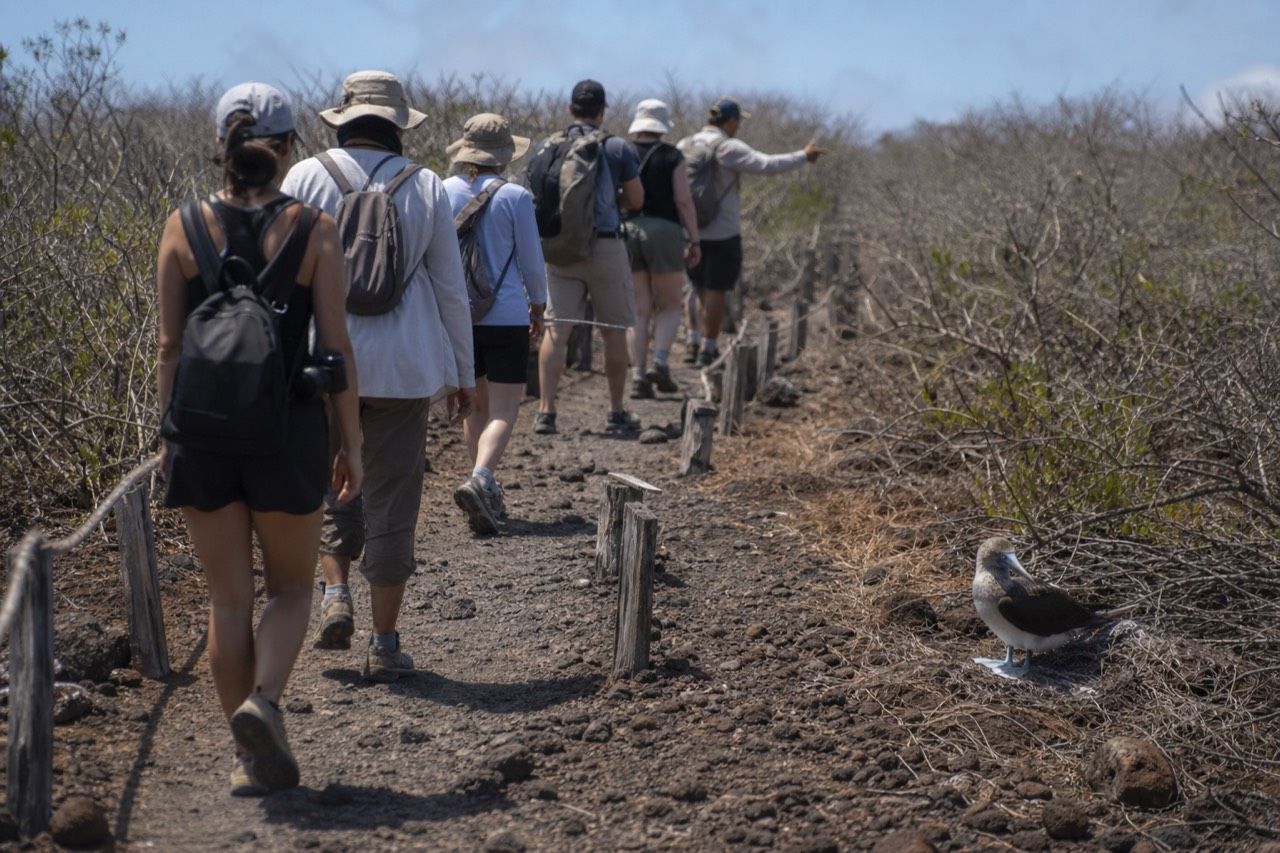
Less than the marketing implies. Every visit to a protected site already runs under national park rules: a licensed naturalist guide, a designated visitor site, a marked trail, and a minimum of two metres between you and any animal. Those are legal minimums, not features. Almost any licensed Galapagos day tour is technically an eco tour.
The Galapagos National Park Directorate controls access to the protected sites the way a museum controls access to its galleries. You cannot wander. Visitor sites are fixed points with defined trails, groups move through them with a park-authorised naturalist guide, and the guide is responsible for keeping the group on the path and off the wildlife. The park's published visitor rules put the distance at two metres, six feet, and they hold even when the animal walks toward you, which it will. Sea lions in particular have no concept of your personal space, and a mockingbird will land on your bag.
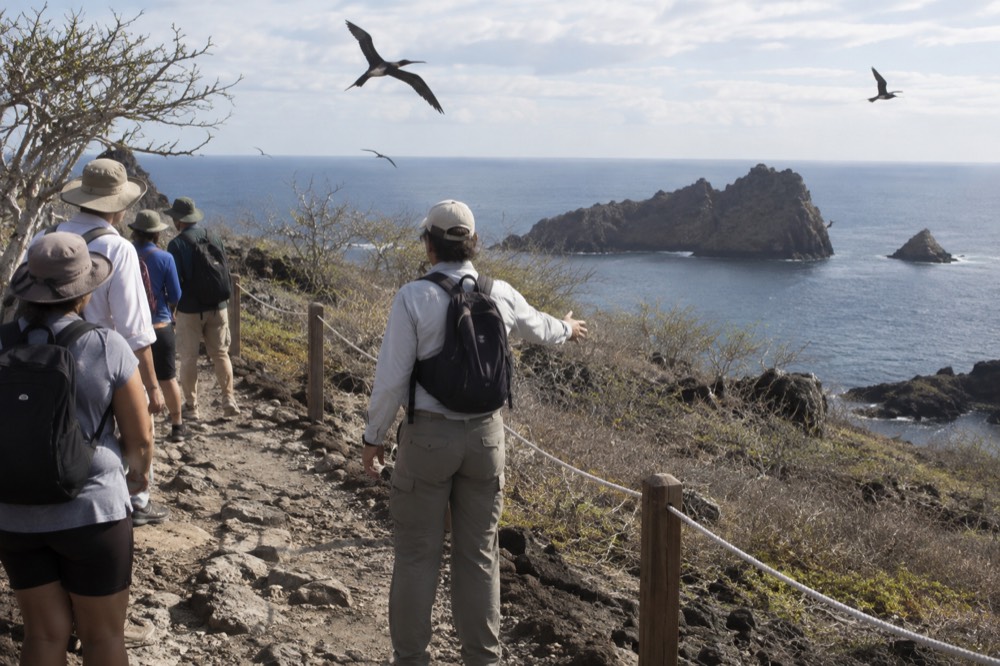
Drones are out. Aerial tourism inside the park and the marine reserve is not permitted, which surprises a lot of people who packed one. Your luggage gets inspected before you fly, because fresh fruit, seeds, plants and many animal products are restricted or banned outright under the biosecurity agency's published product list.
So when an operator advertises "small group, expert naturalist guide, respectful wildlife viewing", read it as a description of Ecuadorian law. The competitor down the street does exactly the same thing, because it cannot legally do anything else.
| Rule or practice | Who sets it | Does it vary by operator? |
|---|---|---|
| Park-authorised naturalist guide at protected sites | National park | No, mandatory |
| Which sites and trails you may enter | National park | No, fixed visitor sites |
| Two-metre distance from all wildlife | National park | No, mandatory |
| Drones and aerial filming | National park | No, not permitted |
| Fruit, seeds and plant material in your bag | Biosecurity agency (ABG/Agrocalidad) | No, inspected before you fly |
| Passengers sharing one guide on the boat | Operator | Yes, and it changes the day |
| Distance run and fuel burned per passenger | Operator | Yes, a lot |
| Crew, drivers and suppliers hired locally | Operator | Yes |
| Whether the day includes a conservation site | Operator | Yes |
The word still does one honest job, and it happens before you ever reach the islands. Operators that reach for the eco label are usually the ones competing on something other than price, and the questions worth asking them, about ratio, fuel and hiring, are questions the label at least implies they can answer. An operator that never mentions sustainability at all can still be excellent. An operator that mentions it and cannot answer those three questions has told you the label is decoration.
The guide requirement deserves more credit than the marketing gives it, because it is the piece that actually shapes your day. A naturalist guide licence from the park directorate represents real coursework and examination, and the licensed guide carries legal responsibility for the group's conduct at the visitor site. Not every licensed guide is a brilliant interpreter, and the range between the best and the merely adequate is wide. But the floor is high, the ceiling is up to the individual, and the difference is worth asking about in a message before you book, because it is the one variable the law cannot equalise.
Where Does The $200 Park Entrance Fee Actually Go?
Into the protected area itself. Foreign adults over 12 pay US$200 and children under 12 pay US$100, collected by rangers on arrival at Baltra or San Cristóbal. The fee doubled from $100 on 1 August 2024. It funds park management, monitoring and conservation across the islands and the marine reserve.
This is the single largest conservation contribution most visitors make, and it is compulsory, so nobody gets to feel especially virtuous about it. Bring it in cash. The ranger desk sits between the aircraft and the baggage hall and the queue moves at the speed of the slowest person hunting for an ATM they will not find. Ecuador's official park tribute page carries the current rates.
There is a second, smaller charge people forget. The Transit Control Card, run through the INGALA/CGREG system, costs US$20 per person and is registered and paid online before you travel. Turning up at Quito or Guayaquil without it starts the trip badly. The fee itself gets picked apart in the park fee explainer.
| Charge | Foreign adult | Foreign child under 12 | When and where you pay |
|---|---|---|---|
| National park entrance fee | US$200 | US$100 | Cash, to rangers at Baltra or San Cristóbal airport on arrival |
| Transit Control Card (TCT/INGALA) | US$20 | US$20 | Online through the CGREG system, before you fly |
| Biosecurity baggage inspection | No charge | No charge | At Quito or Guayaquil, before check-in |
Reaching the fee desk has its own choreography. Avianca and LATAM are the only two airlines flying direct from Quito and Guayaquil into Baltra and San Cristóbal, and every bag, carry-ons included, passes the SICGAL/Agrocalidad biosecurity inspection at your mainland airport before check-in. The Transit Control Card sits entirely online: you pre-register and pay the US$20 through the official CGREG system before you fly, which is why arriving without it goes badly. As for the park fee itself, there is no official confirmation that the ranger desk accepts card payment, so the working assumption is cash, and the working backup is more cash than you think you need.
What Actually Separates One Galapagos Operator From Another?
Four things, and none of them appear on the brochure. How many passengers share your one guide. How far the boat runs and how hard the engines work to get there. How much of the crew, food and transport is sourced on the islands. And whether the itinerary includes a site that funds conservation directly, such as a tortoise breeding centre.
Group size is the one you feel immediately. The guide-to-visitor ratio decides whether you get answers to your questions or the back of somebody's rash guard for six hours. It also decides how quickly the group clears a trail, which matters at busy sites where a slow group holds up the one behind it.
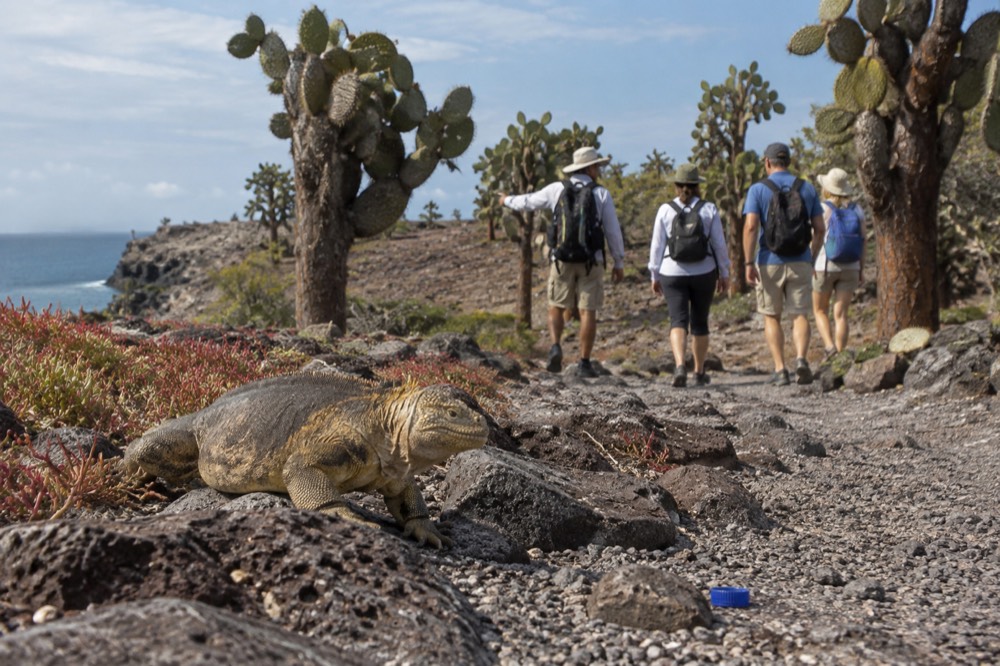
Fuel is the one nobody advertises. A day boat to a distant island runs two hours out and two hours back on diesel outboards or inboards, and that is the largest single piece of your day's footprint. A highlands tour by road, a bay tour in Academy Bay, or a walk to Tortuga Bay costs almost nothing by comparison. If you want a genuinely low-impact day, the answer is boring: stay close to where you sleep.
Local employment is the quiet one. The islands have a resident population that depends on tourism, and an operator crewing with island residents, buying fish and produce from island suppliers, and using island drivers keeps more of your $200 day inside the archipelago. Ask. A straight answer comes fast, and an evasive one tells you plenty.
| Question to ask before booking | Why it matters | What a good answer sounds like |
|---|---|---|
| How many passengers, and how many guides? | Decides your access to the guide and the pace on the trail | A named number, not "small group" |
| How far does the boat run each way? | Fuel burn is the biggest impact of a day tour | Stated in hours or nautical miles, both directions |
| Is the crew from the islands? | Keeps tourism income in the archipelago | Names roles, not a slogan |
| Does the day include a breeding centre or reserve? | Routes money and attention into active conservation | Names the specific site |
| What happens to lunch packaging and bottles? | Single-use plastic is the visible failure | Refill points on board, waste carried back |
Push the ratio question until it produces a number. A boat carrying sixteen passengers with one guide is a different product from the same boat with two guides aboard, and the licensed capacity matters as much as the booked count: a vessel licensed for twenty-four but sailing with fourteen gives you room to move, while a vessel licensed for fourteen sailing full gives you a packed deck. Operators running lighter loads tend to answer this instantly, because it is the thing they are proud of. Operators that answer "small group" a second time have told you the number is not small.
The fuel question has a proxy you can check on any listing: the stated duration. A trip that runs three hours total is not crossing to a distant island, and a trip that runs eight hours almost certainly is. Between two similar wildlife days, the shorter engine time is the lighter one, all else equal. That heuristic fails for hiking days, which run long on foot and short on fuel, but for anything with a boat in the description it holds well.
Which Galapagos Day Tours Actually Put Money Into Conservation?
The ones that visit working conservation sites. The Charles Darwin Research Station in Puerto Ayora is the public face of the giant tortoise breeding programme, and highland reserves protect wild tortoise habitat on private land. Both convert ordinary tourist spending into land under protection and animals in the pipeline.
The Charles Darwin Research Station sits at the eastern end of Puerto Ayora, a twenty-minute walk from the pier, and the guided visit is the closest most day visitors get to the breeding programme that has been rebuilding island tortoise populations for decades. You can walk there yourself. A guided visit buys you the explanation, which is most of the value, since the pens themselves do not tell you why a Española tortoise looks nothing like a Santa Cruz one.
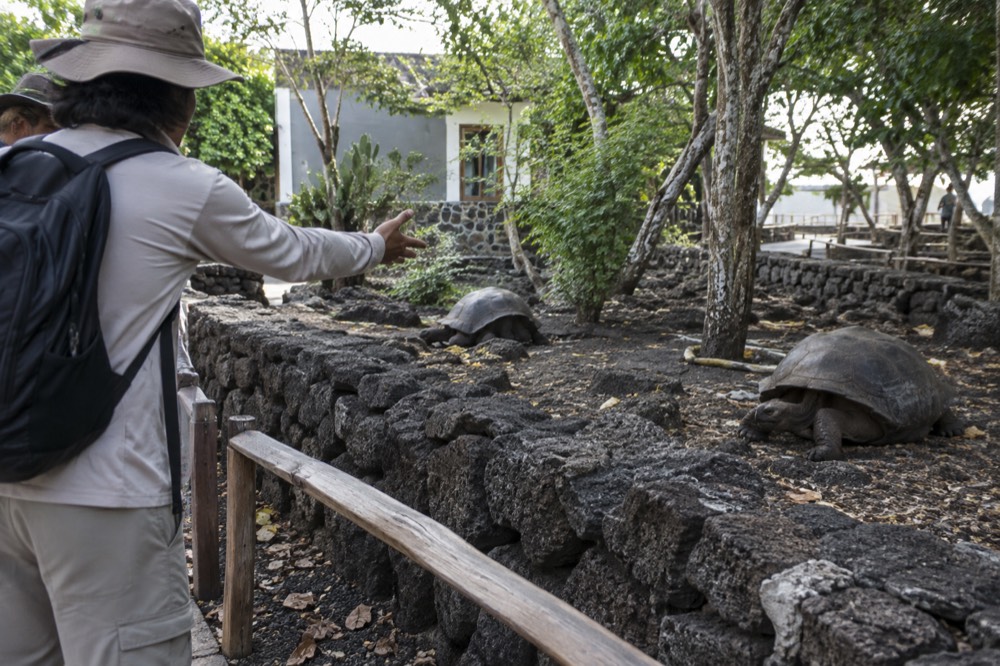
The highlands are the other half. Wild giant tortoises spend the wet months in the humid uplands of Santa Cruz, much of it on private ranch land, and the reserves that host visitors are paid to keep that land as tortoise habitat rather than pasture. If you want to stand near a wild adult tortoise and then walk through a collapsed lava tube on the same morning, a highlands run like the giant tortoise and lava tunnels tour does both in about three hours, and you can Check availability on the operator's listing. It is short, it is road-based, and it is the lowest-fuel wildlife morning available on the island. Everything else leaving Puerto Ayora that day is on the Santa Cruz day tours page.
The price of a highlands morning also tells you where the money goes, if you read the inclusions. The short private run lists coffee or tea and little else, which keeps the sticker at from $39.99 per person. The longer tortoises, tunnels and craters version, from $68 per person, folds in transportation, a juice stop and the entry admissions at the reserve and at Los Gemelos, so a larger share of what you pay never leaves the island. Neither listing includes the national park entrance fee, because that US$200 was collected at the airport and is already at work.
How Much Of The Galapagos Is Actually Protected?
A very large area, and it grew recently. The Hermandad Marine Reserve was created on 14 January 2022, adding 60,000 km² to the existing protection and bringing the total protected marine area around the islands to 198,000 km². The land side has been a national park since long before that, covering the overwhelming majority of the archipelago's surface.
The scale is hard to picture from a hotel in Puerto Ayora, where the world shrinks to one bay and a road up the hill. The reserve expansion announcement put the new area along migratory routes used by sharks, turtles and rays that move between the Galapagos and other protected waters. That is the part tourists rarely see, because the animals using those corridors are far offshore and the sites are days away by boat.
What it means practically is that your snorkelling stop, your dive site and the water your ferry crosses are all inside a managed reserve with fishing restrictions. It is also why the diving picture is complicated, since the famous shark sites sit far offshore in that same protected water.
The expansion matters most for animals you will probably never see. Whale sharks aggregate at Darwin and Wolf between June and November, and those seamounts sit deep inside the protected water, days from the inhabited islands. What you meet close to shore, the sea lions, reef fish, green turtles and the occasional penguin, depends on the older inshore rules: no touching, no feeding, a guide present at every site. The reserve size is the headline. The two-metre rule is the part you personally enforce.
Are Giant Tortoise Numbers Actually Recovering?
Yes, and the numbers are specific. Around 20,000 to 25,000 giant tortoises live across the islands today. Española's population passed 2,300 from a starting point of just 15 surviving adults. More than 1,000 juvenile tortoises have been repatriated to Pinzón, and 158 Floreana-lineage juveniles were released in February 2026.
The Española story is the one worth telling at dinner. Fifteen adults, widely separated on a large island, unable to find each other to breed. The captive programme brought them together, and the rewilding project has since returned enough offspring for the population to pass 2,300.
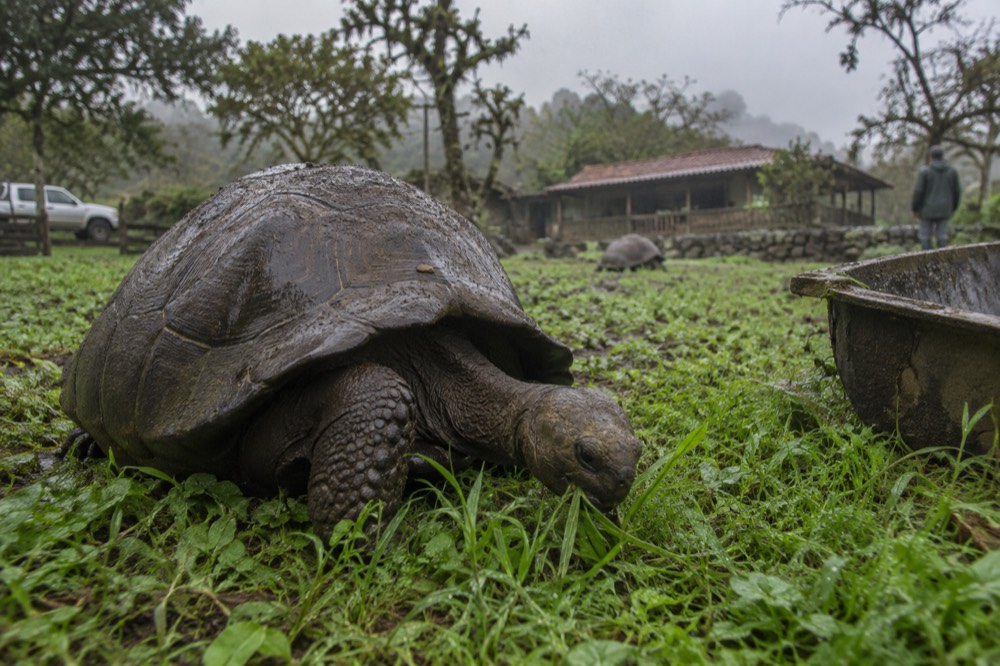
Pinzón needed a different fix. Hatchlings were being eaten by introduced black rats before they reached a size that could survive, so no natural recruitment happened for over a century. Rats were eradicated in 2012, and over 1,000 juveniles have gone back.
Floreana is the newest chapter. The Floreana reintroduction put 158 juveniles of Floreana lineage back on the island in February 2026, the first return in more than 180 years, with over 600 hatchlings born in the captive programme by 2025. The tortoise numbers get more room in the giant tortoise numbers post.
| Population | Where it started | Where it is now |
|---|---|---|
| Española | 15 surviving adults | Passed 2,300 |
| Pinzón | No hatchling survival, black rats present | Rats eradicated 2012, over 1,000 juveniles repatriated |
| Floreana lineage | Absent from the island for over 180 years | 158 juveniles released February 2026, 600+ hatchlings bred by 2025 |
| All islands combined | Heavily depleted by historic exploitation | Roughly 20,000 to 25,000 today |
Recovery also changes what a visitor should expect, and when. The roughly 20,000 to 25,000 tortoises alive today are not spread evenly: wild adults concentrate in the humid highlands, while the breeding centres hold the young and the programme animals. Timing shifts the encounter too. Breeding runs through the hot months of January to May, with nesting after and eggs hatching about 130 days later, so a wet-season highlands walk puts you among active, feeding animals while a dry-season visit can feel quieter.
Is A Land-Based Trip Lighter Than A Cruise?
Not automatically. Land-based travel is now the majority pattern, with 79% of 2025's 290,404 visitors staying in the island towns, and it concentrates demand for water, waste handling and imported food in three small ports. Cruises move that load offshore but burn fuel continuously. Neither is clean, and both are capped by the park.
The honest answer is that the park manages total pressure, so your individual choice matters less than the marketing on either side suggests. What your choice does change is money: land-based spending lands with island hotels, restaurants, taxi drivers and small day-boat operators, while cruise spending mostly lands with the vessel's owner.
If you want a structured land-based trip without assembling it yourself, packaged island-hopping runs exist, and a six-day all-inclusive itinerary listed at $1,983 covers the ferries, the hotels and the day tours in one booking. That is roughly $330 a day, which sits in the normal mid-range band. Assembling it yourself is cheaper and more work. The trade-offs are laid out properly in the cruise versus land-based comparison, including what the ferry days actually cost you in touring time.
Where you base yourself decides what you can reach. From Puerto Villamil the volcano and the tunnels are on your doorstep, and the Isabela day tours run short. From Puerto Baquerizo Moreno you are closest to Kicker Rock, and the San Cristóbal day tours reflect that. Picking the wrong base means paying for a ferry day you did not need.
Base choice sets your ferry budget as much as your tour list. Public ferries run daily between Santa Cruz and Isabela and between Santa Cruz and San Cristóbal, US$35 one way and two to two and a half hours each leg, and there is no direct boat between Isabela and San Cristóbal, so a three-island itinerary buys at least two crossing days. Each crossing is half a day on a small boat in open water, which some travellers book as entertainment and others endure as logistics.
Those crossings are the land-based pattern's hidden footprint, the counterpart to a cruise's continuous fuel. Two ferry legs and five nights of town infrastructure is not obviously lighter than four nights on a ship, which is why the honest comparison is per day and per dollar rather than per slogan. What land-based travel unambiguously does better is local income: your hotel, your dinner and your taxi bill all land on the islands, and none of them are invoiced from a vessel's home port.
Which Highland Tortoise Tour Should You Actually Book?
The highlands options reach the same animals, so the real choice is about guiding depth and what the price bundles. The cheap runs buy you the sighting, the dearer ones buy you a naturalist guide, entrance fees and pickup.
The highlands options cluster into two price bands, and the gap is easier to understand than it looks. The short private Giant Turtle Watching and Lava Tunnels Tour from Santa Cruz delivers tortoises and a lava tunnel in about three hours from $39.99 per person, with coffee or tea included and free cancellation on the listing. The fuller Tortoises, Tunnels and Craters version from Puerto Ayora costs from $68 per person and adds transportation, a juice stop and the entry admissions at the reserve and at Los Gemelos. Both are road-based mornings with essentially no fuel burn per person, and both leave the afternoon free.
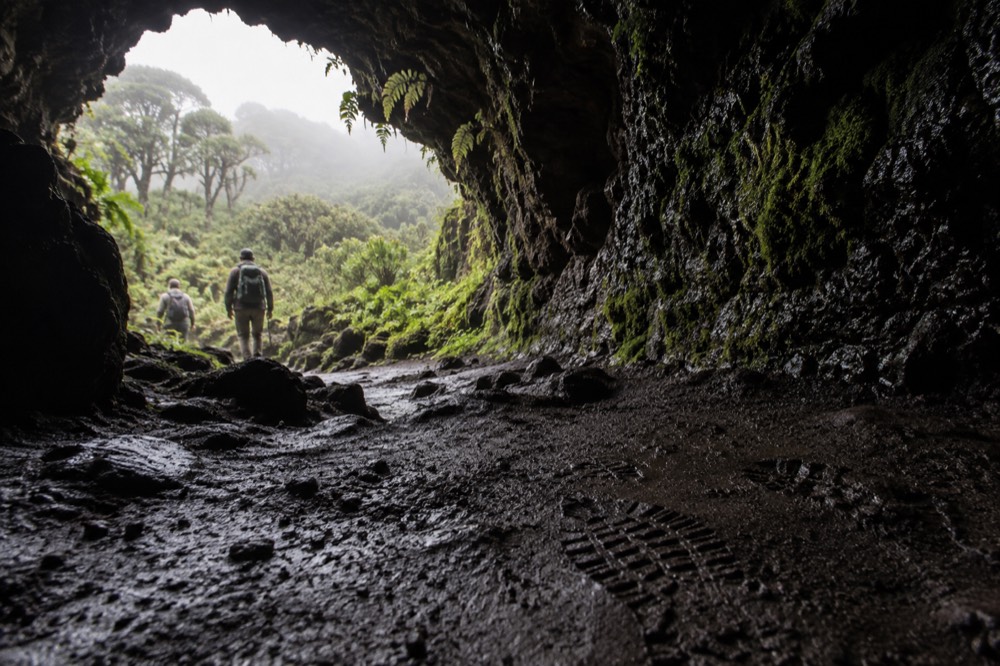
At the top of the range the difference is interpretation. The Meet a 150-Year-Old Giant Tortoise in the Galapagos Highlands tour from Puerto Ayora runs three to four hours and costs from $175 per person, with the entrance fee, an air-conditioned vehicle and coffee included; it holds a 4.9 rating from 46 reviews, with Galapagos Outdoors CL as the operator. What that buys is a guide who can put one old animal in context, which is the difference between photographing a tortoise and understanding one.
The premium over the short runs is not the tortoise, which is the same wild animal on the same ranch land either way. It is the expertise and the inclusions: a naturalist guide who can explain what a century and a half of life on one island actually looks like, the reserve entrance covered before you arrive, the vehicle handled. Whether that is worth roughly four times the price of the short run depends on how much you want from a single morning, and only you can price that.
The shared alternative keeps most of that and trims the price of going alone. Puerto Ayora: The Galapagos Giant Tortoise Shared Experience runs three and a half hours from $175 with Galapagos Outdoors LLC, and it is the more inclusive listing of the two: entrance fees, air-conditioned coach transport, pickup and drop-off, a professional naturalist guide, a walking tour and local taxes are all in the price, with free cancellation on the listing. It carries a 4.9 rating, though from only 10 reviews, so the sample is small even if the average is strong.
Reading those numbers honestly matters more here than on most pages. Ten reviews cannot tell you much about consistency, whatever the average says, while 46 reviews at 4.9 is a real signal. If your priority is the lowest price per sighting, the short private run wins and the afternoon stays open. If your priority is understanding what you are standing next to, the guided experiences justify their price, and between them the shared version bundles more of the day's logistics into a single booking.
What Does A Low-Impact Day On The Water Look Like?
Some boat days cost far more fuel than others, and the difference is decided by geography before you ever board. The island you choose, not the operator you choose, sets most of the footprint, so a lighter day on the water starts with a map rather than a brochure.
The general rule from the comparison table earlier holds at sea: distance run is the impact. Boats out of Puerto Ayora reach the near islands on a fraction of the fuel needed for the distant islets, and the same logic applies from every port. If a marine day matters to you more than a specific island does, picking a closer destination is the single biggest cut you can make to the day's footprint, bigger than anything an operator could promise you.
The Day Tour to Santa Fe Island and Hidden Beach with snorkeling and fishing is the practical example of a marine day done this way. It runs seven hours from Puerto Ayora at from $229 per person with Guiding Galapagos Expeditions, and the inclusions are unusually complete: use of snorkelling equipment, all fees and taxes, lunch, bottled water, soda and coffee are all in the price. It carries a 4.9 rating from 91 reviews, the highest review count of any tour on our pages, so you are not gambling on an unknown quantity.
Snorkelling days like this one are also where the marine reserve stops being an abstraction. The water you swim in sits inside the protected area with fishing restrictions, and the group is accompanied by a park-authorised naturalist guide, the same rule that applies at any land site. The fishing element is worth a message to the operator before you book if it concerns you, since the listing frames it as part of the day and how it is handled is a fair question to ask.
Timing changes what the same litre of fuel buys you. Sea lion pupping peaks in August and September, Galapagos penguins nest from May into December, and blue-footed boobies run their courtship and mating between June and August, so the cooler half of the year delivers the most wildlife drama per crossing. Sea temperatures follow the same calendar: the warm season averages 74 to 76°F (23 to 24°C) while the garúa season drops to 66 to 72°F (19 to 22°C), which decides whether you want a wetsuit more than it decides what you see.
Can You Hike A Volcano On A Day Tour?
Yes, and on Isabela it is the lowest-impact big day available. The Sierra Negra hike runs five to six hours from Puerto Villamil, costs from $66.99 per person, and replaces boat fuel almost entirely with shoe leather.
Isabela is the one inhabited island where a walking day competes seriously with the boat days, and the Hiking Tour to Sierra Negra Volcano is the proof. It is operated by Galápagos Native Tour Operator, holds a 4.3 rating from 24 reviews, and includes private transportation, breakfast with a box lunch and a Galapagos National Park guide, with free cancellation on the listing. At from $66.99 per person it is also one of the cheapest guided days anywhere in the islands, because a hike needs no boat, no long crossing and no dock time.
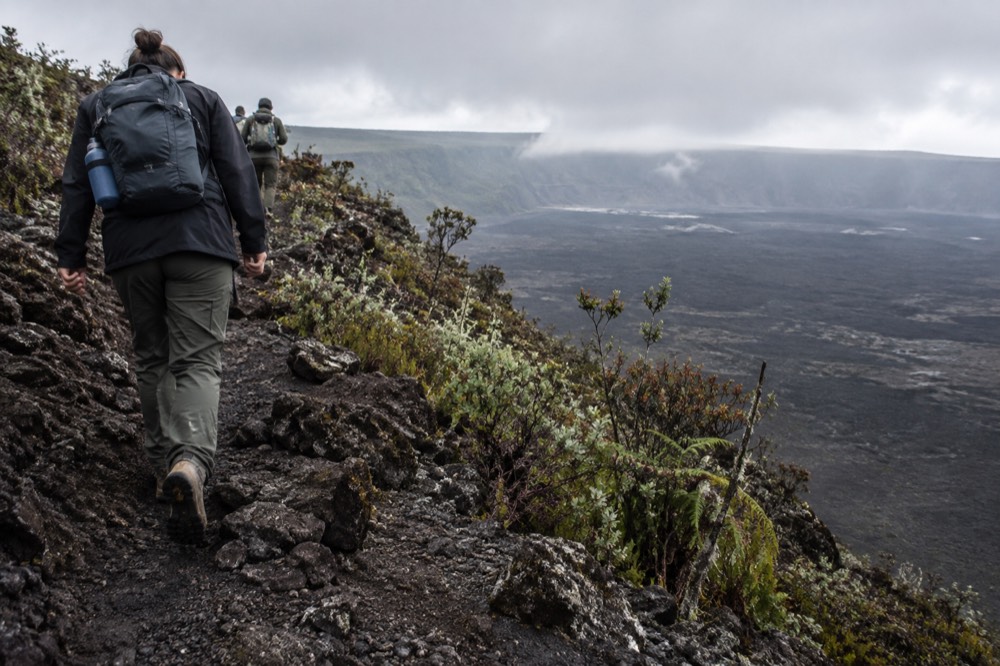
Getting to the trailhead is the real cost, and it argues for sleeping on Isabela. Public ferries run daily between Santa Cruz and Isabela at US$35 one way and take two to two and a half hours, so basing yourself in Puerto Villamil for a night or two is the sane way to do this hike rather than attempting it as a crossing-and-return sprint. From Puerto Villamil the tour picks you up, which removes the last logistics question from your morning.
Weather decides this day more than most. The garúa season, June through November, hangs low cloud over the highlands, and hikers chasing the caldera view tend to prefer the clearer months, while the wet season paints the slopes green and mists the crater rim. A 4.3 from 24 reviews is solid rather than stellar, and visibility is the variable most likely to explain a middling day on an otherwise well-run trip.
What Does A Sustainable Galapagos Budget Look Like?
The fixed costs are identical for everyone, so the real decisions are where you sleep, which island you base on and how many boat days you buy. Mid-range island hopping typically runs $250 to $350 per person per day with everything in, against $450 to $1,000 and up per person per day for cruises.
Start with the fixed floor. The US$200 park fee and the US$20 Transit Control Card are per person and non-negotiable, and round-trip flights from Quito or Guayaquil typically run $250 to $600 depending on dates and airline. Below that floor, almost nothing about a Galapagos budget is compulsory; it is a series of choices, and each one has a footprint as well as a price.
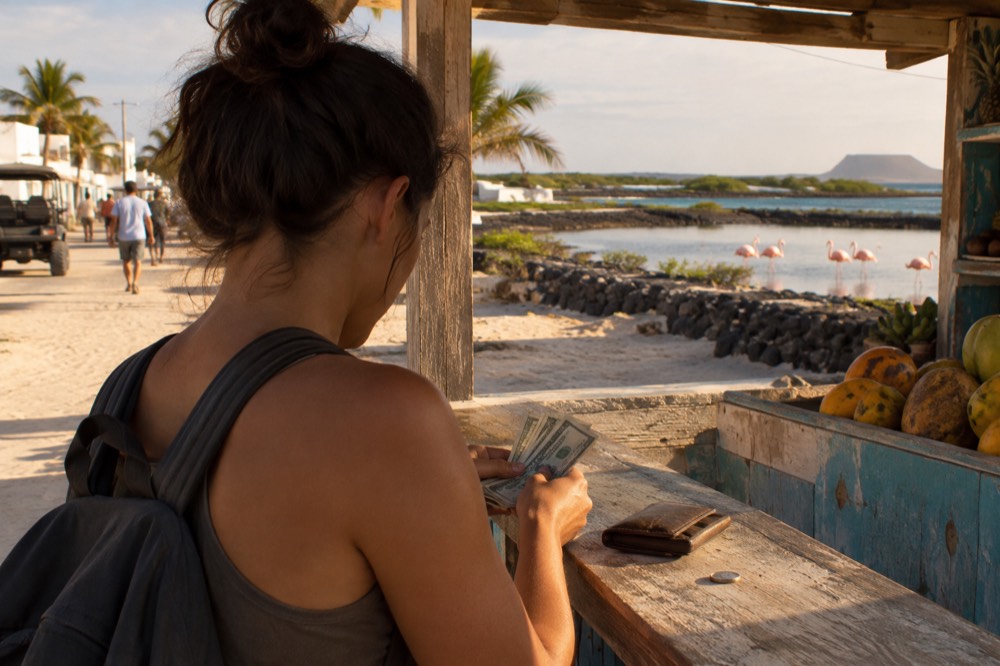
Accommodation and day tours set the rest. Budget hotels in Puerto Ayora start around $30 to $65 a night and mid-range rooms run $65 to $150, and day tours price by island: from Santa Cruz expect $145 to $245 per person for the boat days, from Isabela $75 to $187, and from San Cristóbal $149 to $320. Notice the pattern there. The island with the cheapest day-tour band, Isabela, is also the island where the best-value day is a volcano hike costing from $66.99, which is not a coincidence: walking days are cheap precisely because they burn nothing.
| Cost item | Typical range | Who you pay |
|---|---|---|
| Round-trip flight from mainland | $250 to $600 per person | Airline |
| Park entrance fee | US$200 fixed, foreign adult | National park rangers, on arrival |
| Transit Control Card | US$20 fixed per person | CGREG system, online |
| Budget hotel night | $30 to $65 | Island hotels |
| Mid-range hotel night | $65 to $150 | Island hotels |
| Day tour from Santa Cruz | $145 to $245 per person | Tour operator |
| Day tour from Isabela | $75 to $187 per person | Tour operator |
| Day tour from San Cristóbal | $149 to $320 per person | Tour operator |
| Mid-range island hopping, all in | $250 to $350 per person per day | Mixed |
| Cruise | $450 to $1,000 and up per person per day | Cruise operator |
For travellers with more money than planning time, the 3-Day Galapagos Trip for Traveler Without Much Time bundles the hotel, breakfast and lunch, a navigable tour with snorkelling, transfers and a tour leader who photographs the trip, and it is priced per group at from $5,600 rather than per person. Split across a family of six that lands inside the mid-range island-hopping band; for a couple it is a premium spend. It departs from José Joaquín de Olmedo International Airport or San Cristóbal, so it suits an arrival-to-departure itinerary where nobody wants to think about ferries, and you can Check availability on the operator's listing.
Add the numbers up for a five-night mid-range trip on two islands and they land roughly where the packaged trips land, which is the point. An island-hopping week is not cheap, but it is predictable, and every dollar above the fixed floor is a choice you control. Choosing fewer, closer days turns out to be the same decision as choosing a sustainable one, and the fuller logistics picture sits on the island hopping guide.
Common Questions
Is there an official eco certification for Galapagos tours?
There is no single certification that a visitor can check the way you would check a hotel star rating. What is enforced is the national park framework: authorised naturalist guides, fixed visitor sites, marked trails, the two-metre wildlife distance and a drone ban. Judge operators on group size, distance run, local hiring and itinerary content instead.
Does the $200 park fee include anything else?
No. It is the entrance fee alone. The US$20 Transit Control Card is separate and paid online before you fly, tours are priced separately, and hotels, food and ferries are all on top. Budget the fee as a fixed cost per person before you compare tour prices.
Can I visit the Charles Darwin Research Station without a tour?
Yes. It sits at the eastern end of Puerto Ayora and is walkable from town. A guided visit adds the explanation of the breeding programme and the differences between island tortoise lineages, which is the part the enclosures cannot tell you on their own.
Which single day tour has the lowest environmental impact?
A road-based highlands trip or a short bay tour close to your port, because fuel burned by long-distance day boats is the dominant impact of a day tour. The Santa Cruz highlands run reaches wild tortoises and lava tunnels in about three hours without a long crossing.
Are drones allowed anywhere in the Galapagos?
Not in the national park or the marine reserve, which covers essentially everywhere a tour takes you. Assume you cannot fly one and leave it at home rather than risking a conversation with a ranger at the airport.