Is The Galapagos Good For Families With Kids?
Children are cheaper here than almost anywhere: half price at the park gate. The hard part is not the money, it is the length of the boat days.
Short answer
Yes, with planning. Children under 12 pay a US$100 national park fee instead of US$200, wildlife is unusually approachable, and short bay tours suit ages five and up. The limits are ten-hour boat days, open-ocean ferry crossings, and snorkelling in deep water, which realistically starts around age eight.
There is a stretch of the Tortuga Bay trail on Santa Cruz where the paving runs dead straight through scrub for two and a half kilometres with no shade at all. Every time I have walked it I have passed families, and the pattern is identical: the adults are wilting and the children are fine right up until they are catastrophically not. Then the beach appears, there are marine iguanas lying across the sand like discarded gloves, and everyone forgets the walk.
That is the Galapagos with kids in miniature. The wildlife does the work. The logistics are where a family trip succeeds or falls apart, and almost all of it comes down to how long you keep children on a boat.
What Do Children Pay To Enter The Galapagos?
Children under 12 pay a US$100 national park entrance fee instead of the US$200 adult rate. Anyone 12 or over pays full price. Everyone, regardless of age, pays the US$20 Transit Control Card, registered and paid online before you fly. Both are per person, with no family cap.
The fee doubled on 1 August 2024, and the child rate rose alongside it. The current schedule is published on the park's official fee page, which is the number to trust when a booking agent quotes something older.
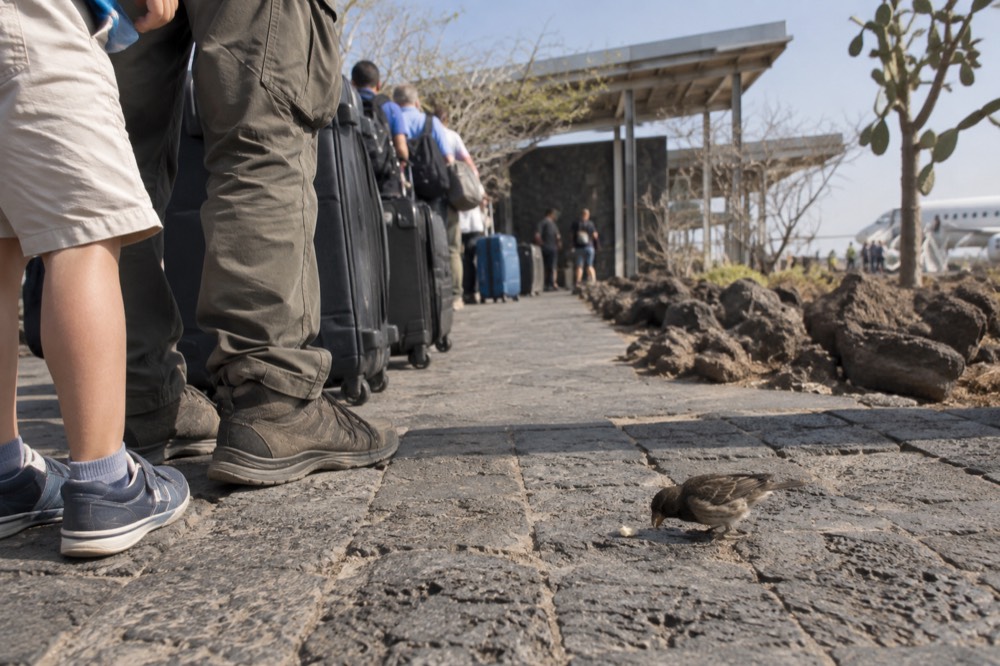
That 12-year threshold matters more than it looks. A family with an 11-year-old and a 13-year-old pays $100 for one and $200 for the other, and the difference is one birthday.
| Party | Park fee | Transit cards | Fixed total at the gate |
|---|---|---|---|
| Two adults | $400 | $40 | $440 |
| Two adults, one child under 12 | $500 | $60 | $560 |
| Two adults, two children under 12 | $600 | $80 | $680 |
| Two adults, two teenagers (12+) | $800 | $80 | $880 |
Flights sit on top of that at roughly $250 to $600 per person round trip from Quito or Guayaquil, and children are rarely discounted much on the island routes. The fee and transit-card mechanics, including where and how you pay them, are covered in the entry rules and flights guide.
Two practical details catch families out at the airport, and both are worth knowing before you pack. The Transit Control Card is not bought on arrival: it is pre-registered and paid online through the official CGREG system before you fly, one registration per person, children included. The park fee works the other way round. It is collected on arrival by park rangers at the Baltra and San Cristóbal airports, and there is no official confirmation that card payment is accepted at the desk, so carry the full amount in US dollars in cash.
None of these gate costs appears in any tour price, and they apply to every visitor on every trip, so treat them as a fixed line in the family budget rather than something to discover at the counter. The order of operations is fixed too: the card is settled online before you fly, the fee in person once you land.
Which Tours Actually Suit Which Ages?
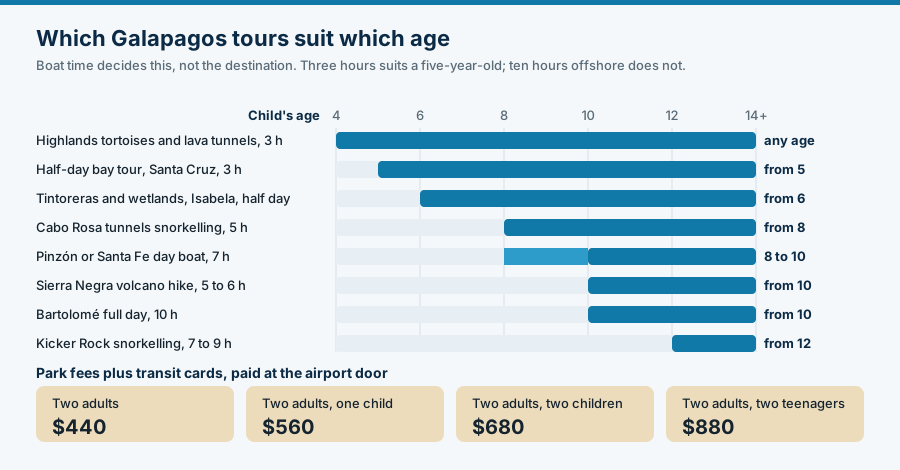
Under five, stay on land and in town. From five, three-hour bay tours in sheltered water work well. From eight, most full-day boats become realistic if the child can snorkel with a life vest. Ten-hour offshore tours like Bartolome suit confident swimmers from about ten upward.
Duration is the real filter, not the destination. A ten-hour tour means an early start, an hour or more of open-water transit each way, two water entries and a packed lunch on a moving deck. Some eight-year-olds handle that happily. Many do not.
| Tour type | Length | Works from about | Why |
|---|---|---|---|
| Half-day bay tour, Santa Cruz | 3 hours | Age 5 | Sheltered water, short transit, snorkel optional |
| Highlands tortoises and lava tunnels | 3 hours | Any age | Land only, short walks, no boat |
| Tintoreras and wetlands, Isabela | Half day | Age 6 | Calm channels, sharks visible from the path |
| Cabo Rosa tunnels snorkelling | 5 hours | Age 8 | Shallow but a proper open-water snorkel |
| Pinzón or Santa Fe day boat | 7 hours | Age 8 to 10 | Long, two snorkel stops, deeper water |
| Sierra Negra volcano hike | 5 to 6 hours | Age 10 | Long walk, exposed, often muddy |
| Bartolome full day | 10 hours | Age 10 plus | Early start, offshore transit, steep boardwalk climb |
| Kicker Rock snorkelling | 7 to 9 hours | Age 12 plus | Deep water, current, sharks, no standing depth |
Kicker Rock is the one to be honest about. It is a spectacular snorkel and it is also a vertical wall of rock dropping into deep blue water with current running through the channel. Children who are not strong, calm swimmers will not enjoy it, whatever the brochure says.
For a first boat day, the half-day bay tour on Santa Cruz is the sensible starting point: three hours around the sheltered bays near Puerto Ayora, with mask and fins included and no long offshore crossing. See what the operator includes and Check availability. If it goes well, the longer boats on the Santa Cruz day tours page open up for the rest of the trip.
On Isabela, the gentlest half day with a proper wildlife payoff is the Half Day Tintoreras Tour from Isabela Island, run by Perfect Destiny: the channels are calm, a good part of the viewing happens from a path rather than from a deck, and the operator's listing shows hotel pickup inside the urban perimeter of Puerto Villamil, breakfast, a box lunch, and use of mask and fins, from $90. The listing currently carries a 4.3 rating from 17 reviews, with free cancellation. One practical note for families: the pickup boundary matters, so if your accommodation sits outside the urban area, confirm the meeting point before you book rather than on the morning.
Does My Child Need To Be Able To Snorkel?
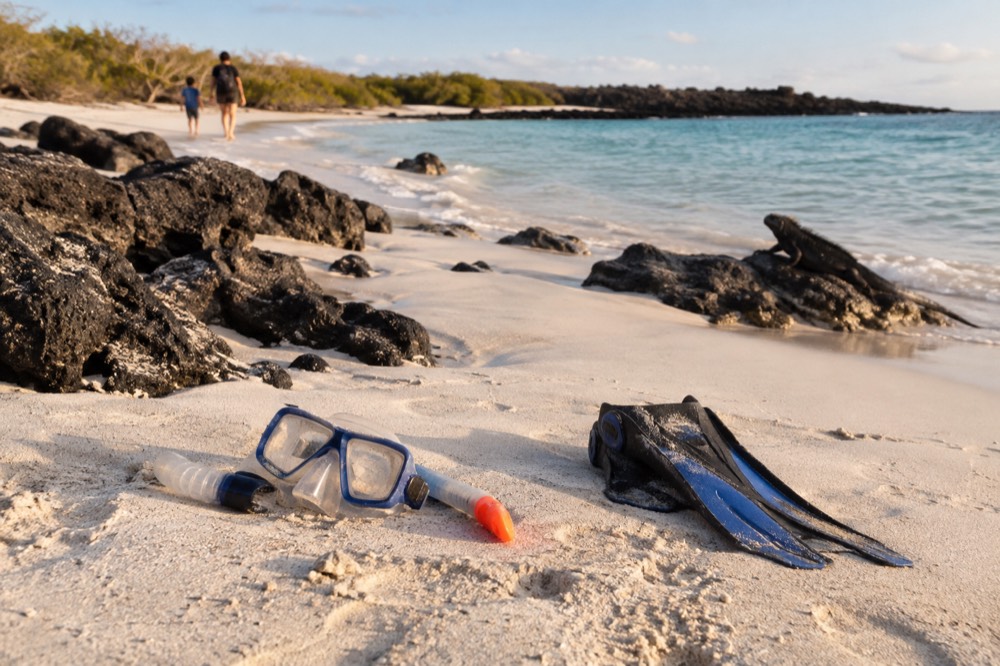
Not for the trip as a whole, but yes for the tours built around it. Most day boats provide a wetsuit and a life vest, and the buoyancy does a lot of the work. A child who can put their face in the water and breathe through a tube calmly is ready. A child who panics with a mask on is not, and a boat deck is a bad place to find out.
Practise at home. Ten minutes in a swimming pool with a mask and snorkel, twice, removes most of the risk. Bringing a child-sized mask is worth the luggage space, because boat kits run adult-heavy and a leaking mask ruins the experience faster than cold water does.
Water temperature is the other factor. From June to November the sea sits around 19 to 22°C, cold enough that small bodies lose heat quickly even in a wetsuit. December to May brings roughly 23 to 24°C and much longer comfortable stints in the water. Families travelling with young snorkellers have a genuine reason to prefer the warm season, and the seasonal breakdown covers what else changes.
Sea lions are the great motivator. Young ones approach snorkellers, spin, and come back for more, and a child who was nervous at the ladder is usually impossible to get out of the water twenty minutes later.
Where the first attempt happens matters as much as whether it happens. A sheltered bay near Puerto Ayora, with a guide in the water and a transit measured in minutes, is a completely different experience from an offshore site with current and swell. If the first try goes badly, a child has lost a morning; if it goes well, the bigger boats become an option for the rest of the week.
The cheapest structured first attempt on Santa Cruz is the Santa Cruz Galapagos Bay Snorkeling Tour, run by OVERLAND ADVENTURE: three and a half hours combining a snorkel with a walk, from $41, including lunch, snacks, equipment and local taxes, with a guide certified by the Galapagos National Park. The listing shows a perfect 5.0 score, though from only four reviews so far, and free cancellation is offered.
How Rough Are The Boats And Ferries?
Rougher than families expect. The inter-island lanchas are small speedboats crossing open ocean for two to two and a half hours, and swell in the channels is normal rather than exceptional. Day-tour transits are shorter but still offshore. Motion-sickness medication, taken an hour before boarding, is standard practice here, not overcaution.
The lancha crossings between Santa Cruz and Isabela or San Cristóbal cost about $30 to $35 and are the least comfortable part of most family trips. Seats toward the middle and rear move less than the bow. Fresh air on the open back deck helps more than sitting inside.
| Crossing | Time | Motion | Family verdict |
|---|---|---|---|
| Santa Cruz to Isabela lancha | 2 to 2.5 hours | Often rough | Medicate in advance, morning boat |
| Santa Cruz to San Cristóbal lancha | 2 to 2.5 hours | Often rough | Same |
| Day tour transit, sheltered bays | 15 to 40 minutes | Mild | Fine for most children |
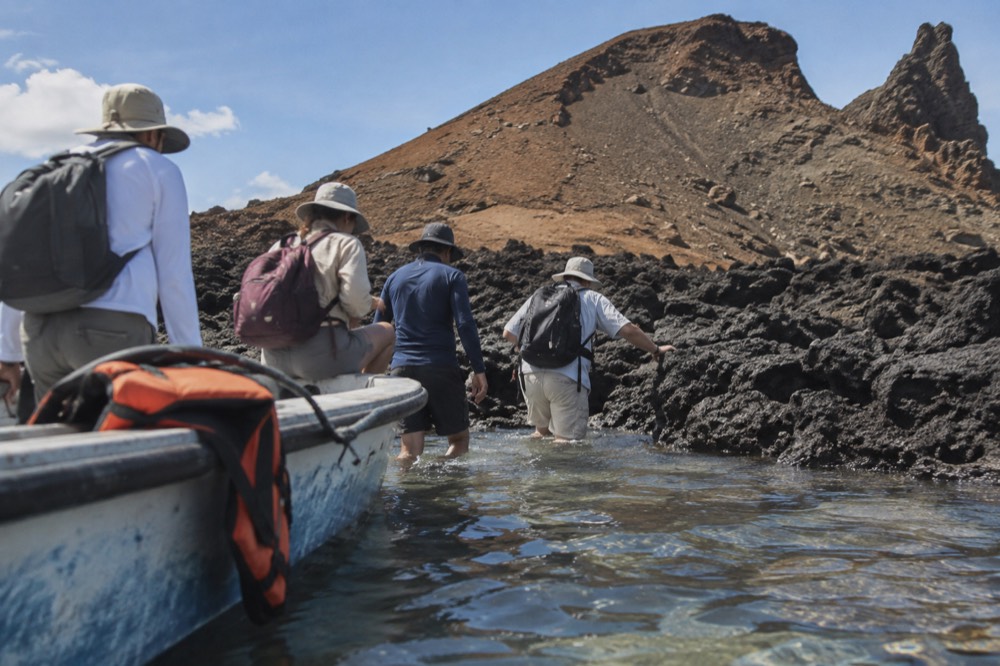
| Day tour transit, offshore islands | 1 to 2 hours each way | Moderate to rough | Age 8 plus, sit low and central |
| Water taxi in Puerto Ayora harbour | A few minutes | Flat | No issue |
One ferry per trip is a reasonable family limit. Two islands over seven nights works. Three islands with young children turns a holiday into a series of transfers.
One itinerary constraint is easy to miss when planning on a map: there is no direct public ferry between Isabela and San Cristóbal, so any trip that includes both islands routes back through Santa Cruz. With children, design around that rather than discovering it. Two bases with one crossing each beats three bases with three crossings, and the third crossing always lands on the day you least want it.
On the medication question, the decision belongs at home, not at the dock. Ask a doctor or pharmacist what suits your child's age and weight, and buy it before you travel rather than counting on finding the right formulation on the islands. What you control locally is timing: whatever is used, the moment to take it is an hour before the boat leaves, not once the swell is already felt.
How Does The 2 Metre Wildlife Rule Work With Children?
Visitors must stay at least 2 metres, about 6 feet, from every animal, even when the animal walks toward you. Children find this genuinely hard, because Galapagos wildlife has no fear response and a sea lion pup will approach a small human directly. The rule holds anyway, and guides enforce it.
Explain it before you arrive rather than on the beach. The framing that works with children is not "you will get in trouble" but "they are not scared of us, so it is our job to be careful". The park's visitor rules also cover feeding, touching and flash photography, all of which are prohibited, and drones are not permitted anywhere in the park or marine reserve.
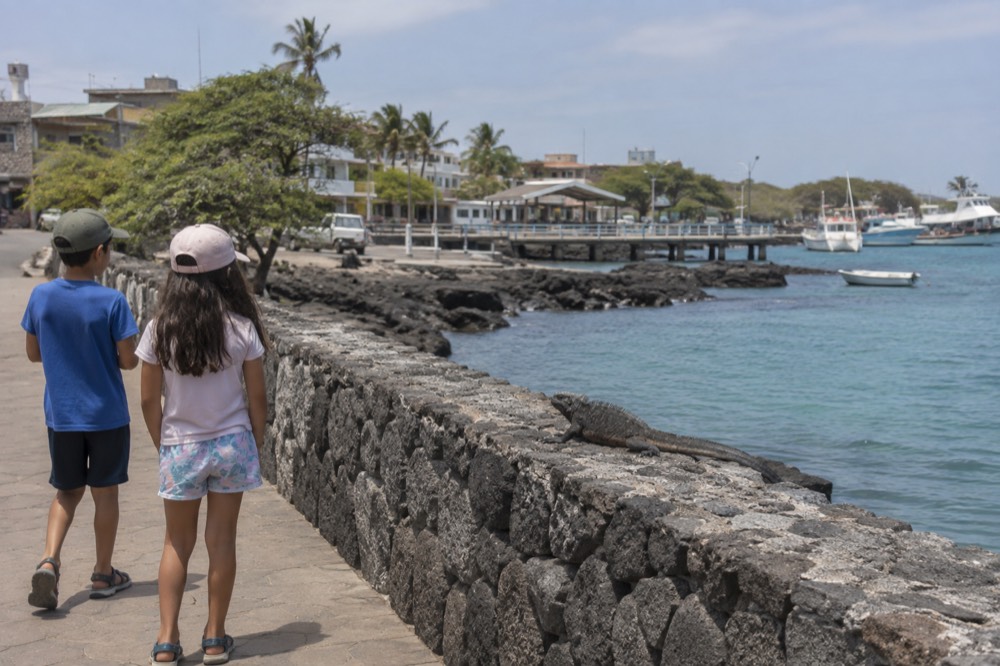
August and September need extra care. That is the peak of Galapagos sea lion pupping, and bull sea lions patrolling a beach with pups on it are the one animal in the islands that will actively see off a person who gets too close. Keep children on the marked path and away from anything lying between them and the water.
Practical version of the rule: pick a landmark distance in advance. Two adult paces. Children manage a physical rule far better than an abstract one.
There is a structural side to all this that explains why booked tours feel the way they do. Inside the protected areas of the Galapagos National Park, visitors must be accompanied by a naturalist guide authorized by the GNPD, so every paid day trip arrives with one, and the good ones turn the distance rule into a game rather than a scolding. Town streets and the fish market are managed differently, but on any excursion the guide is a requirement, not a bonus, which is one reason guided short tours hold their value with children.
What Are The Calmer Alternatives To A Boat Day?
Santa Cruz has a full day of free, land-based wildlife within walking or taxi distance of Puerto Ayora. The Charles Darwin Research Station, the fish market, the Tortuga Bay trail and Las Grietas fill the gaps between tours without anyone setting foot on a boat.
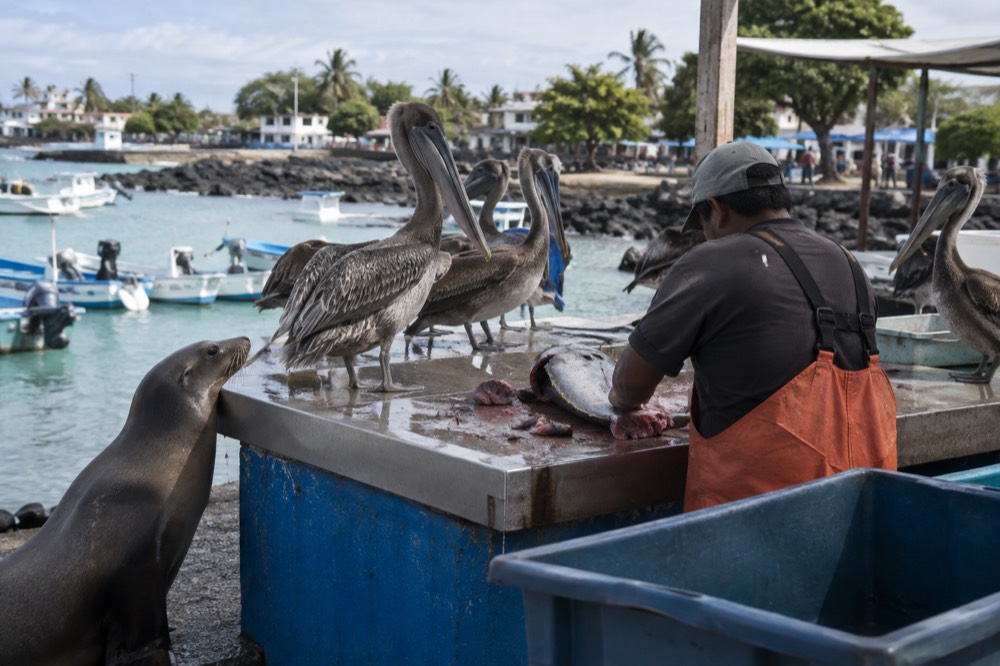
The fish market is the sleeper hit. Pelicans and a sea lion queue at the counter with more patience than the human customers, close enough that the 2 metre rule becomes a running negotiation. It costs nothing and it entertains children longer than most paid attractions.
Tortuga Bay is 2.5km of paved trail each way from town, in full sun, with no shade and no water on the route. Take more water than you think and go early or late. The reward is a long white beach with marine iguanas and, in the sheltered lagoon at the far end, calm water shallow enough for young children to paddle. The walk out to Tortuga Bay covers what to expect on the trail.
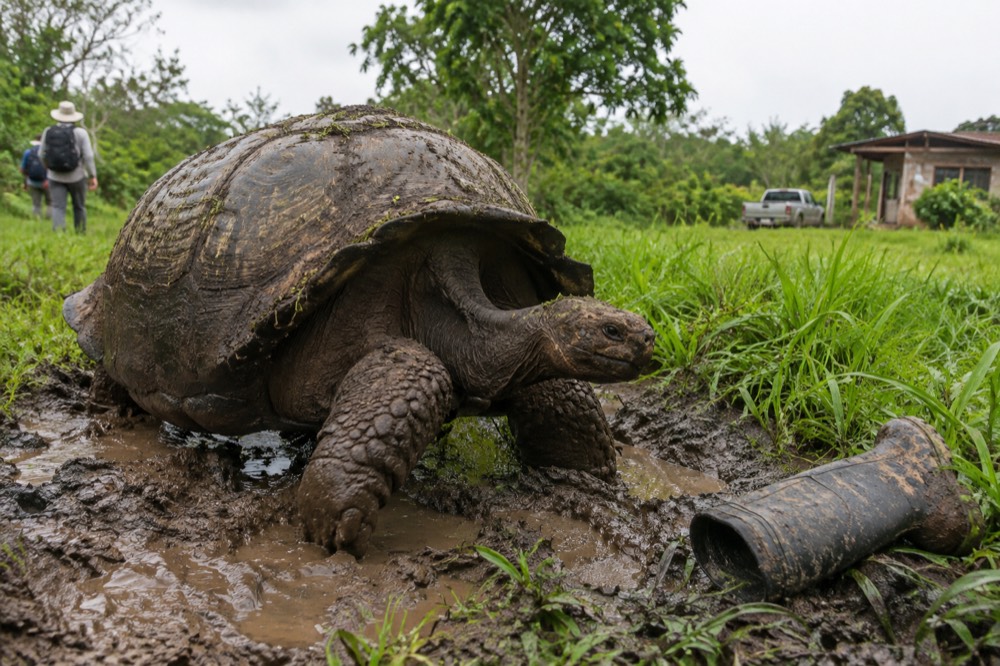
The highlands tortoise reserves are the other reliable option: land-based, short walks, and wild giant tortoises the size of coffee tables at a distance children can actually maintain.
The reserves also suit the youngest children best, for a reason that is easy to forget: a wild giant tortoise moves at roughly the pace of a toddler. The species has recovered to an estimated 20,000 to 25,000 animals across the islands, so in the highlands a sighting is close to guaranteed rather than a lucky long-distance view, which matters when the youngest member of the party has a short attention span and no patience for waiting.
The most-reviewed tour tile on this page is, fittingly, a land-based one: the Giant Turtle Watching and Lava Tunnels Tour run by Galápagos frontier, from $39.99 per person for three hours, currently rated 4.8 from 80 reviews, with free cancellation on the listing. The walk is short, the lava tunnels are a genuine adventure for children who like geology or, depending on temperament, darkness, and the only listed inclusions are coffee and tea, which tells you the price is essentially guiding and access. For a no-boat day that still feels like a proper excursion, it is the cheapest full experience in this guide.
Is Island Hopping Or A Cruise Better With Children?
For most families, land-based island hopping, and it is not a close call. It is cheaper, you set the daily pace, and a tired child can write off an afternoon without writing off a cabin you have already paid for. It is also the majority choice: 79% of Galapagos visitors in 2025 stayed land-based rather than on board.
A cruise does things island hopping cannot. It reaches islands with no ferry link and no hotel strip, it removes the packing and unpacking that island hopping demands on every move, and the wildlife comes to you on a timetable refined over decades. The catch, for a family, is the timetable itself. Every day is structured, every landing has a fixed hour, and no part of it can be shortened because one child is exhausted or seasick.
The price gap is large enough to change the shape of a trip. Mid-range land-based trips typically cost $250 to $350 per person per day including hotels, tours and transport, while cruises typically run $450 to $1,000 or more per person per day, and $3,000 to $10,000 or more for a week-long package. For a family of four, the difference over a week is not a nicer room. It is an entire additional holiday.
I took a last-minute cruise in 2023 and would happily take another, but the rhythm was adult: very early mornings, two activities a day, and a boat that leaves whether or not everyone is ready. My honest read is that the crossover sits somewhere around ten to twelve years old. Below that, island hopping lets you skip the dawn landing; above it, a child starts to enjoy the pace rather than endure it.
| Factor | Land-Based Island Hopping | Small-Ship Cruise |
|---|---|---|
| Typical cost per person per day | $250 to $350 | $450 to $1,000 or more |
| Who sets the daily schedule | You do | The boat does |
| Downtime for children | Built in whenever you want it | Structured around landings |
| Reaching remote islands | Slow, via ferries | Reached overnight |
| A bad day | Swap in a town day | The itinerary moves on regardless |
Island hopping has its own cost, and honesty requires naming it: the ferry crossings covered earlier, and the travel days they consume. The remote islands a cruise reaches while you sleep will cost you a full day in transit each way on a land-based plan. That is the real trade, and only you know which side of it your family sits on. The practicalities of the land-based approach are on the island hopping page.
What Does A Family Day Of Touring Actually Cost?
The big day boats are the expensive line in any family budget: typical prices run $145 to $245 per person from Santa Cruz, $75 to $187 from Isabela and $149 to $320 from San Cristobal. Short shared experiences cost far less, roughly $40 to $175. And one multi-day option is priced per group rather than per person, which changes the arithmetic entirely.
Where you base yourself changes what a day costs more than anything except the boat itself, so it is worth seeing the three ranges side by side before committing to an itinerary.
| Island base | Typical day tour range per person | Example listings |
|---|---|---|
| Santa Cruz | $145 to $245 | North Seymour from $230, Bartolome from $245 |
| Isabela | $75 to $187 | Sierra Negra from $77, Los Tuneles from $187 |
| San Cristobal | $149 to $320 | Kicker Rock from $160, the 360° tour from $190 |
Run the Santa Cruz numbers for a family of four and a single day boat lands between roughly $580 and $980 before anyone buys so much as a juice. That is the real argument for the alternating pattern this guide keeps returning to: one big boat day, then a morning of tortoises or a short bay trip, then another boat. The short options on this page mostly cost between $40 and $175, so a family that mixes lengths spends less across a week than one that books offshore boats daily, and tires the children out far less doing it.
One paid experience sits between the short options and the boats. The Puerto Ayora: The Galapagos Giant Tortoise Shared Experience, run by Galapagos Outdoors LLC, runs three and a half hours from $175 and includes entrance fees, coach transport, pickup and drop-off, a professional naturalist guide, a walking tour and local taxes. It carries a 4.9 rating from 10 reviews, with free cancellation on the listing. For a day when nobody wants sand or swell, it is the polished version of the highlands visit, and the pickup and entrance fees being included removes the two things that most often go wrong with a self-organised highlands day.
The exception to per-person pricing is the 3-Day Galapagos Trip for Traveler Without Much Time, run by GAGV, priced from $5600 per group rather than per person. It includes hotel, breakfast and lunch, a navigable tour with snorkelling, transfers, and a tour leader who doubles as photographer, and the listing carries no reviews yet, so judge it on the itinerary rather than a rating. Compare it against the do-it-yourself total for your family: flights, the $680 in gate fees for two adults and two under-12s from the table above, hotels, tours and ferries. A per-group price only means anything once you have divided it by your headcount.
Which Island Should A Family Base Itself On?
Santa Cruz, for most families, most of the time. It has the deepest tour choice, the best food options, and the most to do on land when a boat gets cancelled or nobody wants one. Isabela and San Cristobal each justify a second base, for different reasons.
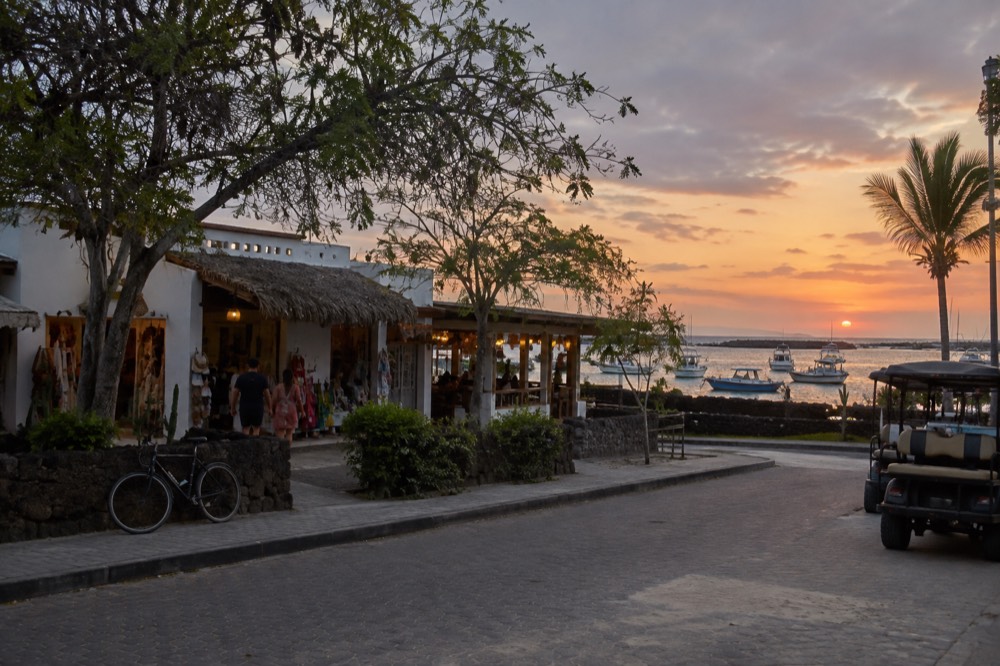
Santa Cruz works as a base because it is the hub of everything. Ferries to both other islands leave from it, the biggest range of day boats leaves from it, and when a trip wobbles there are more fallbacks here than anywhere: the Darwin Station, the fish market, Tortuga Bay, the highlands, Las Grietas. The bay tour and the tortoise experiences covered earlier all run from Puerto Ayora, which means a family can arrive, sleep once, and be on the water the next morning without a single inter-island transfer. The full set of options sits on the Santa Cruz tours page.
Isabela is the slow, beachy base, and children tend to love it. Tours cost less here than anywhere else, from $77 for Sierra Negra to $187 for Los Tuneles, the Tintoreras half-day described above is the gentlest marine trip in this guide, and the town is small enough that children can roam a little. What you pay for all that is the crossing: two to two and a half hours each way by lancha, which is exactly why this guide suggests one ferry per trip rather than two. If Isabela is on the list, the Isabela tours page shows what a base there can reach.
San Cristobal carries the widest day-tour range of the three islands, $149 to $320, including Kicker Rock from $160 and the full-island 360° tour from $190, and its airport means a family can fly straight in without the Baltra transfer. It rewards a second base at the end of a trip rather than a first, once children have their sea legs and their snorkel confidence. More options are on the San Cristobal tours page.
San Cristobal also has the one activity on this page that needs no swimming at all. The San Cristobal Island: Crystal Kayak Tour with Photos, run by Galapagos Deep SA from Puerto Baquerizo Moreno, costs from $80 and includes a crystal kayak, a life jacket, a kayak guide, pictures and a drybag, with a 4.8 rating from 11 reviews and free cancellation on the listing. A transparent-hulled kayak lets a nervous child see what is under the water without ever putting a face in it, and because the photographs are included, the memories come home without a family camera going near the sea. As a bridge for a child who refuses the snorkel, it is the best option on this list.
When Is The Best Month To Take Children?
December to May if water comfort drives the trip: the sea averages 23 to 24°C and children stay in far longer. June to November if wildlife drives it: the sea drops to 19 to 22°C, but sea lion pupping peaks in August and September, and blue-footed boobies run their courtship and mating between June and August.
For a family whose main goal is a child's first snorkel, the warm season is genuinely the easier trip. Water at 23 to 24°C extends comfortable water time enough to matter with small bodies, and the arguments about wetsuits get much shorter. The highlands also see giant tortoise breeding activity concentrated in the hot season from January to May, which pairs the best snorkel conditions with the most active tortoise behaviour on a Santa Cruz base.
The cool season pays its way back in animals. Sea lion pupping peaks in August and September, so beaches carry pups and the two-metre rule needs the extra care described above, and blue-footed boobies perform the courtship dance that precedes mating from June to August. Families considering a cruise that reaches Española should also know the waved albatross is present there for breeding from April through December, absent only in the first three months of the year.
There is no wrong answer here, only a matching exercise between your children and the water. A strong young swimimmer who does not feel the cold can take June to November and get the most active wildlife of the year; a nervous first-time snorkeller will do better in March. The month-by-month detail, including what the seasons do to prices and crowds, is in the best time to visit guide.
What Should We Pack For Children In The Galapagos?
A child-sized mask and snorkel, sun protection that survives water, motion-sickness remedies agreed with a doctor or pharmacist at home, and no fresh fruit, vegetables, seeds or plant products anywhere in the luggage. The biosecurity inspection happens at the mainland airport, before you even board.
Start with the baggage allowance. Galapagos flights permit one checked bag up to 23 kg and one carry-on up to 8 to 10 kg per person, and a family's snorkel gear, wetsuits and sun hats reach those limits surprisingly fast. Decide early what is hired on the islands and what travels, because the inspection at the airport covers all luggage, carry-ons included.
That inspection, run by SICGAL/Agrocalidad at Quito or Guayaquil before check-in, is mandatory for every passenger, and the rules behind it are not decorative: fresh fruits, vegetables, seeds, plants and many animal products are regulated or prohibited for entry to Galapagos. With children this is where it bites, because the obvious travel snack is an apple. Check the official ABG list before packing rather than improvising, and keep snacks in packaging that declares what they are.
On gear, apply the logic from the snorkelling section consistently: if a child-sized mask earns its luggage space, so does everything around it. Test the mask, the fins and the wetsuit fit in a pool at home, not on a boat deck. Sun protection deserves more planning than the equator usually gets credit for, too. The shadeless Tortuga Bay trail is the obvious warning, but a boat reflects light up from the water all day, and a long-sleeve rash guard solves sun, scrapes and a degree of cold in a single item.
Two last items. Buy motion-sickness remedies at home, in the formulation your doctor or pharmacist approves for your child's age, rather than counting on finding the right one locally. And leave the drone at home: aerial activities are not permitted anywhere in the national park or marine reserve, so a drone that cannot fly on the islands is dead weight from the moment you land.