Galapagos Wildlife Tours: What You'll See And When
Galapagos wildlife runs on a calendar. Boobies court in one window, albatross vanish for three months, tortoises breed in the heat. Here is what is where, and when.
Short answer
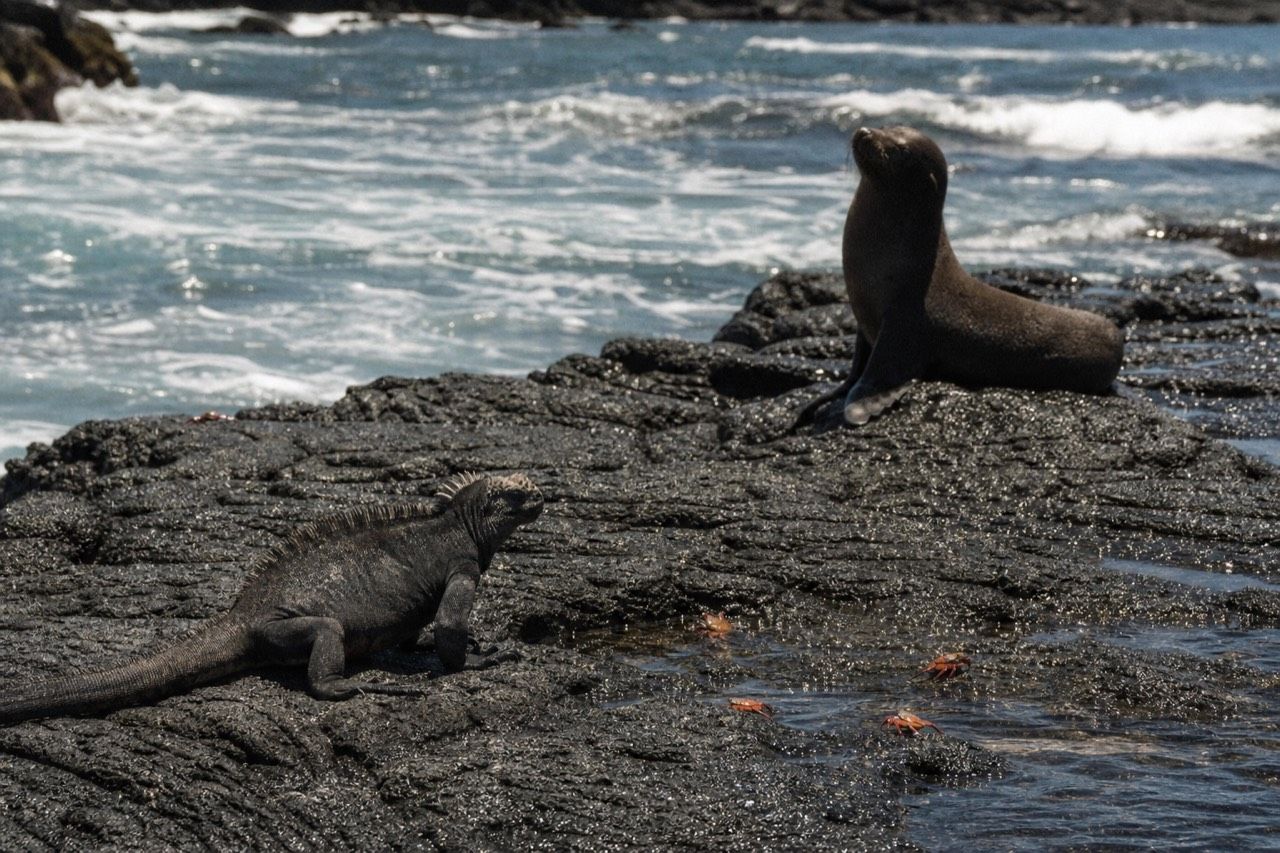
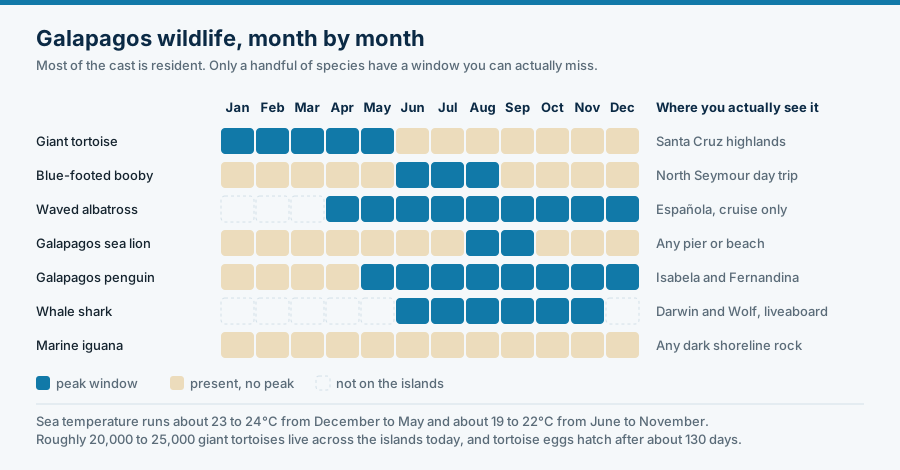
Sea lions, marine iguanas, frigatebirds and finches are near-certain on almost any day tour. Blue-footed boobies court between June and August, waved albatross are on Española from April to December and absent January to March, giant tortoises breed in the hot season from January to May, and sea lion pupping peaks in August and September.
The first marine iguana I ever saw was not on a tour at all. It was on the sandy track out to Tortuga Bay on Santa Cruz, black on black volcanic rock, so still I nearly stepped on it before my brain registered a shape. Then I noticed there were nine more. That is the thing nobody quite prepares you for out here: the animals are not hiding, and they are not running. Most of the work of seeing Galapagos wildlife is being in the right place in the right month, because the calendar does more for you than any amount of patience.
What follows is species by species, with the month and the practical route to each one.
What Will You Definitely See On A Galapagos Day Tour?
Sea lions, marine iguanas, frigatebirds, lava lizards and Darwin's finches are close to guaranteed on almost any day out, in any month. Blue-footed boobies are very likely on seabird islands. Giant tortoises need a highlands trip or a breeding centre. Penguins, red-footed boobies and waved albatross all need a specific island.
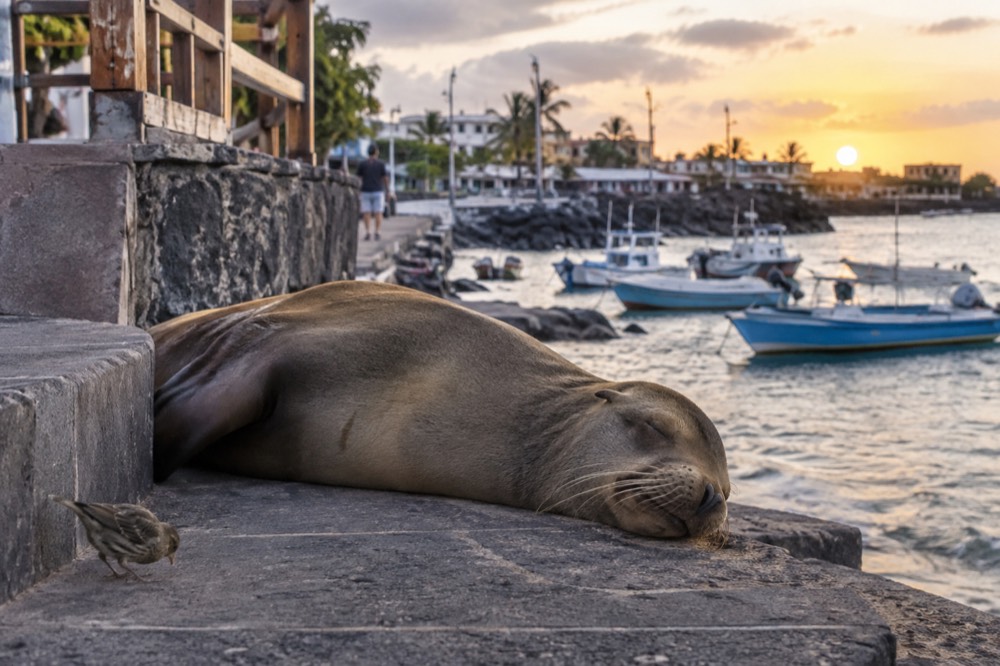
The baseline is high. Galapagos sea lions colonise the piers, the beaches and occasionally the benches in Puerto Baquerizo Moreno, and they show up on essentially every boat itinerary. Marine iguanas cluster on any dark shoreline rock. Frigatebirds follow the boats. Finches hop around your feet at the lunch stop.
Beyond that baseline, the archipelago is not one habitat. It is a set of islands with different ages, elevations and currents, and species distributions follow that. Red-footed boobies nest on outer islands most day boats do not reach. Penguins concentrate in the cooler western waters around Isabela and Fernandina. The waved albatross nests on exactly one island in the archipelago. So the honest planning question is not "will I see wildlife" but "which island am I standing on, and in which month".
One caveat keeps that baseline honest, and it is weather rather than wildlife. The cool garúa months bring the year's roughest crossings, and operators cancel or reroute boat days when the swell makes a landing unsafe, which matters most on a short visit where a lost day cannot be replaced. Build one spare morning into any trip planned between June and November, and treat the free wildlife around town as your insurance policy, because the marine iguanas on the Tortuga Bay walk and the sea lions on the harbour piers do not care what the ocean is doing.
The other decision that shapes the species list happens before you book any tour at all: where you sleep. A Santa Cruz base sits in the middle of the islands and runs the widest spread of day boats, from the booby colonies north of Baltra to the long crossing toward Isabela. A San Cristóbal base puts Kicker Rock, and on one long listing Española itself, within day range. An Isabela base puts you inside penguin country at the western end. Most first-time visitors pick Santa Cruz for exactly that breadth, and the Galapagos day trips hub lays out what each departure point can reach.
How Do You Tell The Three Booby Species Apart?
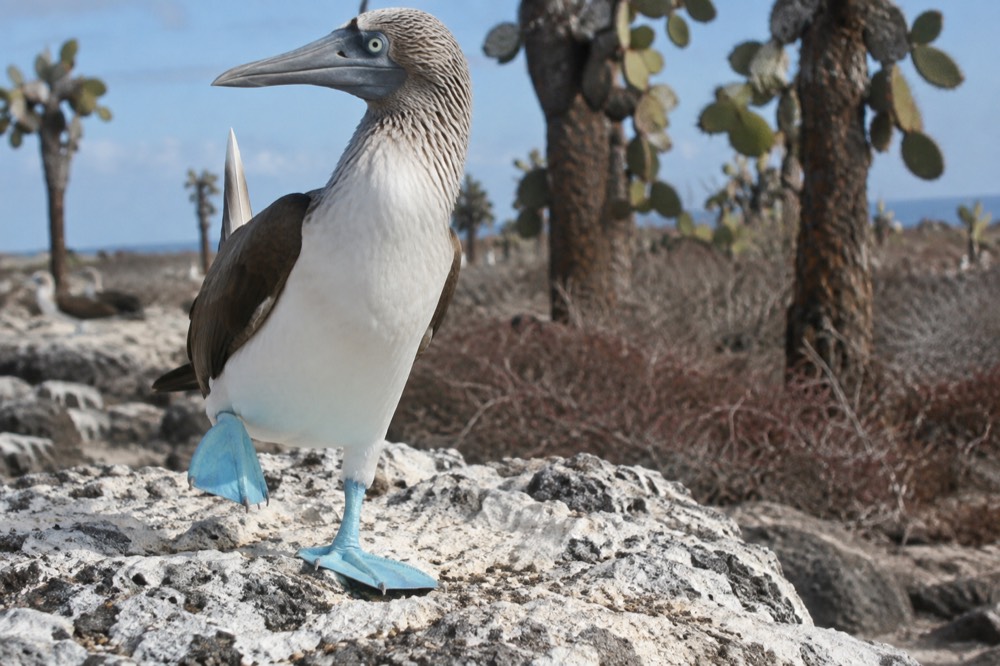
By feet and face, not by size. Blue-footed boobies have bright turquoise-blue feet and a mottled brown head. Red-footed boobies have red feet, a blue bill and are the smallest of the three, nesting in trees rather than on the ground. Nazca boobies are the largest, clean white with black wing edges and an orange bill.
Feet first, every time. The blue-footed booby is the one on the postcards, and the colour is genuinely that intense in daylight. Males show it off deliberately in the courtship dance, lifting each foot in turn in front of a female while pointing bill and wings skyward. That display runs from June through August, so a winter trip means a lot of standing around and a summer trip means a show.
Red-footed boobies confuse people because there is a white morph and a brown morph, and the brown one looks nothing like the pictures. Go by the red feet and the pale blue bill. They nest in shrubs and low trees, which is a giveaway on its own, since the other two nest on bare ground.
Nazca boobies are the big clean white ones, and once you see the sharp black trailing edge on the wing and the orange-pink bill, you stop confusing them with anything. They also nest on open ground, often near cliff edges where the takeoff is easy.
| Species | Feet | Face and bill | Nests | Easiest to see |
|---|---|---|---|---|
| Blue-footed booby | Bright turquoise-blue | Mottled brown head, dark bill | Bare ground, in scrapes | Seabird islands, courtship June to August |
| Red-footed booby | Red | Pale blue bill, smallest of the three | In shrubs and trees | Outer islands, rarely on standard day tours |
| Nazca booby | Grey-green, not showy | White body, black wing edges, orange bill, largest | Bare ground, near cliffs | Cliff-edge colonies on outer islands |
Identification is one half of the experience and behaviour is the other, and the behaviour is what makes the boobies worth the boat fare. The blue-footed courtship is slow and repetitive rather than dramatic, a male lifting one foot and then the other in front of a female for minutes at a time, with pairs reinforcing the bond through sky-pointing and bill contact. None of it runs to your schedule: a displaying pair will pause when a group walks past and resume once the group stands still. Give any nesting colony ten quiet minutes before moving on and you will see more display behaviour than in an hour of walking.
Where Do You See Giant Tortoises In The Wild?
In the humid highlands of Santa Cruz and on Isabela, plus the breeding centres. Wild adults move up into the uplands and are reliably visible on private reserves reached by road from Puerto Ayora. Breeding runs through the hot season, January to May, and eggs hatch after roughly 130 days.
There are two entirely different experiences here and people mix them up. A breeding centre shows you tortoises of every age in enclosures, with the conservation story attached. A highland reserve shows you wild adults in wet grass and mud, doing nothing at all, very slowly, which is somehow better.
The Galapagos giant tortoise is not one animal but a set of island lineages with different shell shapes, saddle-backed on dry low islands and dome-shaped on wet high ones. Roughly 20,000 to 25,000 survive across the archipelago today, which sounds healthy until you learn Española was down to 15 adults before the captive programme rebuilt it past 2,300. The rest of those numbers sit in the giant tortoise numbers post.
Practically: a highlands morning from Puerto Ayora runs about three hours and usually pairs the reserve with a lava tunnel walk. It is the cheapest wildlife certainty on the islands and it needs no boat. Everything else departing Puerto Ayora is on the Santa Cruz day tours page.
Timing within the year matters less than people fear, because the wild adults on the highland reserves are resident rather than seasonal. They are there in every month, and what changes is the ground underfoot rather than the animals. The hot season, January to May, is when the uplands are wettest and the tortoises most visibly active, often wallowing at pond edges, while the garúa months leave the same animals grazing drier ground. Wear closed shoes you do not mind ruining: the trails cross working ranchland and the mud is genuine.
Isabela runs its own breeding centre near Puerto Villamil, so if your itinerary already includes that island you can see tortoises there and spend the saved Santa Cruz morning on a boat instead. The centres tell the repatriation story far better than a ranch visit does, and the story is worth hearing: more than 1,000 juvenile Pinzón tortoises have been returned to their island since black rats were eradicated there in 2012, and 158 Floreana-lineage juveniles went back to Floreana in February 2026 after more than 180 years of absence.
Which Month Is Best For Which Animal?
Depends entirely on the species. June to August is booby courtship. August and September are peak sea lion pupping. April to December is the waved albatross window on Española. January to May is tortoise breeding and warm water. There is no bad month, only months that suit different animals.
Sea temperature drives most of it. The warm season from December to May sits around 23 to 24°C with calmer water, and the cool garúa season from June to November drops to about 19 to 22°C with more nutrients, more plankton and busier feeding. That is why the seabirds breed when the water is cold and the reptiles breed when the land is hot.
| Month | What is happening |
|---|---|
| January | Tortoise breeding season opens; waved albatross absent; sea 23 to 24°C |
| February | Tortoise breeding; albatross still absent; warm calm water |
| March | Tortoise breeding; last month with no albatross on Española |
| April | Tortoise breeding; waved albatross return to Española; warm water |
| May | Final month of tortoise breeding; penguin nesting window opens |
| June | Blue-footed booby courtship begins; whale sharks arrive at Darwin and Wolf; water cools to 19 to 22°C |
| July | Booby courtship in full swing; cool nutrient-rich water; whale shark season |
| August | Booby courtship ends; sea lion pupping peaks; whale sharks present |
| September | Sea lion pupping peak continues; coolest, roughest water of the year |
| October | Penguin nesting; albatross on Española; whale sharks still at the northern sites |
| November | Last month of the whale shark window; albatross present; water starts warming |
| December | Albatross begin leaving; warm season returns at 23 to 24°C; penguin nesting closes |
Read the table as a set of trade-offs rather than a ranking. The warm months are the comfortable months, calm water, better light, active tortoises and no albatross anywhere. The cool months are the productive months, more food in the water, more birds courting, more pups on the beaches, and the price is rougher crossings and a persistent mist along the southern coasts. Travellers who come back a second time tend to split it deliberately: warm season for the water, cool season for the birds.
The shoulder months deserve more attention than they get. May still has tortoise breeding, opens the penguin nesting window and carries warm, calm water before the garúa settles in. November keeps the albatross and the last of the whale sharks while the water is already starting to warm. Both tend to sit outside the busiest visitor periods, which on islands where boats are small and fill up is a practical advantage in its own right.
Which Day Tour Actually Gets You To The Seabird Colonies?
North Seymour, from Santa Cruz. It is the one small island close enough to Baltra for a day boat that holds substantial blue-footed booby and frigatebird colonies plus land iguanas. Expect a full day, roughly nine hours door to door, with the trail circuit and a snorkel or beach stop.
North Seymour sits just north of Baltra, so the crossing is short compared to the outer islands, and the trail is a flat loop through nesting ground rather than a climb. Frigatebird males inflate scarlet throat pouches there in the breeding period, and boobies nest directly beside the path, which is where the two-metre rule gets genuinely difficult to obey because the birds do not respect it.
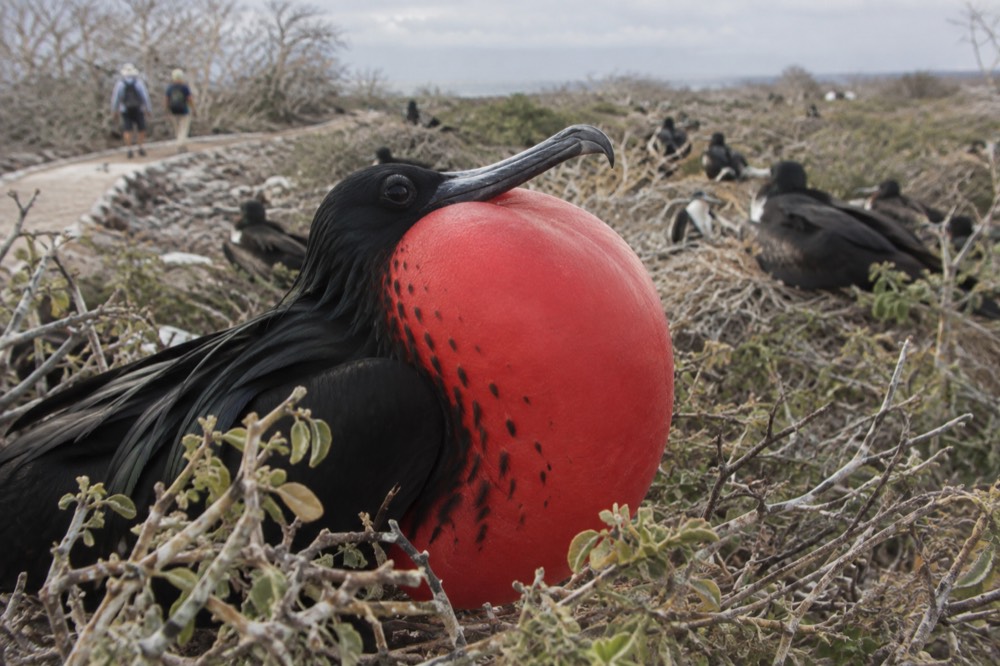
The island's third act is the land iguana colony, which descends from animals moved from nearby Baltra after the native population there died out. They are rust-yellow, heavy and absurdly easy to photograph, since they sit in the shade of low vegetation at roughly eye level from the trail. Between the iguanas, the boobies beside the path and the frigatebirds overhead, a slow circuit of the loop can absorb most of a morning, and the better operators schedule it that way rather than rushing the walk to extend the snorkel stop.
The other colony island within day-boat range of Puerto Ayora is South Plaza, reached on the Day Trip to South Plaza Island from Puerto Ayora with Galapagos a la Carte. The listing runs about eight hours, from $355, with a national park naturalist guide, snorkel gear and lunch included, hotel pickup from selected hotels and drop-off at the main pier. It carries a 5 rating from a small pool of six reviews, so read the itinerary rather than the average.
Between the two, North Seymour is the purer seabird day and South Plaza the better mixed walk. South Plaza's land iguanas move between the prickly pear cactus stands in numbers that make the two-metre rule another polite fiction, a bachelor colony of sea lions hauls out on the rocks below the lower trail, and red-billed tropicbirds work the seaward cliff edge. North Seymour counters with boobies nesting directly on the path and the denser frigatebird display. If you only have one seabird day from Santa Cruz, North Seymour is the conventional pick; if you have two, they make a genuinely different pair.
Group size is the other thing worth checking before you pay. Boats on these routes range from small fast craft to larger day yachts, and the difference shows up at the landing, where a dozen people can spread along a colony trail while forty have to move as a single block. Ask the operator directly when booking, and in the busy months book early, because these are the two most in-demand wildlife days from Puerto Ayora and both fill first.
If seabirds are the reason you came, this is the day to book, and you can Check availability on the operator's listing before you commit to dates. The listing shows a nine-hour day departing from Santa Cruz. Review volume on these platforms is thin across the board, so read the itinerary rather than the star count, and compare the alternatives on the Santa Cruz day tours page.
Where Do The Marine Iguanas, Sea Lions And Penguins Actually Turn Up?
Marine iguanas are everywhere there is dark shoreline rock, including town beaches. Sea lions colonise piers and beaches on all inhabited islands and pup mainly in August and September. Galapagos penguins concentrate in the cooler western waters around Isabela and Fernandina, breed year-round and may nest any time from May to December.
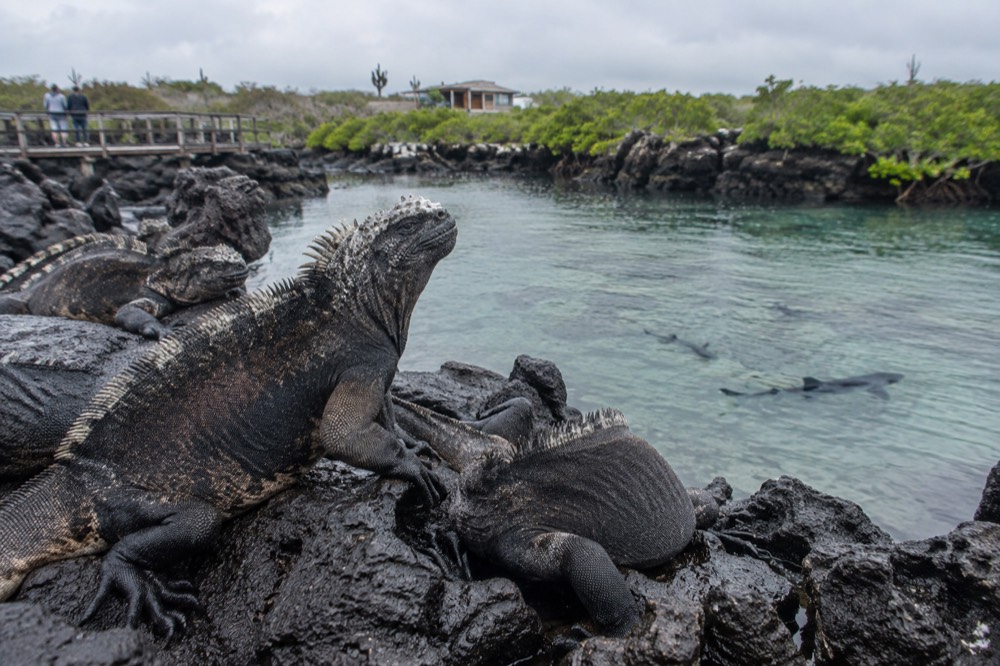
Marine iguanas are the least effort of any Galapagos animal to see and the most interesting to watch, because they feed by grazing algae underwater and then haul out to reheat. Cold iguanas are sluggish. Warm iguanas sneeze salt, which is a real thing they do and it will land on you.
Sea lions are the ones you meet in the water. Juveniles will come and spiral around a snorkeller out of pure curiosity, and that encounter, more than any bird, is what people describe on the boat afterwards. The snorkelling with sea lions post covers the etiquette, which mainly means not chasing them and letting the animal set the distance.
The Galapagos penguin is the hardest of the three. It is the only penguin found north of the equator and it needs the cold upwelling on the western side, so an Isabela base gives you a real chance and a Santa Cruz base gives you a slim one. The Isabela day tours that run to Tintoreras and Los Túneles pass the rocky shorelines where they perch.
| Species | Where you actually see it | Best months | Realistic route |
|---|---|---|---|
| Giant tortoise | Santa Cruz highlands, Isabela, breeding centres | Year-round, breeding January to May | Road-based highlands tour from Puerto Ayora |
| Blue-footed booby | Seabird islands and cliff coasts | Courtship June to August | North Seymour day trip from Santa Cruz |
| Marine iguana | Any dark shoreline rock, including town beaches | Year-round | Free, on foot, or any boat tour |
| Sea lion | Piers, beaches, snorkel sites, all inhabited islands | Pupping peaks August and September | Any bay or island day tour |
| Galapagos penguin | Western waters, Isabela and Fernandina | Nesting possible May to December | Tintoreras or Los Túneles from Puerto Villamil |
| Darwin's finches | Highlands and lunch stops, all islands | Year-round | Any highlands trip |
| Waved albatross | Española only | April to December, absent January to March | Cruise itinerary, not a standard day tour |
From a Santa Cruz base, the most efficient route into penguin water is the Day Tour to Isabela Island with Tintorera Islet, Snorkeling Wetlands & Flamingos run by Guiding Galapagos Expeditions, a ten-hour day from $285 per person rated 4.7 from 138 reviews. The crossing is a substantial part of the day, and the payoff on arrival is a snorkel through the narrow lava channels of the Tintoreras, where white-tip reef sharks rest in the gaps between the rocks, followed by the wetland trails where flamingos feed in the lagoons. Wetsuits long or short as you prefer, snorkel gear, lunch, soft drinks and the Puerto Ayora pier fee are all included.
The alternative is to base yourself on Isabela for a night or two. The public ferry runs daily between Santa Cruz and Isabela for $35 one way and takes two to two and a half hours, and from Puerto Villamil the local operators run shorter Tintoreras and Los Túneles trips that spend less time commuting and more time in the water. That trade, one long day versus a slower two-day stay, is the classic scheduling decision on the archipelago, and the answer depends almost entirely on how fixed your dates are. The Isabela day tours page covers both shapes.
Are Darwin's Finches Worth Looking For?
Yes, but manage the expectation. They are small, brown, unassuming birds that look almost identical to each other, and the interest is entirely in the beaks. Different species evolved different bill shapes for different food, which is the observation that fed into Darwin's thinking. They are common in the highlands and around lunch stops.
Nobody photographs a finch and puts it on a fridge. What makes them worth two minutes of your guide's time is that they are the clearest living demonstration of the mechanism the islands are famous for, and a good naturalist guide will show you a heavy seed-cracking bill and a fine probing one within the same clearing.
They are also fearless to the point of comedy. Leave a sandwich unattended at a highland reserve and you will get a practical lesson in adaptive feeding behaviour.
Do not plan to identify every finch you see, because even researchers lean on bill measurements and song, and several species overlap to the point of genuine difficulty. The workable version of finch watching is the one a guide gives you: two or three named species around a specific bush, with the beak differences pointed out directly. Two minutes of watching a finch work a seed with a heavy bill explains adaptation faster than any panel in a visitor centre, and it is why the ten minutes at the lunch stop are never dead time.
Where Is The Waved Albatross, And Can A Day Tour Reach It?
On Española, and no. Practically the entire world population of waved albatross nests on that one island, arriving around April and leaving by December or January. From January to March they are at sea and the island has none. Española sits on cruise itineraries, not on the day-boat routes from the port towns.
This is the species where honest planning matters most, because it is genuinely spectacular and genuinely hard to reach. The birds have a wingspan over two metres, they perform a long clattering courtship dance, and they launch off a cliff edge because they cannot get airborne easily from flat ground. The waved albatross profile covers the biology.
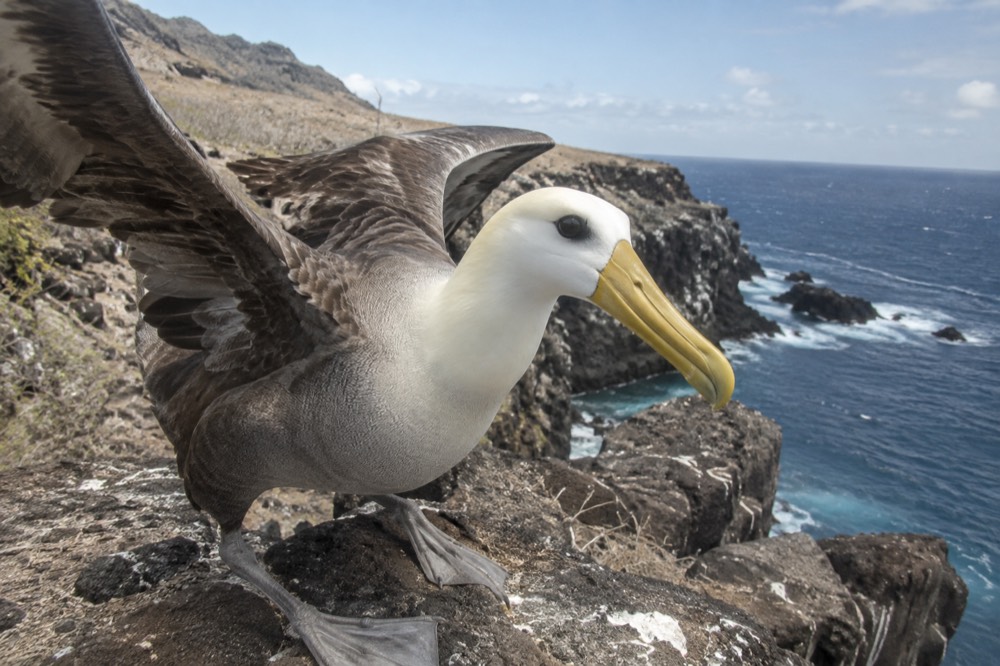
The travel reality is simpler. Our listed day tours run from Santa Cruz, San Cristóbal and Isabela, and none reach Española. If the albatross is your priority species, that points at a cruise itinerary between April and December, which changes the shape and cost of the whole trip. The best time to visit guide lines the seasons up against price if you are weighing months against budget.
There is one listed exception to that rule, and it changes the arithmetic for travellers fixed on this bird. A full-day Española Island Day Trip with Snorkeling departs San Cristóbal with GALAPAGOS SHARKSKY TRAVEL & CONSERVATION, roughly ten hours and weather-dependent, from $389, with a light breakfast, lunch with vegetarian and vegan options available, snacks, fruit, beverages and a towel included, and free cancellation on the listing. It has no rating on the listing yet. Subtract the crossing each way and the walk on Española is a compact slice of what a cruise spreads over half a day, which makes it a serious option when the albatross is the one animal nothing else will replace, and only between April and December, never January to March.
| Wildlife day tour we list | Departs from | Duration | Rating and reviews |
|---|---|---|---|
| Pinzón Island day tour with snorkelling | Santa Cruz | About 7 hours | 4.9 from 154 reviews |
| Santa Fe Island and Hidden Beach | Santa Cruz | About 7 hours | 4.9 from 91 reviews |
| Isabela day trip: Tintoreras, wetlands, flamingos | Santa Cruz | About 10 hours | 4.7 from 138 reviews |
| Giant tortoises and lava tunnels | Santa Cruz highlands | About 3 hours | 4.8 from 80 reviews |
| Bartolomé Island full day | Santa Cruz | About 10 hours | 4.8 from 21 reviews |
| North Seymour day trip | Santa Cruz | About 9 hours | 5.0 from 3 reviews |
Review counts on these platforms are small, because most Galapagos travel is still booked directly with operators rather than through booking sites. A five-star average from three reviews tells you far less than a 4.7 from 138, and neither tells you as much as the itinerary itself.
Which Day Tour Gives The Best Snorkelling?
For underwater wildlife from Santa Cruz, the seven-hour Santa Fe and Pinzón day tours are the dedicated options, both combining snorkelling with fishing and both rated 4.9 on the listings we track. From Isabela, Tintoreras and Los Túneles deliver penguins, reef sharks and turtles in a single morning. The best single answer depends on your base island and the season: warm months for comfort, cool months for density.
What you actually meet underwater is a shorter list than the land one but far more personal. Sea lions are the headline, and juveniles will spiral around a snorkeller for as long as the snorkeller stays still. Turtles graze the shallow bays at most sites, reef fish follow the rock edges, and rays turn up on the sand patches. The seasonal trade-off from the calendar section applies below the surface too: the cold, nutrient-rich garúa water is what feeds everything, and it is the same plankton that clouds the view, so abundance and visibility tend to move in opposite directions.
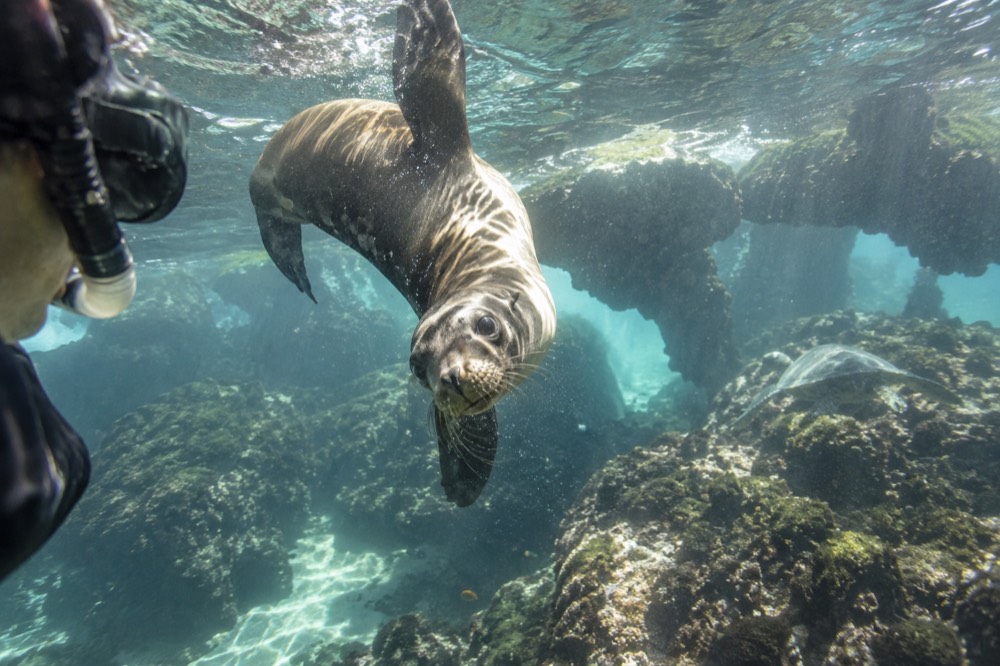
Santa Fe is the gentler of the two Santa Cruz options and the best value on our list for a pure water day. The Day Tour to Santa Fe Island and Hidden Beach with snorkeling and fishing runs about seven hours from Puerto Ayora, from $229 per person, rated 4.9 from 91 reviews, with snorkel gear, all fees and taxes, coffee or tea, lunch, bottled water and soft drinks included. The bay holds one of the densest sea lion colonies in the archipelago, the island carries its own pale endemic land iguana, and Hidden Beach is the standard swim stop. Because the crossing is shorter than the outer islands, it is also the day most likely to run as planned when the swell is up.
Pinzón is the deeper-water day, and it carries the highest review count of any day boat we list, 4.9 from 154 reviews, at from $249 per person for about seven hours from Santa Cruz. The same operator includes snorkel gear, wetsuits in short or long versions as you prefer, towels, lunch, soft drinks, and all fees and taxes. The island itself is closed to landings, so the day is spent on the water by design, at the Pinzón snorkel site and the anchorage at La Fé or Palmitas Bay, with fishing lines out on the crossings. For confident snorkellers it is the stronger pick; for first-timers, Santa Fe's sheltered bay is easier.
Whichever you pick, check what the listing includes before assuming you need to rent anything. Two of the three water days we list include wetsuits, which matters more than it sounds in the garúa season, when water of 19 to 22°C is comfortable for ten minutes and bracing for an hour. In the warm months a shorty, or nothing at all, is fine for most people.
What Does A Wildlife Day Trip Cost From Each Island?
Typical day trips run $145 to $245 per person from Santa Cruz, $75 to $187 from Isabela and $149 to $320 from San Cristóbal. On top of every tour sits the fixed visitor overhead: the $200 national park entry fee for foreign adults and the $20 transit control card, which are separate from any tour price.
The overhead first, because it surprises people. Every foreign visitor over 12 pays the $200 Galapagos National Park entry fee, paid to the park rangers at Baltra or San Cristóbal airport on arrival, and children under 12 pay $100. Before you even board your flight from Quito or Guayaquil you also need the Transit Control Card at $20 per person, obtained through the official online pre-registration system. None of it is refundable and none of it is booked through your tour. For two adults and two children, that is $680 before a single excursion.
Tour prices then follow crossing distance. The wildlife-heavy boat days we list from Santa Cruz sit at the top of, or above, the typical band: Santa Fe from $229 per person, Pinzón from $249 per person, the long Isabela day from $285 per person, South Plaza from $355 and North Seymour from $360. The cheapest wildlife certainty on Santa Cruz is not a boat at all but the roughly three-hour highlands tortoise trip, and Isabela-based boats run cheaper still, precisely because the anchorages sit close to port.
| Departure island | Typical day tour price | What sits within day range |
|---|---|---|
| Santa Cruz | $145 to $245 per person | North Seymour, South Plaza, Santa Fe, Pinzón, the long Isabela day, highlands tortoises |
| Isabela | $75 to $187 per person | Tintoreras, Los Túneles, Sierra Negra, the wetland trails |
| San Cristóbal | $149 to $320 per person | Kicker Rock, the 360° tour, the long Española day |
One comparison to make carefully before deciding anything is expensive: basis. Every day tour above is priced per person, but the one short package on our listings, the 3-Day Galapagos Trip for Traveler Without Much Time, is priced per group, from $5600 for the whole party. It bundles hotel nights, breakfast and lunch, a navigable snorkelling tour, transfers and a tour leader who also photographs, and it carries free cancellation. The listing has no rating yet. A per-group headline next to a per-person headline is not a like-for-like comparison, and the three-day figure only makes sense set against your entire do-it-yourself budget.
Do You Need A Guide To See The Wildlife?
Inside the national park's protected visitor sites, yes, always: park rules require every visitor to a protected area to be accompanied by a naturalist guide authorised by the Galapagos National Park Directorate. In the towns and on the public beaches, no, and that free access is a real feature of a land-based trip.
This requirement is why nearly every wildlife experience beyond the waterfront is sold as a guided tour, and why the price of a day trip is inseparable from the guide. The guide is not a courtesy. They hold the landing permission for the site, manage the group's behaviour there, and are the difference between seeing animals and understanding them. Since park rules require it, a guide comes with every landing whether or not the inclusions line spells it out.
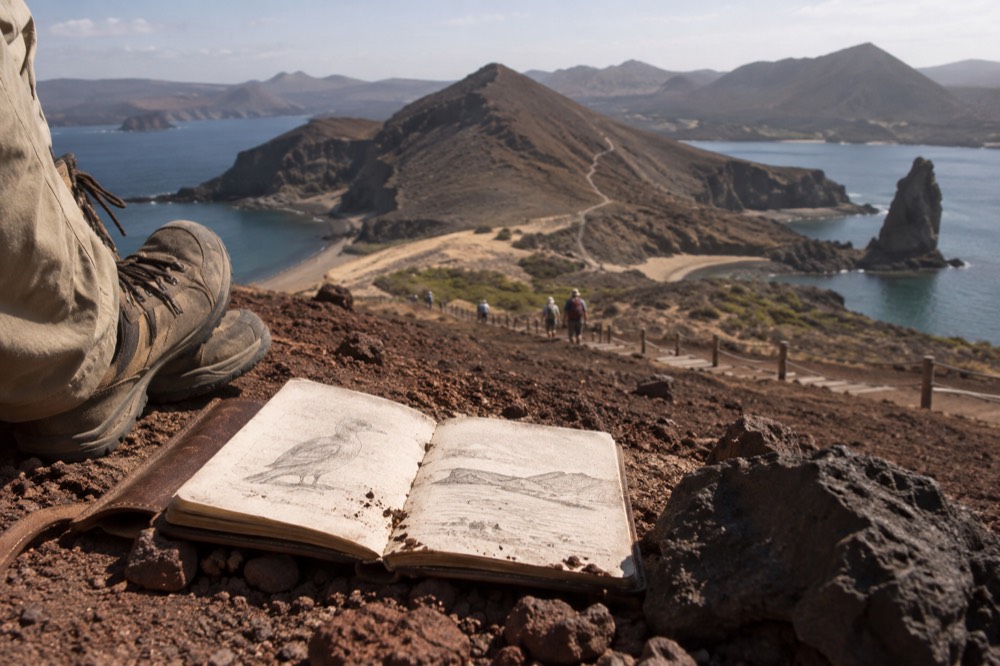
The rules the guide enforces are short and worth knowing before you go. Keep two metres, six feet, from wildlife, even when a sea lion pup or a nesting booby closes the gap itself, in which case your job is to hold still or step back rather than reposition for a photograph. Drones are prohibited throughout the national park and the marine reserve, so leave them on the mainland. And check what you carry: fresh fruits, vegetables, seeds and plants are regulated or prohibited on entry to the islands, which is why your bags get the mandatory SICGAL biosecurity inspection at Quito or Guayaquil before the flight, and why the official ABG list is worth a look before you pack snacks.
What you can do unguided is still substantial. The Tortuga Bay walk from Puerto Ayora passes marine iguanas and finches along the track, the piers and harbour beaches in every port town are sea lion territory, and the highland back roads on Santa Cruz run through wild tortoise country. Most land-based travellers use one or two free mornings like this and save their money for the islands that genuinely need a boat.
Is A Cruise Better Than Day Tours For Wildlife?
For raw species count, yes: cruise itineraries reach Española and the far western islands that no day boat touches, including the waved albatross colony and the densest penguin and flightless cormorant waters. For most travellers the case is narrower, because 79% of visitors now travel land-based, and cruise berths typically run $450 to $1,000 or more per person per day against roughly $250 to $350 for an organised land-based day.
What a cruise genuinely buys is range and rhythm. A small ship moves between islands overnight, so one week can stitch together Española, the far west and the central islands, with dawn landings before the day boats arrive. That is the only realistic way to see the waved albatross properly, and it is the easiest way to reach the penguin and cormorant coastlines of the west. The weekly price tag for that range, typically $3,000 to $10,000 or more per person, is the arithmetic most travellers step back from.
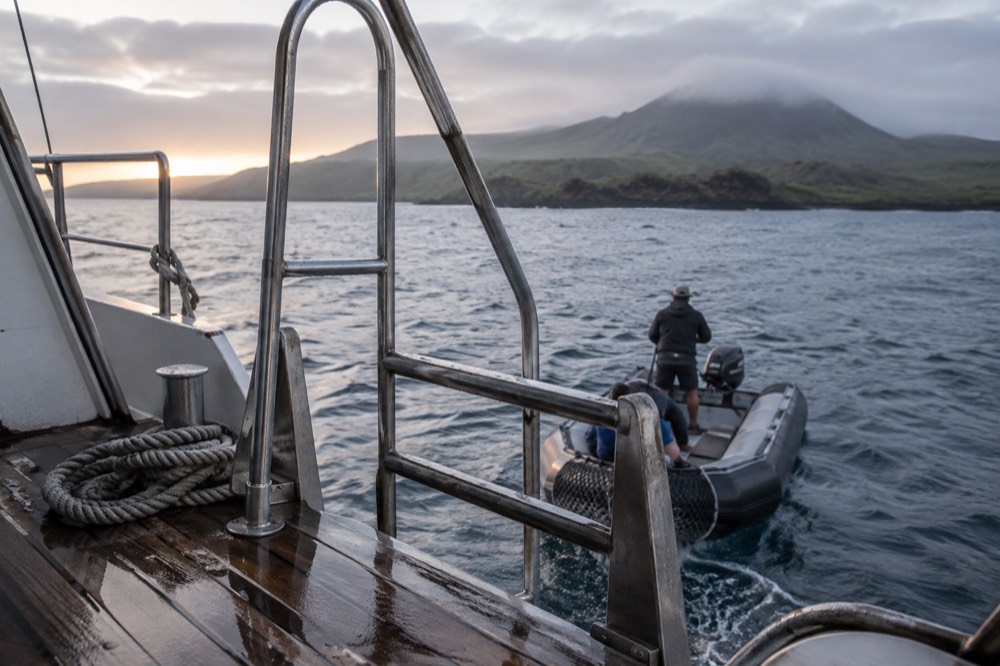
Day tours win on control. You pick the island that matches your priority species, you pay per day rather than per berth, and a bad-weather cancellation costs one morning rather than a week of plan. The trade-off is permanent: nothing from the ports reaches the far west at all, and Española sits only just inside day range from San Cristóbal on one long listing. If the albatross or the western endemics are non-negotiable, the cruise question mostly answers itself. For everyone whose list runs boobies, frigatebirds, sea lions, iguanas, tortoises and penguins on a good Isabela day, the day-boat network delivers the overwhelming majority of it.
The middle path is island hopping, and it is what most visitors actually choose: 79% of 2025 arrivals stayed land-based. Hotel nights on two or three islands, linked by the $35 inter-island ferries and a day tour from each base, get you the seabird colonies, the tortoise highlands, Tintoreras and Kicker Rock without a cabin or a weekly price tag. The Galapagos island hopping guide covers the standard routes, and the honest summary is that a cruise buys range while island hopping buys control. Only you know which one your species list needs.
Common Questions
What is the single best month for Galapagos wildlife?
There is no single answer, which is why the calendar matters. June to August gives you blue-footed booby courtship and cool productive water. August and September add peak sea lion pupping. January to May gives warmer, calmer water for snorkelling and active tortoise breeding, but no waved albatross at all.
How close can you get to the animals?
Two metres, six feet, is the national park minimum and it applies even when the animal walks toward you. The animals do not know the rule and will close the gap themselves. Your job is to hold still or step back, not to reposition for a better photograph.
Can I see penguins on a day tour from Santa Cruz?
Possible but unreliable. Galapagos penguins concentrate in the cooler western waters around Isabela and Fernandina, so basing on Isabela and taking a Tintoreras or Los Túneles trip gives you a far better chance than any Santa Cruz departure.
Do I need a telephoto lens?
Less than you would anywhere else on earth. Most encounters happen within a few metres, so a mid-range zoom and a wide lens cover almost everything. Bring a dry bag instead, because the panga landings are wet more often than the itinerary suggests.
Are the animals really unafraid of people?
Yes. The islands had no land predators for most of their history, so the animals never evolved a flight response to large mammals. This is exactly why the two-metre rule exists: the wildlife will not protect itself from you, so the rules have to.